A dehumidifier can help manage moisture from drying washing indoors, but it’s no substitute for ventilation or for repairing a leak or faulty ventilation system. Choose one to suit the room’s size and temperature, the conditions under which its extraction capacity is measured, its noise level and how the water is collected. For drying washing indoors, ADEME recommends using a large, well-ventilated room or one with a mechanical ventilation (VMC) extract vent.
Who is this for?
You often dry washing in an occupied room
You need to balance regular drying with the size of the room and a noise level that’s acceptable while it’s in use. ADEME recommends using a large, well-ventilated room or one fitted with a mechanical ventilation (VMC) extract vent.
You want to empty the tank less often
If the appliance runs for long periods or frequently, compare an easy-to-empty tank with continuous drainage that’s compatible with your intended setup. A drainage connection alone doesn’t guarantee that you’ll be able to fit the hose in your home.
You’ve noticed persistent damp
If the room remains damp even when you’re not drying washing, check the ventilation and look for signs of water ingress before relying on a portable appliance. A dehumidifier won’t fix these underlying causes.
What should you look for?
First, work out whether the moisture is from drying washing or due to a problem that persists even when there’s no washing to dry. Then compare the stated capacities and their test conditions, along with the practical considerations of emptying the water, room temperature and noise.
| What to consider |
What to check |
Who it matters to |
| Cause of the damp |
Check whether the damp persists when you’re not doing laundry, as well as the condition of the ventilation and any signs of water ingress. |
If the room stays damp when there’s no washing to dry, I want to understand why before buying an appliance. Around 36% of consumers may put finding the cause first. |
| Drying washing |
Compare the capacity in l/24 h with the test temperature and relative humidity, and check whether there’s a laundry mode. |
When I do laundry frequently, I look for a capacity that suits my room rather than relying on an extraction figure in isolation. This could be the main priority for around 29% of consumers. |
| Water collection |
Check the tank’s capacity and how easy it is to access, or whether you can install a continuous drainage hose. |
For extended use, I’d rather not have to stop the appliance regularly to empty its tank. Around 21% of consumers may prioritise this consideration. |
| Noise and temperature |
Check the noise level of the mode you plan to use and the model’s stated operating temperature range. |
If the room is occupied or stays cool, I need to know whether I can use the appliance in those conditions without making assumptions about how comfortable it’ll be. Noise or temperature may be the main priority for around 14% of consumers. |
Mistakes to avoid
-
Choosing based on litres per day alone
A capacity quoted for specific temperature and relative humidity conditions doesn’t guarantee the same extraction performance in your room. For example, De’Longhi gives figures for its DNS80 and DD230P at 30 °C and 80% relative humidity.
Check the test conditions for each model before comparing its other features, including laundry mode, noise and water collection.
-
Relying on the appliance to mask an ongoing problem
A dehumidifier removes moisture from the air, but it won’t fix a leak or faulty ventilation. So if damp persists when you’re not drying washing, it needs to be looked into separately.
Check the ventilation. If you see signs of water ingress or the damp persists, have the cause investigated before deciding what size appliance to buy.
-
Forgetting to empty the tank
Extraction capacity and tank volume are two different things. If you plan to use the appliance for long periods, how often you’ll need to empty it could affect your choice.
Compare how easy the tank is to access with the option of continuous drainage. If you choose continuous drainage, check the hose, its route and whether you might need a pump.
-
Assuming laundry mode means you don’t need to ventilate
A dedicated mode may be worth considering for drying washing, but it doesn’t mean you can skip ventilating the room. ADEME recommends drying washing in a large, well-ventilated room or one fitted with a mechanical ventilation (VMC) extract vent.
Also check the noise level of the mode you plan to use, rather than relying on the noise level for a different setting.
Brands to know
De’Longhi
The Tasciugo range includes the desiccant DNS80 and the compressor DD230P, with water collection options to check for each model.
- According to De’Longhi France’s product specifications, the DNS80 is rated at 7.5 l/24 h and the DD230P at 30 l/24 h, both at 30 °C and 80% relative humidity.
- These capacities alone don’t tell you how well the appliance will perform in your room. Also check the noise level and drainage setup for the model you choose.
Air&Me
Air&Me presents the Evel as suitable for cool rooms, with a laundry mode and continuous drainage.
- Air&Me says the Evel can operate from 0 °C and comes with a continuous drainage hose.
- Check the specifications of the version you’re considering and the hose installation requirements before choosing this model for your room.
Meaco
The MeacoDry Arete Two range includes a 20L model marketed for larger spaces, with features that vary by model.
- Meaco states that the Arete Two 20L is suitable for areas of up to 50 m².
- The stated area doesn’t replace checking extraction conditions, noise and water management for the room where you dry your washing.
Dehumidifiers available on Joybuy
These models have features worth comparing for a room where you dry washing, including stated coverage, water collection and, depending on the model, a drying mode. Always consider the stated capacity in relation to the conditions in your room; none of these models replaces proper ventilation.
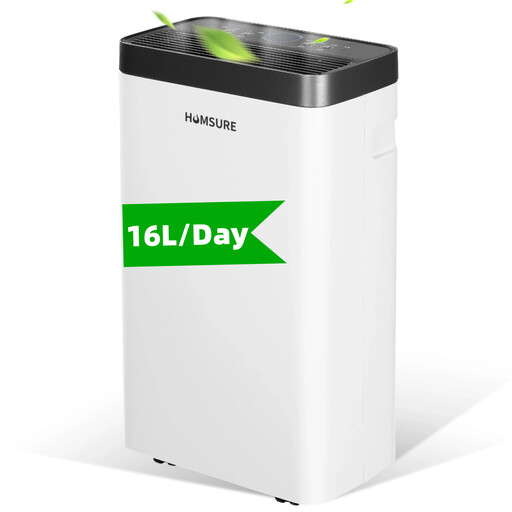 Image unavailable
HUMSURE 16 L/day dehumidifier, 1.4 L tank
Worth considering if you dry washing in a room that matches the stated coverage of 25 m². The title lists three modes, a 24-hour timer, automatic defrost and automatic shut-off. Check the conditions for the stated capacity and the noise level of the mode you’ll use.
View on Joybuy
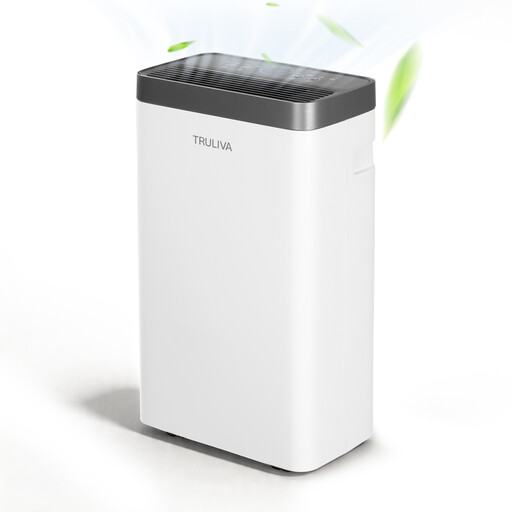 Image unavailable
TRULIVA AP10-2012EE dehumidifier for washing
Worth considering if drying washing is your main use and you can install a continuous drainage hose. The title states coverage of around 32 m², a 24-hour timer and automatic defrost. Check the noise level if you plan to use it in an occupied room.
View on Joybuy
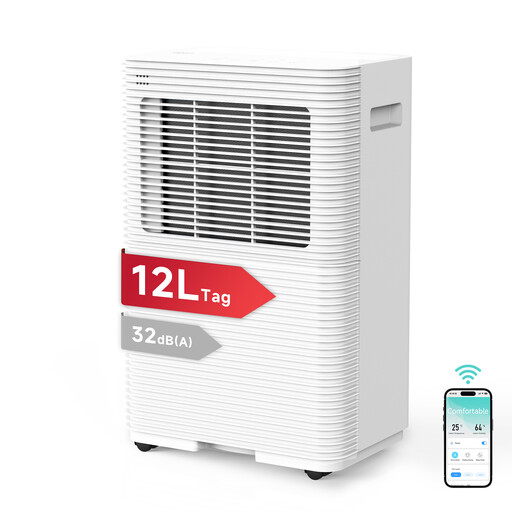 Image unavailable
VINO 12L Smart Wi-Fi dehumidifier, 1.8 L tank
Worth considering for a room that matches the stated coverage of 24 m² if you also want a Dry mode. The title lists Auto, Dry and Sleep modes. The noise figures for Sleep mode are contradictory, so check them before using it in an occupied room.
View on Joybuy
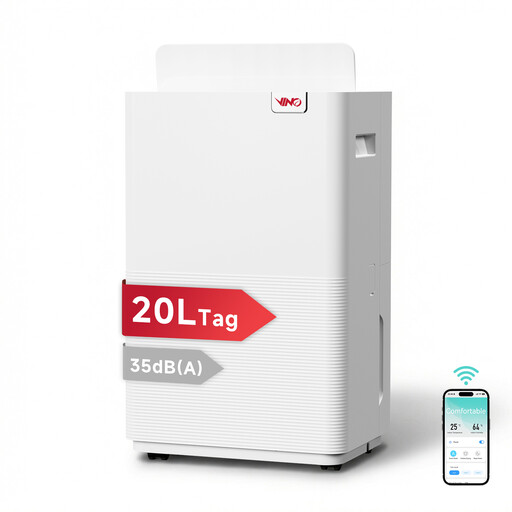 Image unavailable
VINO 20L Smart Wi-Fi dehumidifier, 2.5 L tank
Worth considering if the stated coverage of 40 m² suits your room and you want a Dry mode. The title lists Auto, Dry and Sleep modes. Check the noise level for your chosen mode, as the figures given for Sleep mode don’t match.
View on Joybuy
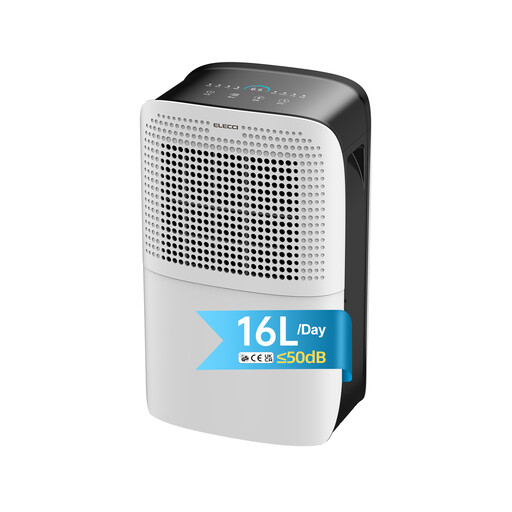 Image unavailable
ELECCI 16 L/day dehumidifier with hose and 3.1 L tank
Worth considering if you can use the stated drainage hose while drying washing. The title lists four modes and coverage of 32 m². Check the noise level and the temperature range for the location you have in mind.
View on Joybuy
Frequently asked questions
Does a dehumidifier replace ventilation or a VMC system?
No. A dehumidifier can help collect moisture from drying washing, but it won’t refresh the air in place of a properly working ventilation system. ADEME recommends drying washing in a large, well-ventilated room or one fitted with a mechanical ventilation (VMC) extract vent.
How should I compare capacities stated in litres per day?
Compare capacities measured at the same temperature and relative humidity. For example, De’Longhi gives figures for its DNS80 and DD230P at 30 °C and 80% relative humidity. These figures don’t guarantee the same extraction in a colder or less humid room.
When should I choose continuous drainage over a tank?
Continuous drainage can mean fewer trips to empty the tank during extended use, provided the hose can be installed as instructed. Check whether it’s supplied, where the water can drain and whether your setup needs a pump. De’Longhi says the DD230P comes with a pump and hose, while Air&Me says a hose is supplied with the Evel.


