If you regularly get condensation after showering, cooking or drying laundry, first check the room’s humidity and make sure the ventilation is working properly. A dehumidifier can help if excess moisture persists, but it won’t fix a leak or water ingress. When choosing a model, consider its stated capacity, noise level, drainage options and energy consumption for the way you plan to use it.
Who is this advice for?
Anyone dealing with condensation after showering or cooking
If condensation appears after an activity that produces steam, start by noting when it forms, measuring the humidity and checking the ventilation and mechanical ventilation system (VMC). ADEME advises against switching off the VMC, while France Rénov’ points out that ventilation removes the moisture produced by everyday activities.
People who dry laundry indoors
Whether you dry laundry in a bedroom, utility room or living area, it adds moisture that needs to be removed. If you’re considering a dehumidifier alongside ventilation, also think about noise, stated capacity and how you’ll empty the tank.
Anyone dealing with persistent damp
Recurring water marks, stains or mould are a reason to investigate the cause before buying an appliance. Qualitel lists inadequate ventilation, water ingress and poor insulation among the possible causes of damp.
What should you check before choosing?
First work out whether the humidity is temporary or persistent, and whether it’s caused by how you use the room or by something else. Only then should you consider the appliance’s features.
| Priority | What to check | What you need |
|---|
| Measure the humidity |
Use a hygrometer to take readings before and after activities that produce steam. Qualitel generally puts the recommended indoor humidity range at 40 % to 60 % and notes that the risk of condensation increases above 70 %. |
Does the condensation clear after airing the room, or does the humidity remain high? I want to tell the difference between a temporary spike and a lasting problem. |
| Remove the steam |
Check that air inlets and outlets aren’t blocked and that the VMC is working. According to ADEME and France Rénov’, ventilation removes the moisture produced in the home; a dehumidifier is no substitute. |
After a shower or cooking, I want to remove the steam rather than rely solely on an appliance in the room. |
| Choose the appliance |
Compare the stated capacity in L/day with the room and how you plan to use it, especially for drying laundry. Check the noise level in the mode you’ll use, and the operating temperature if the room is cool. Figures from different product specifications aren’t a like-for-like test. |
If humidity stays high despite ventilation, I’m looking for an appliance that suits the room, without assuming it will reach its stated capacity in my home. |
| Plan for emptying |
Check the tank capacity, full-tank alert and whether a hose is included. If you want continuous drainage, check the installation instructions for the model you’re considering. |
If I regularly dry laundry indoors, having to empty a small tank could become a chore. I also need to know whether a hose can be fitted where I plan to put the appliance. |
| Plan for electricity use |
Check the power rating of the exact variant and estimate how long it will run. As Rowenta explains, energy use in kWh is calculated from the power in kW and the number of hours the appliance is used. |
If I’ll use it often, I want to estimate its energy use based on how I’ll actually use it and check whether I can set a target humidity level. |
| Identify the cause |
Look for recurring water marks and damage. If a leak or water ingress is possible, get the source investigated: drying the air won’t stop water from getting in. |
If the stains keep coming back or water seems to be coming through a wall, I want to deal with the cause rather than mask the symptoms with a dehumidifier. |
What should you look out for?
-
Using the appliance to mask water ingress
A dehumidifier removes moisture from the air; it won’t fix the source of a leak or water ingress. Qualitel distinguishes these causes from condensation caused by inadequate ventilation.
If water marks or damage keep returning, get the cause identified. If you rent your home, report the problem to your landlord and find out what steps are appropriate for your situation.
-
Relying on the litres-per-day figure alone
The stated capacity doesn’t guarantee the same amount of moisture will be removed in all temperature and humidity conditions. It also doesn’t tell you, by itself, how noisy the appliance is or how often you’ll need to empty it.
Check that the capacity suits your intended use, then look at the noise level for the mode you’re interested in, the tank capacity and the operating conditions for the exact model.
-
Forgetting where the collected water will go
When the tank is full, you’ll need to empty it before using the appliance again. Continuous drainage, on the other hand, depends on your room layout and the model’s instructions.
Choose a spot where you can access the tank or correctly install the hose, if one is available for the model you’ve chosen.
-
Overlooking how long it will run
The stated power rating alone won’t tell you how much energy the appliance will use in a day: the number of hours matters too. Rowenta explains that you can work it out by multiplying the power in kW by the number of hours of use.
Check the power rating of the variant on sale and estimate how long you’ll use it for. If you want the appliance to respond to humidity levels, check whether it has a humidistat and what settings it offers.
A few brand models to consider
These features apply to the models listed, not to every appliance from each brand.
Rowenta
Rowenta presents the Extrême Dry Compact+ DH5260F0 dehumidifier as suitable for rooms up to 40 m² or 100 m³, particularly where laundry is dried indoors.
- Rowenta states a capacity of 16 L/day, a noise level below 40,5 dB(A), a 3 L tank and a 1 m hose for continuous drainage.
- These stated figures alone can’t predict how much moisture it will remove or how noisy it will be in your room, and they don’t allow a direct comparison with models from other brands.
De’Longhi
The Tasciugo range includes the DEX212SF, which may be worth considering if the room is cool or the stated noise level is an important factor.
- E.Leclerc’s product information lists a capacity of 12 L/24 h, a noise level of 36 dB, a 2,1 L tank and an operating temperature range of 2 °C to 30 °C for the DEX212SF.
- Check these details in the instructions for the variant on sale. The noise figure isn’t directly comparable with another model measured under different conditions.
Meaco
The MeacoDry ABC 12L is an example of the brand’s compact range, which it presents as suitable for spaces up to 50 m².
- Meaco states a capacity of 12 L and a noise level of 35 dB for this model.
- Check the conditions behind the stated coverage and noise figures before comparing them with another appliance’s specifications.
Dehumidifiers available on Joybuy
These electric models are designed to tackle damp in a room and, in some cases, help dry laundry indoors. They’re intended to complement working ventilation, once you’ve ruled out a leak or water ingress.
 Image unavailable
VINO 20L Smart, 2,5 L tank
Worth considering for a room where damp persists or where laundry is dried indoors, while still keeping the room well ventilated. The product title states a capacity of 20 L/day, Wi-Fi control, three modes—Auto, Dry and Sleep—and a 2,5 L tank. Its stated capacity doesn’t guarantee the same extraction in your home; also check the noise level for the mode you plan to use.
View on Joybuy
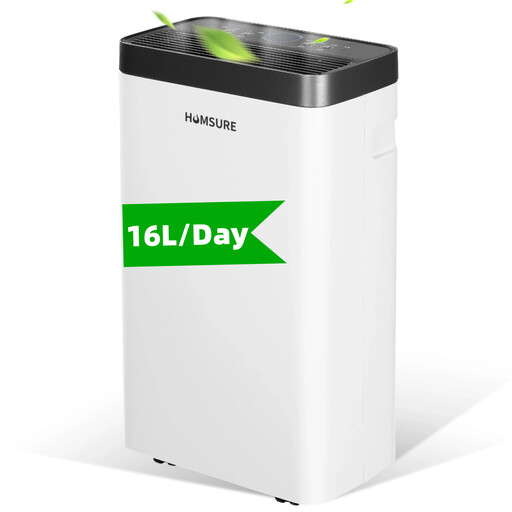 Image unavailable
HUMSURE 16L/Day, 1,4 L tank
If your room is regularly damp, first check that its ventilation is working, then plan how you’ll empty the tank. The product title states a capacity of 16 L/day, coverage of 25 m² and a 1,4 L tank. Capacity can vary depending on operating conditions, so check which modes are available on the variant on sale before relying on precise settings.
View on Joybuy
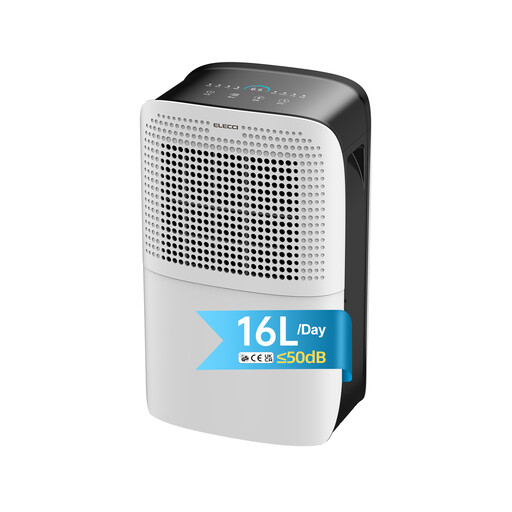 Image unavailable
ELECCI 16L/D, 3,1 L tank and hose
The stated tank size and hose are worth considering if you expect to use the appliance frequently, particularly for drying laundry indoors. The product title lists a capacity of 16 L/day, a 3,1 L tank and continuous drainage. Confirm the coverage for this variant, as the product title and description give different figures, and check its noise level if it will run in an occupied room.
View on Joybuy
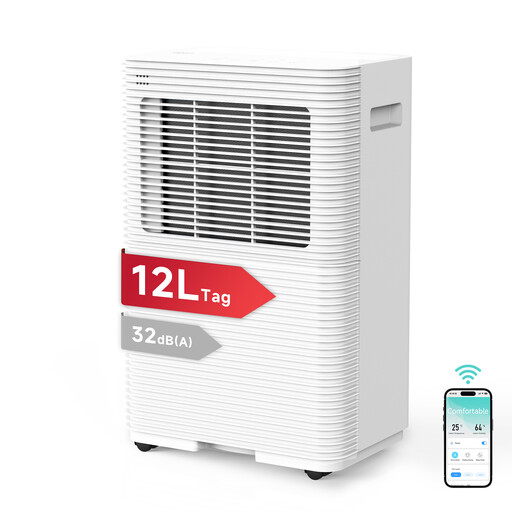 Image unavailable
VINO 12L Smart, 1,8 L tank
Consider this model for a room listed as suitable for up to 24 m² if humidity remains high despite ventilation. The product title states a capacity of 12 L/day, Wi-Fi control, three modes—Auto, Dry and Sleep—and a 1,8 L tank. Check the noise level for the mode you want to use: the product information gives different noise figures in different sections.
View on Joybuy
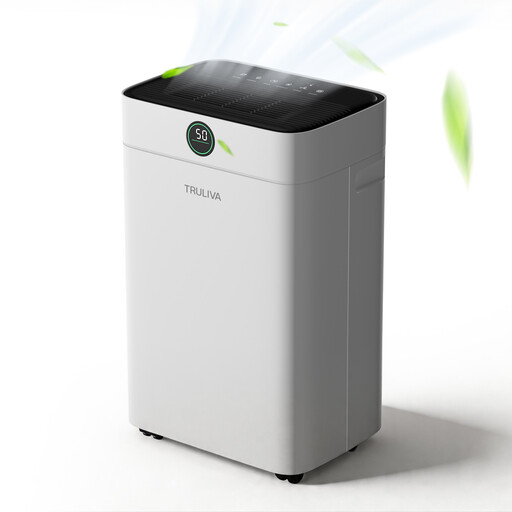 Image unavailable
TRULIVA 25L/Day, 2,8 L tank and hose
The stated laundry mode and hose are worth considering if you often dry laundry indoors and can arrange drainage for the water. The product title lists a capacity of 25 L/day and a 2,8 L tank. This capacity doesn’t guarantee the same performance in your room; if the room is cool, also check the operating and defrosting conditions in the instructions.
View on Joybuy
Frequently asked questions
Can a dehumidifier replace airing the room or using a VMC?
No. ADEME advises keeping the VMC running, while France Rénov’ explains that ventilation removes the moisture produced by the people living in your home. A dehumidifier can help in a room where humidity remains high, but it shouldn’t replace ventilation.
What humidity level should I check before buying?
Measure the humidity in the room, particularly before and after activities that produce steam. Qualitel generally puts the recommended indoor humidity range at 40 % to 60 % and says that the risk of condensation and mould increases above 70 %. A single reading after a shower doesn’t, on its own, tell you what the room’s usual humidity is.
Do I need to empty the tank every day?
Not necessarily. It depends on how much water the appliance collects, the size of the tank and how long it runs for. For example, Rowenta lists a 3 L tank and a 1 m hose for the DH5260F0. For any model you’re considering, check the tank capacity and the installation requirements for any continuous drainage option.
What should I do if the damp seems to be caused by a leak?
Get the source of the water investigated rather than buying a dehumidifier as a fix. Qualitel distinguishes water ingress from damp caused by ventilation problems and recommends identifying the cause when damp persists. If you rent your home, report the marks and damage to your landlord so the appropriate steps can be taken.


