What should you check before buying?
Start by identifying the cause of the damp, then consider the room’s usual conditions. Next, compare extraction rates under their stated test conditions, noise levels in the mode you intend to use and the options for draining the water.
| Consideration |
What to check |
Consumers concerned |
| Cause of damp |
Look for a leak, water ingress or poor ventilation before relying on a portable appliance. Get persistent damage to your home investigated. |
If condensation keeps coming back despite effective ventilation, I want to understand the cause before buying an appliance; around 36% of consumers would make this their priority. |
| Comfort in a living space |
Compare dB(A) levels in the mode you’ll use and L/24 h figures alongside their test temperature and relative humidity; also check the model’s stated room size. |
In a bedroom or home office, I want an appliance with a noise level I can live with, without choosing capacity based on a single figure. Around 29% of consumers would have this priority. |
| Laundry dried indoors |
Check for a laundry mode, the noise level at the corresponding speed and whether you can empty the tank or connect a drain hose. |
When I regularly dry laundry indoors, I want to manage the extra moisture without having to stop the appliance frequently to empty its tank; around 21% of consumers would prioritise this need. |
| Cool space and difficult drainage |
Check the permitted temperature range, then measure the height and length of the drainage route to see whether you need a pump. |
In a cool basement, I need to be able to use the appliance at the room’s temperature and drain the water to an available outlet. Around 14% of consumers would make installation their first consideration. |
Dehumidifiers available on Joybuy
These models offer the option of collecting water in a tank and, depending on the model, draining it through a hose. They may suit a damp room or drying laundry. Check the extraction conditions and your drainage set-up before choosing.
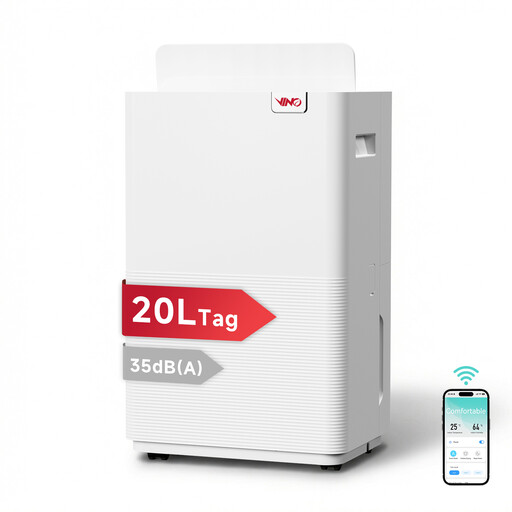 Image unavailable
VINO Smart 20 L, WiFi control, 2.5 L tank
Worth considering for a damp room or indoor laundry drying, once you’ve checked the model is suitable for the space. The stated extraction rate is 20 L/day at 30 °C and 80% relative humidity; the title lists three modes and a 2.5 L tank.
If you’re planning to use continuous drainage, check the slope and hose specifications. In an occupied room, compare the noise level in the mode you’ll actually use.
View on Joybuy
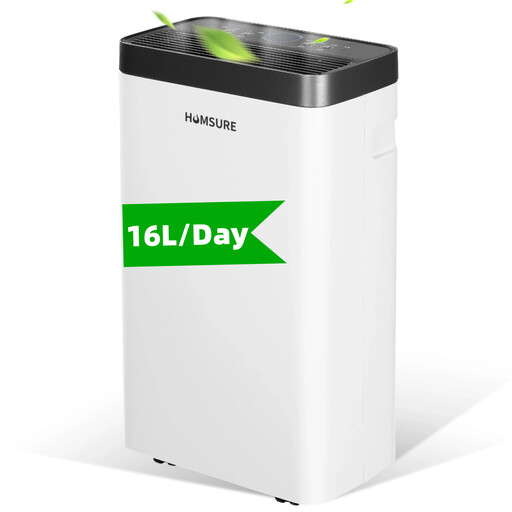 Image unavailable
HUMSURE 16 L/day, 1.4 L tank
Consider this if drying laundry or dealing with prolonged periods of damp is the reason you’re buying. The title lists 16 L/day, a 1.4 L tank, a 24-hour timer and automatic defrost.
Before using it in a cool space, check the minimum permitted temperature. Also compare the conditions behind the 16 L/day figure with those in your room, and check the route for any planned drainage.
View on Joybuy
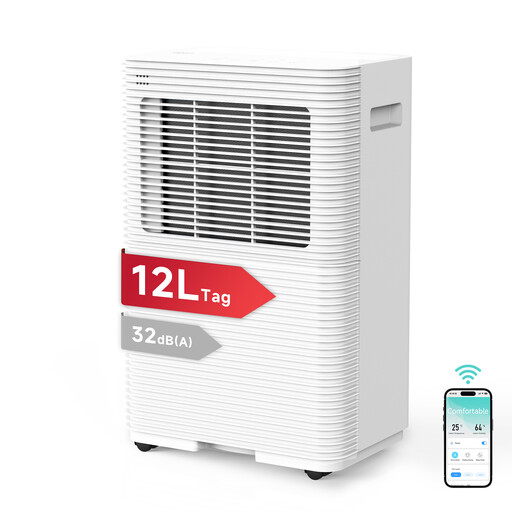 Image unavailable
VINO Smart 12 L, WiFi control, 1.8 L tank
Worth considering for a room that matches the model’s stated capacity, or for occasional use when drying laundry. The stated extraction rate is 12 L/day at 30 °C and 80% relative humidity; the title lists three modes and a 1.8 L tank.
If noise or emptying the tank is a particular concern, check the noise level in the mode you plan to use and the instructions for connecting the drain.
View on Joybuy
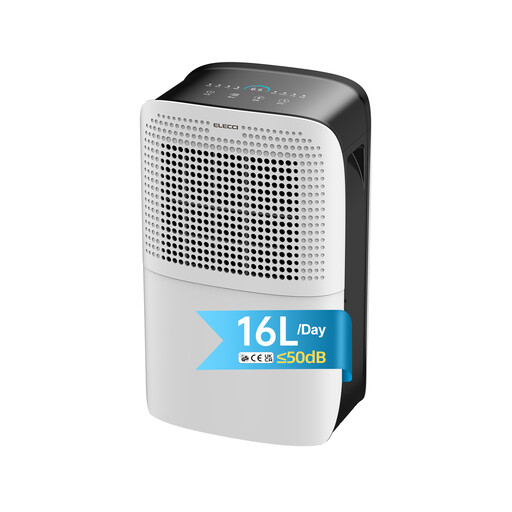 Image unavailable
ELECCI 16 L/day, drain hose, 3.1 L tank
The included drain hose may be suitable if you have a gravity-fed outlet; the tank provides another way to collect the water. The title lists 16 L/day, four modes and a 3.1 L tank.
For a bedroom or cool space, check the noise level and permitted temperature range. Also check the slope and whether the hose is compatible with your set-up.
View on Joybuy
 Image unavailable
Comfee MDDN-10DEN7, 10 L/24 h
Worth considering for a damp room once you’ve compared its volume with the model’s stated capacity. The title lists an extraction rate of 10 L/24 h and R290 refrigerant.
Before comparing this capacity with other appliances, check the test conditions. The stated room-size recommendations for this model vary, so check the recommended room volume in the relevant documentation.
View on Joybuy
Frequently asked questions
When should you have your home checked before buying a dehumidifier?
Prioritise finding the cause if you notice a leak, water ingress, poor ventilation or persistent damage. A dehumidifier won’t fix these problems; ANIL notes that a home’s ventilation must be able to remove the moisture produced through normal occupancy.
Do litres per day tell you which room size is suitable?
No, an L/24 h figure alone isn’t enough to determine the right room size. For example, De’Longhi lists 20 L/24 h at 30 °C and 80% relative humidity for the DDSX220; compare the test conditions, then check the model’s recommended capacity for your room’s volume.
Should you choose a tank, continuous drainage or a pump?
Choose a tank if you can empty it easily, or continuous drainage if there’s a compatible outlet lower than the appliance. If the water needs to be lifted, check that the model has a pump and find out how high it can pump: De’Longhi lists up to 5 m for the DD230P. Measure the route and check the installation instructions for your chosen model.
Is a compressor dehumidifier suitable for a cool basement?
It may be suitable, but only if the basement temperature is within the permitted range for the model you choose. Wood’s presents its adsorption WDD90 as an option for colder areas; still, compare its operating range, noise level, power consumption and installation instructions with your needs.


