A dehumidifier can complement ventilation when excess moisture is confined to one room, but it won’t fix a leak or a building defect. Start by measuring humidity and checking the air inlets and ventilation, as ADEME recommends. If marks persist on the walls, France Rénov’ advises having their cause investigated. When choosing an appliance, compare the conditions used for its measurements with the room’s volume, temperature and actual use.
Who is this guide for?
The cause of the damp and the room’s temperature matter just as much as the appliance’s stated capacity.
People using a living room or damp utility room
In a heated room where laundry takes a long time to dry or condensation keeps coming back, measure the humidity and check the ventilation before considering an appliance. Then compare the room’s volume, the noise level near occupied spaces and how the water will be drained.
People dealing with persistent damp marks
Damp marks on walls call for investigation into their cause, not just removal of moisture from the air. France Rénov’ recommends having these marks investigated. ADEME also advises checking the vents and ventilation system if your home remains too damp.
People using a cellar or an unheated space
For a cellar, garage or second home, note the lowest temperature in the space before comparing capacities in litres per day. Check that the model you’re considering is approved for use at that temperature and that its drainage method is suitable for the location.
What should you check before choosing?
Start by establishing where and when the damp persists, then compare appliances under the conditions in the room concerned, rather than judging them by their stated capacity alone.
| Priority |
What to check |
What I need |
| Cause of the damp |
Measure the humidity in the room concerned. Check the air inlets, vents and ventilation system; have any persistent marks on the walls investigated. |
I want to know whether an appliance can complement the ventilation, without leaving an underlying cause in the home uninvestigated. ADEME recommends checking the ventilation if damp persists; France Rénov’ advises having the marks investigated. |
| Room and temperature |
Compare the room’s actual volume with the coverage stated for the model. Note the lowest temperature in the space and check the conditions given for its capacity in L/24 h. |
Is my room heated all year, or is it a cold cellar? A capacity stated under specific test conditions does not, on its own, tell me how the appliance will perform in my space. |
| Collected water |
Check the tank capacity and whether the appliance switches off when the tank is full. For extended use, check the connection, hose and water outlet route; if the water needs to be pumped upwards, you’ll need a suitable solution. |
If I can’t empty the tank regularly, I need to be able to connect the appliance to a drain that’s compatible with its drainage system. |
| Use in an occupied room |
Check the noise level and the setting it applies to. Check the humidity controls and filter maintenance instructions for the exact model. |
Near a living room or bedroom, noise matters just as much as monitoring humidity. Qualitel generally gives 40 to 60% as the reference range for relative humidity in a home; this is a guide, not a way to diagnose the cause of marks on walls. |
What pitfalls should you avoid?
-
Using the appliance instead of checking the ventilation
Removing water from the air won’t fix faulty ventilation or the cause of persistent marks. ADEME recommends checking the vents and ventilation system if your home remains too damp; France Rénov’ advises identifying the cause of the marks.
Check the air inlets and ventilation, measure the humidity, then have any marks on the walls investigated before treating the appliance as a long-term solution.
-
Choosing based on litres per day alone
A stated capacity depends on the conditions under which it was measured. A model’s maximum stated coverage also doesn’t guarantee that it can handle several open-plan rooms.
Compare the test conditions, stated coverage, volume and temperature of your room. Also consider the noise and how the collected water is handled.
-
Overlooking the temperature in a cellar or garage
Operating temperature ranges vary between models. For example, Wood’s states that the SW23FW can be used from +2 °C; this feature isn’t available on every dehumidifier.
Note the lowest temperature in the space and check the stated operating range for the exact model before buying.
-
Overlooking the tank, drainage and filter
A tank needs emptying; continuous drainage requires a suitable route for the water to flow away. The filter needs the maintenance specified in the model’s instructions.
Before planning frequent use, check the tank capacity, the full-tank shut-off, whether a hose is supplied or compatible, and the maintenance instructions.
Without suitable continuous drainage, plan to empty the tank regularly by hand.
Which brands are useful points of reference?
These ranges illustrate different uses and features to compare; the figures quoted are those stated by the manufacturers for the models listed.
Rowenta
Rowenta presents the Extrême Dry Compact+ DH5260F0 as suitable for a heated living space or laundry-drying area.
- For this model, Rowenta states a capacity of 16 L/day, maximum coverage of 40 m² or 100 m³, a 3 L tank and a 1 m drainage hose.
- Check the room’s volume and the conditions associated with the stated capacity; the stated coverage is no substitute for diagnosing damp caused by the building itself.
De’Longhi
The Tasciugo AriaDry Multi range includes home models with different drainage options and operating conditions.
- De’Longhi states a capacity of 14 L/24 h at 30 °C and 80% relative humidity for the DEXD214RF, with continuous drainage.
- The DD230P, also presented by De’Longhi, offers a different drainage solution thanks to its pump. Check the exact model, noise level and installation options rather than assuming that one model’s features apply to the whole range.
Wood’s
Wood’s presents the SW23FW as suitable for a cellar, garage or loft.
- For the SW23FW, the brand states a capacity of up to 13,5 L/day, a hose connection and operation from +2 °C.
- Check the actual temperature in the space, the drainage and the noise level of the model you’re considering; stated suitability for a cellar doesn’t mean it will be comfortable to use in a bedroom.
Dehumidifiers available on Joybuy
These electric models are designed for home use, including in living spaces and utility rooms. Before choosing one for a persistently damp home, check the ventilation. If you’re buying for a cellar that isn’t heated much, also check the minimum permitted temperature for the exact model.
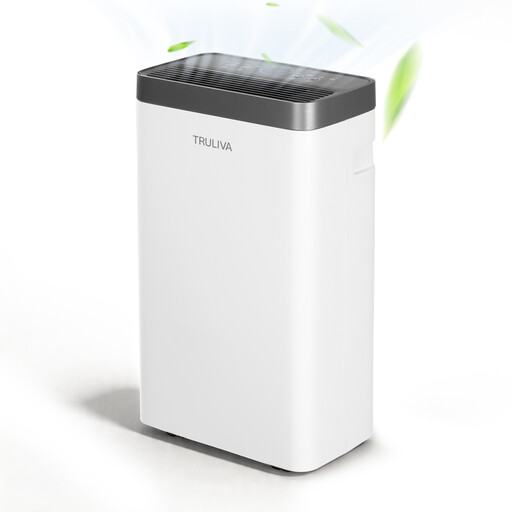 Image unavailable
TRULIVA AP10-2012EE dehumidifier, for rooms up to approximately 32 m²
Worth considering for a room at home or for drying laundry, after checking the ventilation. The title states that it has a 24-hour timer, automatic defrost and continuous drainage. Check the exact humidity setting range for this version and the operating conditions if the room is cool.
View on Joybuy
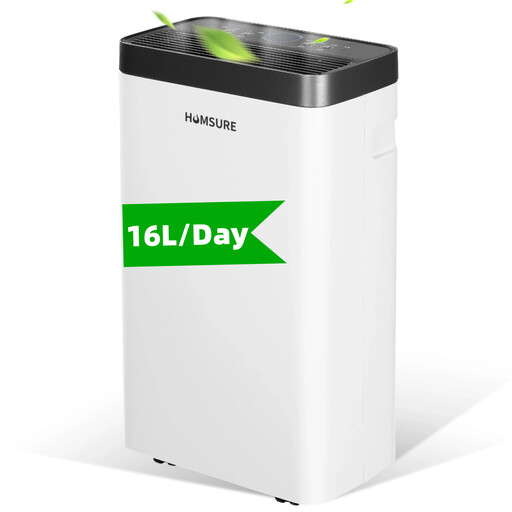 Image unavailable
HUMSURE 16 L/day dehumidifier for 25 m²
For a room within the stated coverage, compare the stated capacity with the manufacturer’s measurement conditions. The title lists a 1,4 L tank, a 24-hour timer, defrost and automatic shut-off. Check the available modes and minimum temperature if the space isn’t heated much.
View on Joybuy
 Image unavailable
Comfee’ MDDN-10DEN7 dehumidifier, 10 L/24 h
A home-use option to compare for a room where you’ve measured the humidity. The title lists an LED display and automatic operation. Check the coverage for this version before choosing a size: the stated floor area varies across listings for this model.
View on Joybuy
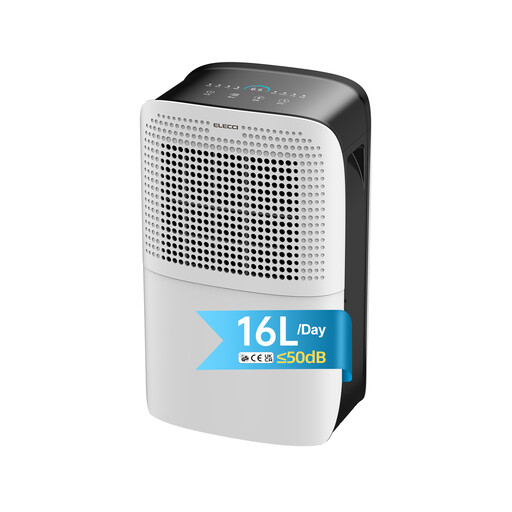 Image unavailable
ELECCI 16 L/day dehumidifier with a 3,1 L tank
Worth considering if managing collected water is important for extended use. The title lists a hose, continuous drainage, four modes, automatic defrost and a 24-hour timer. Check the floor area covered by this version, as the figures given for this model vary.
View on Joybuy
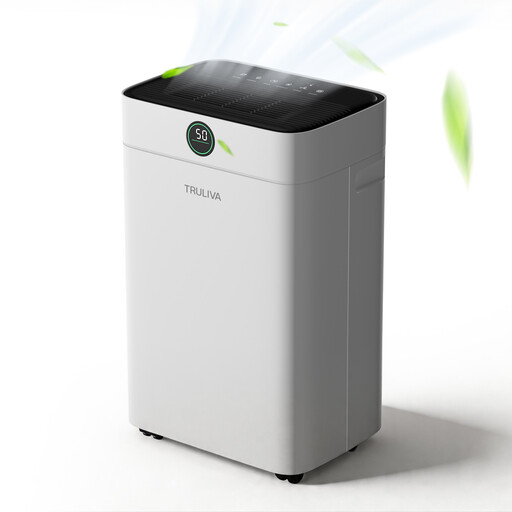 Image unavailable
TRULIVA 25 L/day dehumidifier with laundry mode
Worth comparing for a utility room, but don’t assume the stated capacity will deliver the same results in every room. The title lists a 2,8 L tank, a continuous drainage hose and automatic defrost. Check the coverage, operating temperature and noise level for the space you have in mind.
View on Joybuy
Frequently asked questions
When should you check the ventilation before buying a dehumidifier?
Check it if the damp persists despite your usual airing routine. ADEME recommends checking the vents and ventilation system in this situation. If marks remain visible on the walls, France Rénov’ advises having their cause investigated. An appliance can remove moisture from the air without fixing the underlying cause.
What humidity level should you aim for in a room?
Qualitel generally gives 40 to 60% as the reference range for relative humidity in a home. Measure it in the room concerned and note how it varies with factors such as temperature and activities. A reading alone can’t diagnose the cause of marks on the walls.
Are litres per day enough to compare two appliances?
No. Also compare the measurement conditions, the space’s volume and temperature, the noise level and how the water is drained. For example, De’Longhi states a capacity of 14 L/24 h for the DEXD214RF at 30 °C and 80% relative humidity; this figure doesn’t automatically reflect the conditions in your room.
When should you consider continuous drainage?
It’s worth considering if the appliance needs to run for long periods or if regularly emptying the tank would be inconvenient. Check that the model accepts a hose, that the water can flow to the drain and, if it needs to be pumped upwards, that a suitable pump is included.


