
Livraison le jour même ou le lendemain

Qualité garantie

Débloquez vos offres de bienvenue: Livraison GRATUITE | Jusqu'à -80 % | 30 jours d'essai gratuits à JoyPlus
Téléchargez l'application
Condensation in a bedroom, a musty smell in the cellar, laundry that takes hours to dry, or dark marks around your windows – these signs can all point to excess moisture. A dehumidifier helps to purify the air, but not all appliances are designed for the same rooms or the same uses.
Before you place an order, three common mistakes keep cropping up:
For a studio flat, a bedroom, or a small bathroom, an appliance rated at 10 or 12 litres per day may be sufficient, depending on the humidity level. In a large room, a cellar, or for regularly drying laundry, a capacity of 16 to 25 litres per day gives you more leeway.
These figures don't guarantee the same results in every situation. They are measured at a specific temperature and humidity level. In a cold cellar, for example, choose a model with an automatic defrost function to limit frost forming on the heat exchanger.
A large tank means fewer trips to empty it, but it also makes the appliance heavier when full. With a continuous drainage hose, water can be directed to a drain, provided the drain is lower down and the hose isn't kinked or blocked.
In a bathroom, however, avoid spots that are exposed to splashes. A dehumidifier is still an electrical appliance: place it on a stable, dry surface with plenty of clearance.
In a bedroom, look for a quiet dehumidifier with a sleep mode. Models rated between 35 and 50 dB can only be compared if the measurements were taken under similar conditions, because the fan speed affects the noise level.
The power rating is also worth a look. A 200 W appliance doesn't necessarily draw that power continuously: thanks to its humidistat, it can switch off the compressor once the set humidity level is reached. A 24-hour timer also helps to limit unnecessary running time.
The washable filter should be cleaned regularly, often every two weeks depending on the environment. If it becomes clogged, it reduces airflow and can affect the appliance's performance.
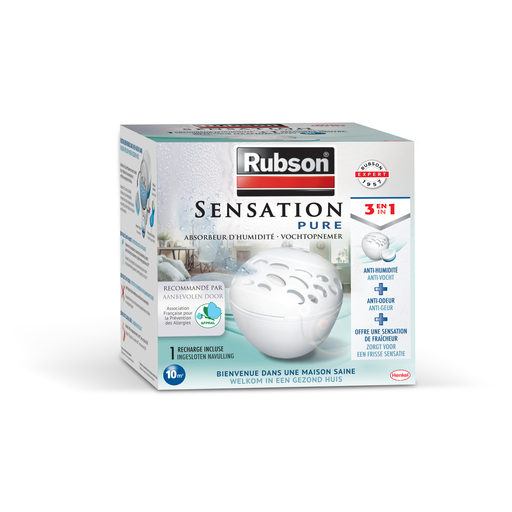
Why this choice makes sense: This electricity-free absorber is suitable for small rooms up to 10 m², cupboards, caravans, and poorly ventilated spaces when you want a simple, plug-free solution.
It requires no electrical tank or power socket. However, you will need to replace the refill and keep the crystals out of reach of children and pets.
Completely silent operation, no electricity consumption, a 300 g refill included, and intended for use in spaces up to 10 m².
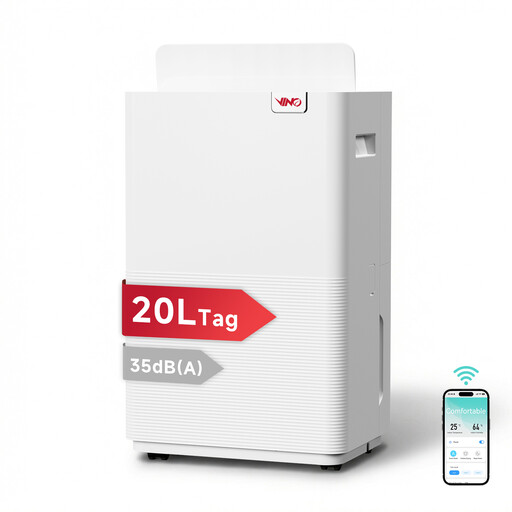
Why this choice makes sense: App control and remote scheduling may appeal to owners of a large living room, a flat, or a second home.
The spec states a capacity of 20 L per day, a 2.5 L tank, and two drainage options. The continuous drainage must still be installed correctly, by gravity.
App control, sleep mode rated at 35 dB, laundry drying function, child lock, and antibacterial PET filter.
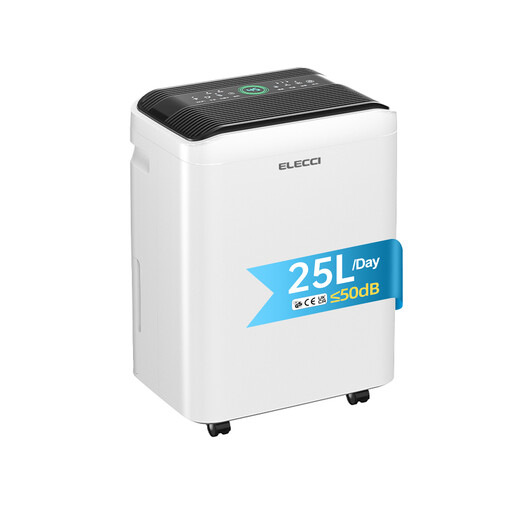
Why this choice makes sense: With its stated 25 L per day and 4.8 L tank, this model is aimed at cellars, utility rooms, large rooms, and situations with persistent dampness.
The spec mentions continuous drainage, automatic defrost, and auto shut-off when the tank is full. The hose must always be connected to a suitable drain.
Three speeds, laundry drying mode, 24-hour timer, 360° swivel castors, and a stated noise level of 36 dB.
We've put together a comprehensive, real-time selection of products that meet these demanding criteria as well as European safety standards.
A dehumidifier can reduce condensation and damp-related odours. However, it does not replace effective ventilation, repairing a leak, or calling in a professional if you have significant mould.
A compact model with a night mode and an adjustable humidistat will generally be the most practical. Check its noise level, tank capacity, and overall size. If the humidity is only moderate, an electricity-free absorber may also be sufficient in a small bedroom.
It all depends on the appliance's power rating, how long it runs, and your electricity tariff. To get an estimate, multiply its power in kilowatts by the number of hours of use, then by the cost per kilowatt-hour. A humidistat and a timer can help cut down on unnecessary cycles and reduce your bill.
This varies depending on maintenance, how often it's used, and the conditions in the room. Cleaning the filter, keeping the grilles clear, avoiding water splashes, and following the recommended rest period after transport all help to extend the appliance's life. If you notice a persistent drop in performance, a leak, or unusual noise, stop using it and consult the manual or customer service.