
Livraison le jour même ou le lendemain

Qualité garantie

Débloquez vos offres de bienvenue: Livraison GRATUITE | Jusqu'à -80 % | 30 jours d'essai gratuits à JoyPlus
Téléchargez l'application
Condensation on windows, musty smells, laundry that takes hours to dry, or cold walls in a basement – damp can quickly become a problem, especially in poorly ventilated homes. To tackle it, you have two main options: a moisture absorber that doesn't need electricity or an electric dehumidifier.
The right choice depends above all on the area you need to treat, the amount of moisture present, and the level of comfort you're after. Before you head to the checkout, it's also worth knowing the most common pitfalls.
A moisture-absorbing sachet can work perfectly well in a cupboard, drawer or car. However, it won't stand a chance in a 30 m² basement. The same goes for small electric appliances, which can quickly show their limits in a very humid utility room or while drying laundry.
Start by checking the stated coverage area, given in square metres, then compare it to the room in question. Leaving a door open won't magically turn a model designed for a bedroom into one that can handle an entire house.
A stated capacity of 12, 16 or 25 litres per day is usually measured in warm, very humid conditions. In a cooler room, like a basement, the actual performance can therefore be noticeably different.
This figure is still handy for comparing models, but you should also look at the operating temperature range, the airflow rate, whether it has automatic defrost, and the water drainage options.
A small tank can fill up faster than you might think. If the appliance stops as soon as the tank is full, you'll need to empty it regularly. For prolonged use, go for a dehumidifier with continuous drainage, supplied with a hose or compatible with a suitable connector.
The filter also needs cleaning according to the manufacturer's recommendations. If it gets clogged with dust, it reduces airflow, sometimes makes the unit noisier, and can push up the electricity consumption.
For a bedroom or small living room, a model that can extract 10 to 12 litres per day may be enough, depending on the humidity level. In a utility room, basement or large room, a capacity of 16 to 25 litres per day gives you more leeway.
Chemical absorbers work differently. A Rubson moisture absorber with refill can suit a room of 10 to 20 m², while a Minifresh sachet is designed for a much smaller space, such as a cupboard or walk-in wardrobe.
In a bedroom, check the noise level carefully – it's given in decibels – and look for a night mode. Multiple fan speeds also let you adapt the appliance to each situation: maintaining a stable humidity level, speeding up laundry drying, or opting for quieter operation.
The power rating, given in watts, gives you an idea of the instant energy consumption. A 24-hour timer, automatic humidity measurement, and a shut-off once the desired level is reached all help avoid running the appliance longer than necessary.
Models with a compressor that use R290 refrigerant must stay perfectly upright, placed on a stable surface with enough clearance around the air inlets and outlets. If the unit has been tilted during transport, follow the waiting time stated in the manual before plugging it in.
In a bathroom, never place an electric appliance near an area exposed to splashes. In a very small space, a non-electric absorber can be simpler to use, as long as you keep it out of reach of children and pets.
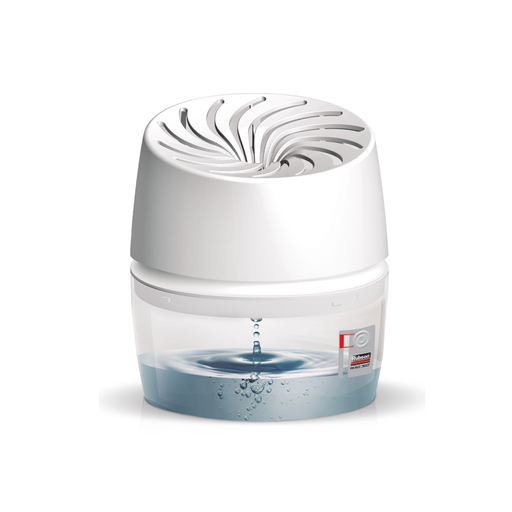
Why this choice suits this profile: No electricity needed, this model works in a bedroom, office or bathroom up to 20 m². It runs without compressor noise or complicated settings.
Its stated coverage area and refill indicator stop you mistaking it for an electric appliance that can handle a large room.
Silent operation, no electricity needed, with pouring spout and 450 g refill included.
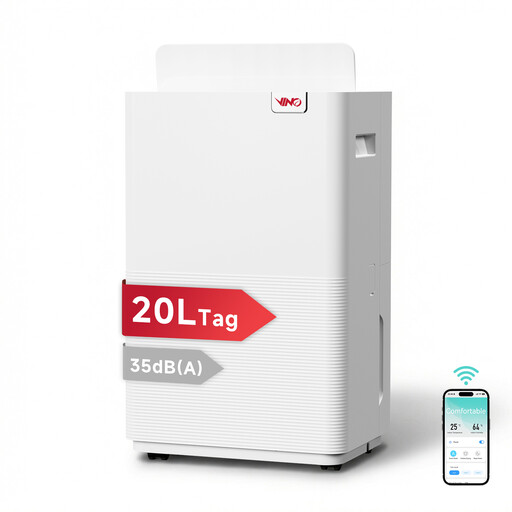
Why this choice suits this profile: App control, 24-hour programming and sleep mode: this model meets the expectations of a connected home up to around 40 m².
It states a capacity of 20 L per day, a 2.5 L tank and two drainage options: concrete information, rather than just a promise of comfort.
Wi-Fi control, laundry drying mode, washable filter and continuous drainage possible.
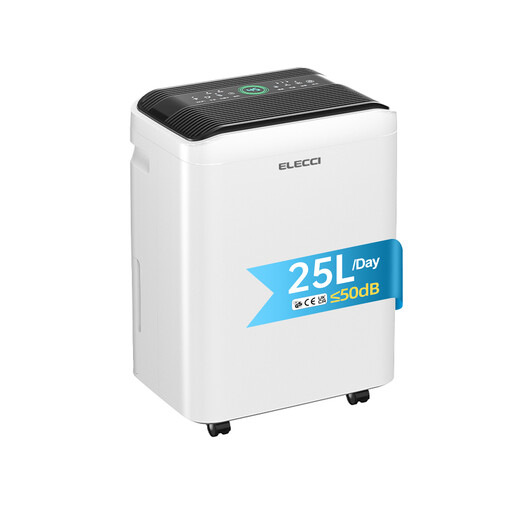
Why this choice suits this profile: With its stated 25 L per day, this model targets basements, utility rooms and large spaces where damp is a persistent problem.
The automatic defrost and drainage hose address the demands of use in a cool room or without supervision.
4.8 L tank, three fan speeds, 24-hour timer, laundry mode and stated noise level of 36 dB.
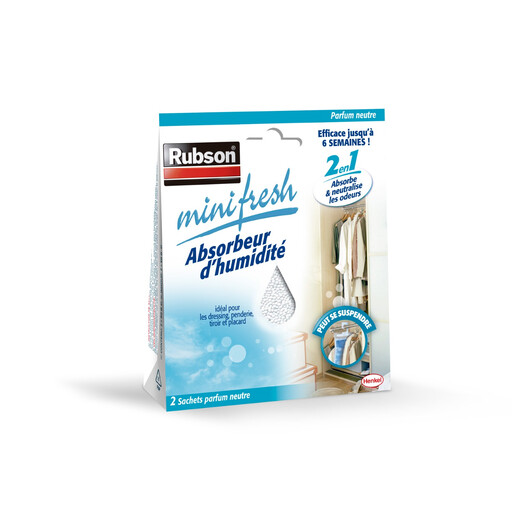
Why this choice suits this profile: These sachets are designed for small enclosed spaces of 1 to 2 m², such as a walk-in wardrobe, shoe cupboard, drawer or car.
Its usage area is clearly limited to small volumes, which stops you using it to treat an entire bedroom.
Hang or place format, beads that turn moisture into gel, and odour-neutralising action.
We've put together a comprehensive list, updated in real time, of products that meet these demanding selection criteria and European safety standards.
Start by looking at the noise level, whether it has a night mode, and the coverage area. A non-electric absorber may be enough in a small, low-humidity room. If condensation keeps coming back, an electric dehumidifier with automatic control and a timer will be far more practical.
It all depends on the appliance's power rating, how long it runs, and the rate your electricity supplier charges. To get an estimate, multiply its power in kilowatts by the number of hours of use, then by the price per kilowatt-hour. Automatic mode, the timer and continuous drainage can help cut down unnecessary cycles.
A sachet or refill needs replacing once it's saturated. How long it lasts depends on the temperature and humidity level. An electric appliance can last several years if its filter is maintained, its tank is emptied properly, and its grilles stay clear. Before buying, the manufacturer's recommendations and warranty terms are your best reference.