
Livraison le jour même ou le lendemain

Qualité garantie

Débloquez vos offres de bienvenue: Livraison GRATUITE | Jusqu'à -80 % | 30 jours d'essai gratuits à JoyPlus
Téléchargez l'application
Excessive humidity in a home is a serious problem. Condensation on windows, musty odours, laundry that struggles to dry, and, most importantly, the appearance of mould... the signs are unmistakable. Faced with this issue, an air dehumidifier presents itself as the most effective solution. But with an overwhelming number of options making various promises, how can you navigate the market and make the right choice??
In our editorial office, we test dozens of devices each year. Our mission: to help you see things more clearly. Let's break down the pitfalls to avoid and the essential criteria for finding the device that will truly meet your needs.
Before diving into the technical specs, it's crucial to be aware of the seemingly good ideas that lead straight to disappointment.
To make an informed choice, focus on these three fundamental parameters. On their own, they determine 90% of your future device's performance.
This is THE number one technical criterion. It indicates the volume of water the device can extract from the air in 24 hours, under standard test conditions (often 30?°C and 80% relative humidity).
The electric dehumidifier comes in two main technologies.
Beyond raw power, certain options truly make daily life easier:
Rather than an endless catalogue, here are our targeted recommendations for three distinct user profiles.
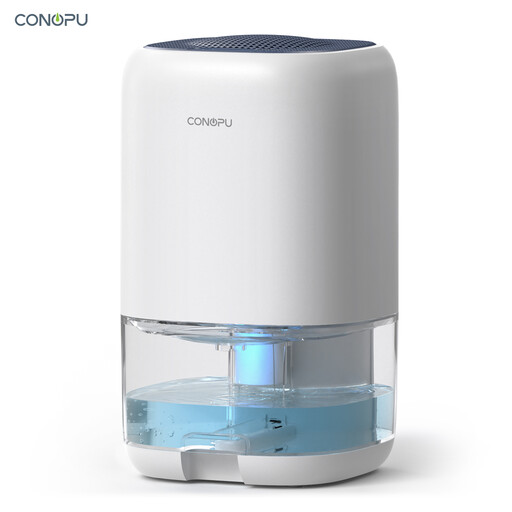
Why this pick? Perfect for tackling a very localised humidity problem: bathroom, walk-in closet, camper van... Its Peltier technology ensures nearly silent operation, and its compact size allows it to fit anywhere.
It doesn't promise the moon or claim to treat a living room. It is tailor-made for its mission: an effective and discreet supplementary solution for spaces up to 15 m?, where a chemical absorber would be overwhelmed.
Ultra-quiet operation and negligible power consumption. Its removable and washable tank makes maintenance much simpler.
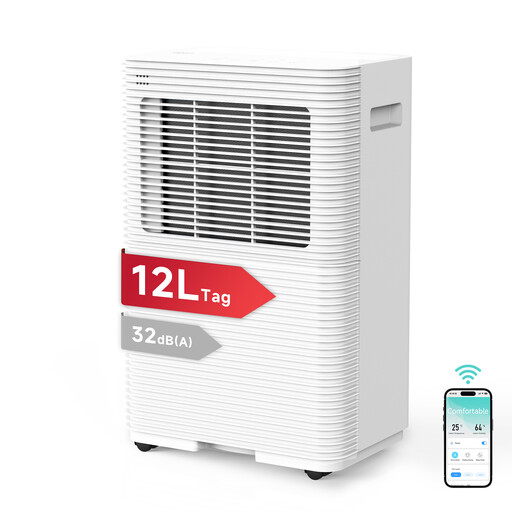
Why this pick? This is the ultimate Swiss Army knife. Its 12 L/day capacity is perfect for living areas up to 24 m?. It combines a laundry dry mode, quiet operation, and remote control via its app.
It tackles the noise issue head-on with a 32 dB night mode, making it perfectly suitable for use in a bedroom. Its capacity is well-calibrated for the recommended area, avoiding the trap of being undersized.
Control via the Wi-Fi app to program and adjust humidity remotely. Its ultra-quiet night mode is a real asset for optimal nighttime comfort.
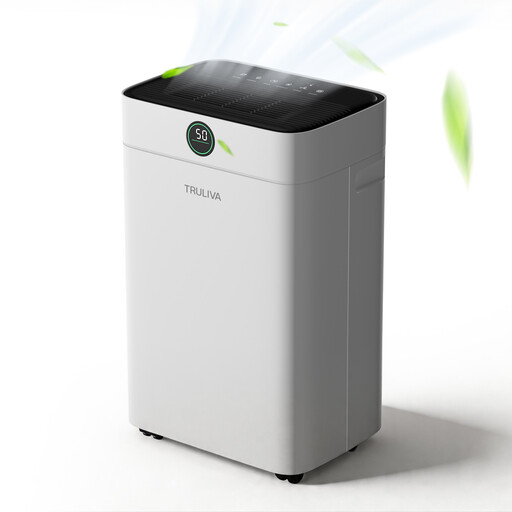
Why this pick? For the most severe humidity cases. With its 25 L/day extraction capacity, it's built for basements, cellars, garages, or large, very damp living areas. A powerful solution for a deep treatment.
It avoids the trap of being undersized by delivering ample power. Its continuous drainage option makes it completely autonomous, which is ideal for a basement where daily tank emptying is not feasible.
Its very high extraction capacity (25 L/day) and auto-defrost function ensure consistent performance, even in cooler locations like a basement.
Discover our full selection of devices tested and approved by our editors, which meet our performance criteria and current safety standards.
Consumption depends on its power (in Watts) and its duration of use. A 200?W compressor model running 8?hours a day will consume 1.6?kWh. The secret to keeping your bill in check? Choose a device with a humidistat. It will only turn on when necessary, thus optimising its consumption.
As a general rule, no. The ideal is to use the humidistat to maintain a healthy humidity level (between 40% and 60%). Continuous operation should be reserved for emergencies: drying a room after water damage, using the "laundry dry" mode, or intensively treating a very damp basement.
For maximum efficiency, place it on a flat, stable surface, leaving a space of at least 20 to 30?cm all around it to ensure good air circulation. For general treatment, a central position is ideal. To combat condensation on a window, place it nearby.