
Livraison le jour même ou le lendemain

Qualité garantie

Débloquez vos offres de bienvenue: Livraison GRATUITE | Jusqu'à -80 % | 30 jours d'essai gratuits à JoyPlus
Téléchargez l'application
An overly damp home is a well-known menace: condensation on the windows, musty odours, and even the appearance of mould... To fix this, the first instinct is often to turn to an air dehumidifier. But be careful—the market is saturated with models making tempting promises, and it's easy to get lost or make the wrong choice.
As a product expert at Joybuy, my role is to help you cut through the noise. Let's forget the marketing jargon and focus on what's essential. Here are the most common pitfalls to avoid and the key criteria for finding the right solution for you.
The 2 classic mistakes that make a purchase pointless:
To make an informed choice, you need to understand a few technical benchmarks. These will determine the device's real-world effectiveness for your home's indoor air treatment.
To combat humidity, two main categories of products compete:
The performance of an electric dehumidifier is measured in litres per day (L/day). This value indicates the amount of water it can extract from the air in 24 hours under standard test conditions. It is directly linked to the recommended area in square metres (m?).
As for chemical absorbers, effectiveness depends on the refill size. A 450g tab is often recommended for a room up to 20 m?, but its effect will be most noticeable in smaller spaces (like a closet or wardrobe).
Rather than an endless list, here is our curated selection, designed for different user profiles and based on the criteria we've just discussed.
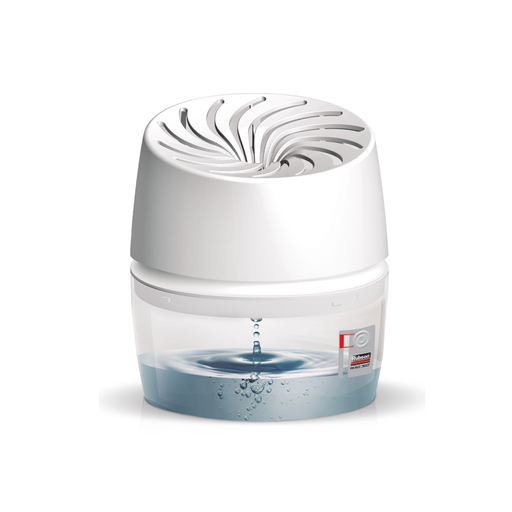
Why we recommend it: Ideal for a highly localized damp problem (wardrobe, small bathroom, corner of a room) and for those looking for an ultra-simple, plug-free, and low-cost solution. It's the perfect entry-level choice for treating a confined space.
This product doesn't promise to treat an entire house. Its action is targeted, avoiding the "one-size-fits-all" trap. Its completely silent operation instantly solves the noise issue.
100% autonomous and silent operation. Zero electricity consumption. Incredibly simple to install and refill.
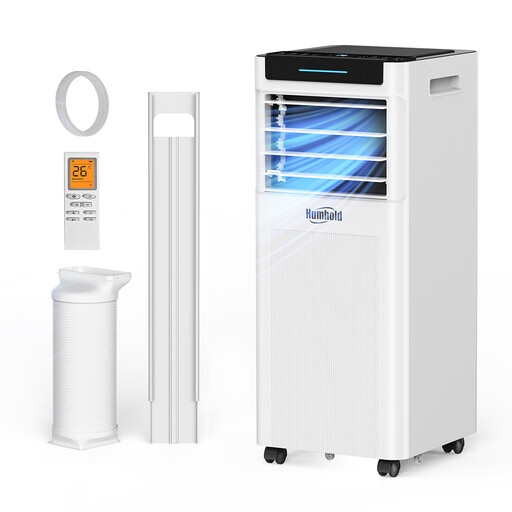
Why we recommend it: For those who live in an apartment and suffer from the double whammy of heat and humidity in the summer. This 3-in-1 device (AC, dehumidifier, fan) is a complete solution for restoring comfort in a bedroom or office up to 28 m?.
It meets the dual need of cooling and purifying the air. Its spec sheet advertises a night mode under 49 dB, a major selling point for using it in a bedroom without disturbing your sleep.
Unbeatable 3-in-1 versatility. High dehumidification capacity (up to 26 L/day). 24-hour timer and sleep mode for customised comfort.
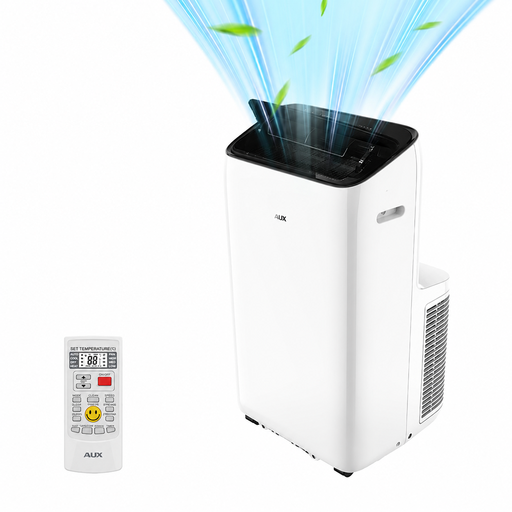
Why we recommend it: Built for large spaces (living rooms, open-plan offices) or critical areas like very damp basements. Its 12000 BTU power and 450 m?/h airflow rate guarantee a fast and effective heavy-duty treatment. The Wi-Fi control is the icing on the cake for smart home enthusiasts.
Its power is clearly stated to avoid any risk of being undersized for the job. The manufacturer highlights a quiet design (52 dB(A) in sleep mode) with sound-absorbing cotton: proof that acoustic comfort wasn't sacrificed for performance.
Very high air-processing capacity. Remote control via Wi-Fi app. Self-evaporating system for minimal maintenance.
Our selection doesn't stop here. To find the perfect solution for your home and budget, browse our full range. We've brought together reliable, high-performance products that are tested and approved.
A refill's lifespan varies greatly depending on the humidity level and temperature. Generally, a 450g tab (like the Aero 360°) lasts between 1 and 3 months in a 20 m? room. Smaller sachets for wardrobes last about 4 to 6 weeks. This is a recurring cost to factor into your budget.
Consumption depends on its power (in Watts) and how you use it. Modern models, especially those with an Energy Class A rating, are much more efficient. The trick to keeping your bill in check is to choose a device with a humidistat (it shuts off automatically when the target humidity level is reached) and to use the timer. Its consumption is often lower than that of a small space heater.
Yes, but not at the same time! For maximum efficiency, an air dehumidifier (chemical or electric) should run with doors and windows closed. Its job is to treat the air inside. However, this doesn't mean you can skip ventilating for 10 to 15 minutes each day to refresh the air and expel pollutants. This is a golden rule for a comprehensive and effective anti-humidity treatment. For a portable air conditioner, venting the hot air through a hose is mandatory, but the room must also remain closed.