
Livraison le jour même ou le lendemain

Qualité garantie

Débloquez vos offres de bienvenue: Livraison GRATUITE | Jusqu'à -80 % | 30 jours d'essai gratuits à JoyPlus
Téléchargez l'application
Excessive humidity in your home is often where the problems begin. Condensation on the windows, musty odours, mould spots appearing in corners... These warning signs reveal an environment that is damaging not only your property but also your comfort and health. To combat this menace, an air dehumidifier stands out as the most effective solution.
The problem is, the market is flooded with models making sometimes outlandish claims, and it's easy to make the wrong choice. As product experts, our role is to help you see things more clearly. Here are the most common pitfalls to avoid before you invest.
To find the device that will truly meet your needs, focus on a few objective technical specifications.
The extraction capacity, expressed in litres per day (L/day), is the volume of water the unit can remove from the air in 24 hours. This figure should be matched to the room's surface area (m?) and its humidity level.
Noise is THE ultimate comfort criterion, especially if the unit is intended for a bedroom or living room. Here are some benchmarks:
An energy-efficient dehumidifier will save you from unpleasant surprises on your electricity bill. Check the power rating in Watts (W) and favour models that use the more eco-friendly R290 refrigerant gas.
Some options can be a real game-changer:
Rather than an endless list, we've selected three models that meet very specific needs, based on the criteria we've just discussed.
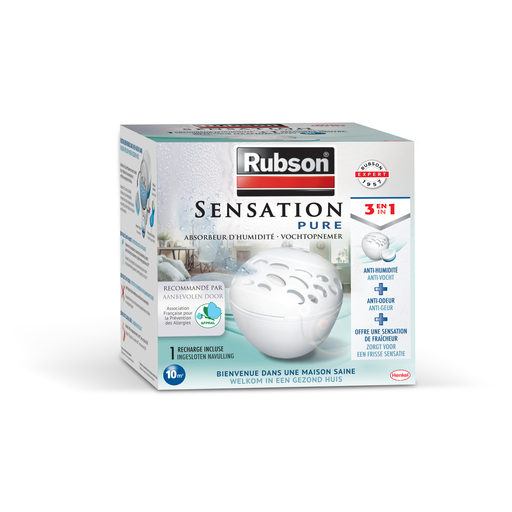
Why we chose it: The simplest, electricity-free solution for a cupboard, wardrobe, or a very small bathroom (up to 10 m?). Cost-effective to buy, it is by nature completely silent.
This product is refreshingly straightforward: it's a chemical absorber, not an electric dehumidifier. Its use case is perfectly targeted: very small spaces where an electric unit would be unnecessary and overkill.
Zero electricity consumption, making it economical and ensuring absolute silence. A significant bonus: it is recommended by AFPRAL (the French Association for the Prevention of Allergies) for its preventive action against dust mites and mould.
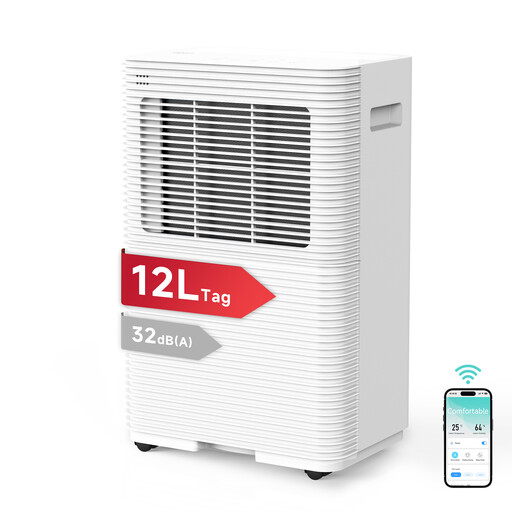
Why we chose it: The perfect compromise for living spaces up to 24 m?. It combines a 12 L/day capacity with modern features like app control and a genuinely discreet night mode.
It debunks the myth of silence by stating a clear figure: its "Night" mode drops to 32 dB, a sound level low enough not to disturb sleep.
Its remote control via Wi-Fi lets you manage everything from your smartphone. It goes even further with an air purification function (plasma) and an antibacterial filter to sanitise the atmosphere.

Why we chose it: With its 20 L/day capacity, it tackles rooms up to 40 m?. This is the heavyweight you need for severe humidity problems in a cellar, basement, or for intensive use like drying laundry.
No empty promises. Its 20 L/day capacity is advertised under standard conditions (30°C / 80% RH), making it a reliable benchmark for demanding use and a true anti-humidity solution for the home.
Its dual drainage option (2.5 L tank or continuous drain) gives it maximum autonomy. Add the dedicated laundry drying mode and app control, and you get a device that is as versatile as it is powerful.
Our editorial team has selected a full range of products that meet our selection criteria and current safety standards.
It all depends on its power (in watts), how often you use it, and your electricity rate. For example, an energy-efficient 200?W model running for 8 hours a day consumes 1.6?kWh. Based on an average rate of €0.25/kWh, this comes to about €0.40 per day. Models equipped with a humidistat are even more economical, as they only turn on when needed.
No, it's generally not necessary or recommended. The ideal approach is to choose a model with a humidistat to aim for a stable humidity level, typically between 40% and 60%. The device will manage everything on its own. Continuous mode should be reserved for specific situations, such as speeding up laundry drying or after water damage.
The lifespan of a compressor model depends on its build quality and, most importantly, its maintenance. On average, you can expect a lifespan of 5 to 10 years. Regular maintenance is key: remember to clean the air filter (about every two weeks) and dust the grilles. This is the best way to ensure its performance and make it last.