
Livraison le jour même ou le lendemain

Qualité garantie

Débloquez vos offres de bienvenue: Livraison GRATUITE | Jusqu'à -80 % | 30 jours d'essai gratuits à JoyPlus
Téléchargez l'application
Excessive humidity in a home is never a good sign. Condensation on windows, musty smells, mould patches appearing in corners… These are all warning signs of an overly damp environment that can damage your property and affect your comfort. To restore a healthy indoor atmosphere, an air dehumidifier is often the most direct and effective solution.
However, the market is flooded with models making various promises, and it's easy to make the wrong choice. Before you buy, here are the 3?most common pitfalls that can turn a good investment into a real source of frustration.
To help you see things more clearly, we've broken down the technical criteria that truly matter and selected devices that meet specific, real-world needs.
Let's ignore the marketing claims for a moment and focus on the technical specifications that truly make a difference in the effectiveness of an electric dehumidifier.
The extraction capacity, expressed in litres per day (L/day), indicates the volume of water the unit can remove from the air in 24?hours under standard test conditions (often 30?°C and 80?% humidity).
A correctly sized unit will operate more economically and protect your home more effectively against dampness and mould.
Noise is a crucial comfort factor, especially if the unit needs to run at night. The sound level is measured in decibels (dB).
Many models offer a "night mode" that slows down the fan for quieter operation.
These options can truly make your daily life easier.
Every home and situation has its own requirements. Here is a selection of products that cater to distinct user profiles.
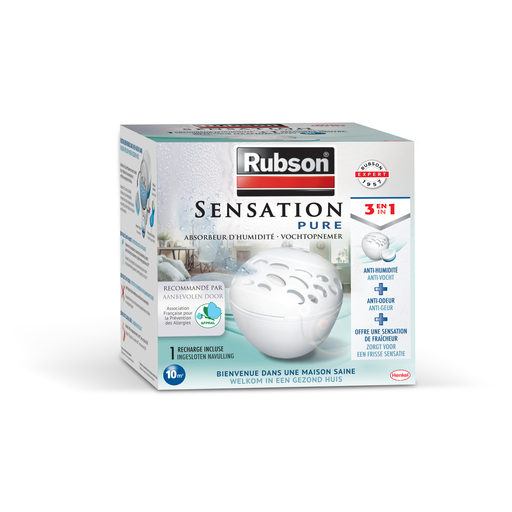
Who is it for ? Perfect for those who want a hassle-free, electricity-free solution for confined spaces: walk-in wardrobes, small bathrooms, cupboards, caravans... This is a chemical moisture absorber, not an electric appliance.
Designed for 10 m?, it's impossible to get the capacity wrong. It's completely silent and requires no emptying : just replace the refill when it's used up.
Self-sufficient, cost-effective, and perfectly silent. A bonus : it is recommended by AFPRAL (the French Association for the Prevention of Allergies) for helping to create an environment hostile to dust mites and mould.

Who is it for ? The perfect all-rounder for an apartment. Its 12L/day capacity is ideal for living areas, and its smart features make it a versatile and easy-to-live-with appliance.
The 'Night' (Sleep) mode tackles the noise issue for bedroom use. The hygrostat and 24-hour timer prevent energy waste by running the unit only when needed.
Its ultra-quiet Night mode and smart humidity management ensure both comfort and energy savings. The dual drainage option (tank or continuous hose) offers maximum flexibility.
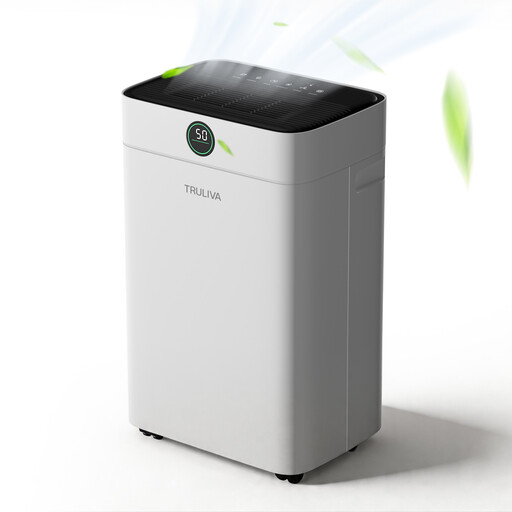
Who is it for ? For those battling stubborn damp in a cellar, basement, or large laundry room. Its power and laundry drying function make it a powerful ally for the most demanding situations.
Its large 25L/day capacity is built for large spaces, eliminating the risk of being undersized. The continuous drainage (hose included) is essential for this type of use and frees you from the chore of emptying the tank.
Its very high extraction capacity ensures fast and effective deep treatment. The dedicated laundry drying function is a real bonus for families or on endless rainy days.
Explore our full selection of products that meet our performance criteria and European safety standards.
It depends on its power rating (in Watts) and how long it runs. For example, a 200?W model running for 8?hours a day will consume about 1.6?kWh. Units equipped with a hygrostat are much more economical, as they only activate when the humidity level rises.
It all depends on the initial humidity level and the size of the room. At first, you may need to run it continuously for a few days to bring the humidity down. Afterwards, a model with a hygrostat will manage itself. In manual mode, 4 to 8?hours per day is often enough to maintain a comfortable level (between 40?% and 60?%).
Absolutely, it's one of their main benefits. Mould needs a damp environment to thrive. By keeping the humidity level below 60?%, a dehumidifier stops it in its tracks, along with dust mites. It is an incredibly effective preventative and remedial solution.