What should you check before buying?
Start by monitoring humidity and checking ventilation. A hygrometer helps you track what’s happening, while a dehumidifier removes water from the air but won’t fix faulty ventilation or water ingress. Qualitel generally puts the recommended indoor humidity range at between 40 % and 60 %; a single reading isn’t enough to identify the cause.
| Concern |
What to check before buying |
Consumers concerned |
| Understanding the humidity you’ve noticed |
Measure humidity at different times and see how it changes after ventilation; check the ventilation if the problem persists. |
If condensation keeps coming back and I don’t know whether it clears between uses, I want to understand what’s happening first. Around 33 % of consumers might put measuring and checking this at the top of their list. |
| Drying laundry indoors |
Compare the extraction capacity under the stated conditions with the size of the room and whether the machine has a laundry mode. |
When I regularly dry laundry at home, I need a machine suited to extended use. This would be the main concern for around 27 % of consumers. |
| Spikes in humidity after showering or cooking |
Continue to ventilate as recommended by ADEME, then check the machine’s portability, noise level and permitted placement in the instructions. |
After a shower or cooking, I want to manage repeated increases in humidity without giving up fresh air. Around 27 % of consumers might prioritise this occasional need. |
| Everyday practicalities |
Check the tank, full-tank alert, noise level and whether continuous drainage can actually be connected. |
If I need to run the machine often, emptying the tank and noise could affect my choice. For around 13 % of consumers, managing these factors might be the main concern. |
Brands to compare
These points relate to the models mentioned, not every machine made by each brand. Always compare the exact model and its operating conditions.
Rowenta
The DH4236F0 is worth considering if drying laundry and controlling humidity are important to you.
- Rowenta states that this model has a capacity of 16 L/day, a laundry mode, a built-in hygrometer and a full-tank alert.
- The stated capacity and room size apply to this specific model. Check its operating conditions rather than assuming they apply to other Rowenta models.
De’Longhi
The Tasciugo AriaDry models mentioned offer different ways to manage water drainage.
- De’Longhi states that the DDSX220 has continuous drainage and the DD230P comes with a 5 m hose and a pump.
- These features vary by model. Check that you have a suitable drainage point, and read the instructions and temperature requirements for the model you’re considering.
Supra
The Supra safety instructions provide practical checks for installing and using the machine they accompany.
- The instructions specify the clearance required, the need for a stable surface, and precautions relating to water and the electrical connection.
- These instructions don’t allow you to compare the performance of the entire range or assume that a particular model is suitable for a bathroom.
Dehumidifiers to consider on Joybuy
These machines are worth considering if you’re looking for a domestic dehumidifier because humidity keeps returning or you dry laundry indoors. Compare their specifications with your room and day-to-day needs, after checking ventilation and the possible causes of persistent damp.
 Image unavailable
VINO Smart, 20 L dehumidifier with WiFi
Worth considering if you often dry laundry indoors or need to manage humidity in a room.
The title states 20 L/day, a 2,5 L tank and three modes: Auto, Dry and Sleep. It specifies a room size of 40 m²; check that this is suitable for your home.
The noise figures in the title and product table differ. Check the figure and its test conditions if the machine will be used near a bedroom.
View on Joybuy
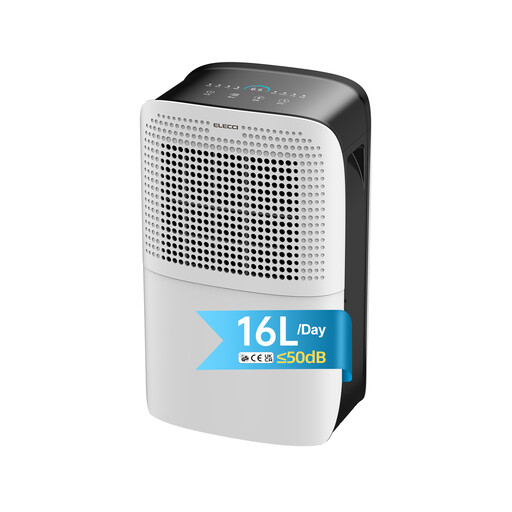 Image unavailable
ELECCI, 16 L/day dehumidifier with hose
Consider this model if you’d like the option of connecting a drainage hose rather than relying solely on emptying the tank.
The title states a 3,1 L tank, continuous drainage, four modes and automatic defrost.
Check the room size it’s suitable for and whether you can connect the hose to a drainage point.
View on Joybuy
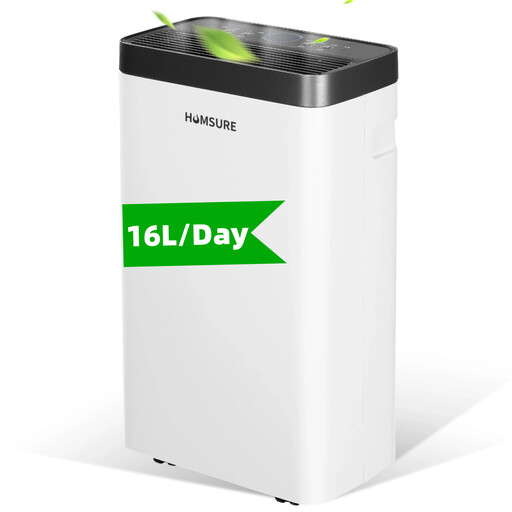 Image unavailable
HUMSURE, 16 L/day dehumidifier, 1,4 L
Worth considering for drying laundry indoors, bearing in mind how often you’ll need to empty the tank if you use it.
The title states a room size of 25 m², a 1,4 L tank, a 24 h timer and automatic shut-off.
The product information gives different figures for the number of modes. Check which modes and settings are available for each version.
View on Joybuy
 Image unavailable
Comfee' MDDN-10DEN7, 10 L/24 h dehumidifier
Worth considering for monitoring and controlling humidity in a room that’s the right size for this model.
The title states 10 L/24 h, an LED display and automatic dehumidification.
The product information gives different figures for the recommended room size. Confirm this before choosing the right capacity for your space.
View on Joybuy
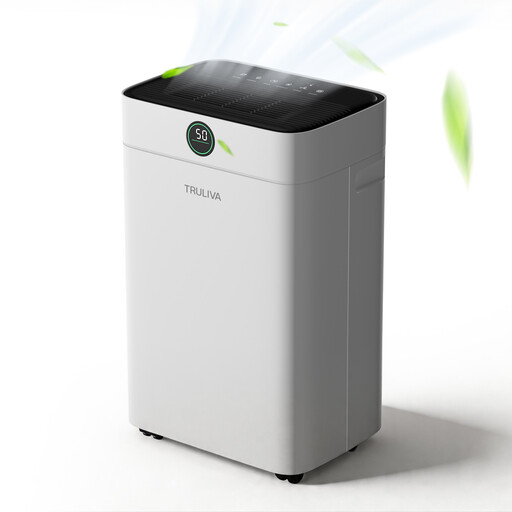 Image unavailable
TRULIVA, 25 L/day dehumidifier with laundry mode
Worth considering if you regularly dry laundry indoors and can set up continuous drainage.
The title states a 2,8 L tank, a continuous drainage hose and automatic defrost.
Check the recommended room size and the distance between the machine and the drainage point you plan to use.
View on Joybuy
Frequently asked questions
Can a dehumidifier replace ventilation after a shower or cooking?
No. ADEME recommends ventilating the bathroom after a shower and the kitchen after boiling water. A dehumidifier can complement these steps if humidity keeps returning, but it can’t replace working ventilation.
What humidity level should I check before buying?
Qualitel generally puts the recommended indoor humidity range at between 40 % and 60 %, and notes that the risk of condensation and mould increases above 70 %. Take readings at different times: a humidity reading alone won’t reveal the cause of the damp.
Can you install an electric dehumidifier in a bathroom?
Don’t assume that any location will be suitable. Check the instructions for your model, its protection rating and the electrical installation at the intended location. If you’re unsure, ask a qualified professional to check the spot.
Why is my dehumidifier collecting very little water?
The humidity in the room may already be low. De’Longhi also advises checking the filter in its FAQ and notes that room temperature can make a difference. For your machine, follow the checks in its own instructions.
What should I check before switching the machine on?
Start by following the instructions for your model. The Supra instructions consulted specify, among other things, a stable surface, clear space around the machine and avoiding contact with wet hands. Follow the connection and maintenance guidance for the machine in question.


