
Livraison le jour même ou le lendemain

Qualité garantie

Débloquez vos offres de bienvenue: Livraison GRATUITE | Jusqu'à -80 % | 30 jours d'essai gratuits à JoyPlus
Téléchargez l'application
Condensation on windows, musty smells, washing that takes ages to dry or a damp cellar: an air dehumidifier can make your home noticeably more comfortable. But not every appliance is suited to the same needs. A non-electric moisture absorber may be enough for a small room, while an electric dehumidifier is better suited to regular use or a larger area.
Before you buy, it’s worth avoiding three common pitfalls.
The stated room size is a useful guide, not a guarantee that will apply in every situation. A well-ventilated 20 m² bedroom doesn’t have the same needs as a cellar of the same size after a leak. In a small room, a crystal moisture absorber may be enough to reduce condensation and odours.
The Rubson Sensation Pure, for example, is designed for spaces of up to 10 m² and works without electricity. Under these conditions, a 300 g refill is said to last around two months, depending on humidity and temperature. This solution is suitable for wardrobes, small bedrooms, caravans or poorly ventilated bathrooms, but it can’t match an electric appliance for quickly treating an entire home.
For a room measuring 20 to 40 m², look for a home dehumidifier with a capacity of 12 to 20 litres per day. For a cellar, workshop or building site, a professional dehumidifier capable of extracting 30 to 90 litres per day will be a better fit.
A tank with a capacity of 1.8 to 3.8 litres is generally suitable for home use, but it may need emptying frequently when the air is very damp. Look for:
A dehumidifier with continuous drainage is especially handy in a utility room or cellar, or when you want to speed up laundry drying. Make sure the hose is properly secured, with no kinks or upward bends that could obstruct the flow.
When choosing a quiet dehumidifier, compare the noise level in night mode rather than relying on the word ‘quiet’ alone. Some models claim to operate at around 30 to 36 dB in this mode, but the compressor may run differently depending on the ambient humidity.
An electric appliance uses more energy than a passive moisture absorber, but it provides more consistent extraction. Also check the rated power, the refrigerant used and the safety instructions. R290 is used in several models in this selection. As it is flammable, you’ll need to follow the recommended safety distances, ventilation requirements and manufacturer’s guidance.
Finally, clean the washable filter as instructed in the manual, often every two weeks in a dusty environment. A blocked filter reduces airflow and can increase the time the appliance needs to run.
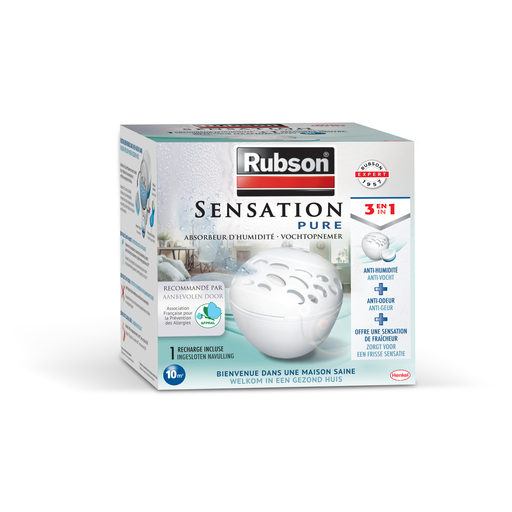
Why it’s a good fit: As it works without electricity, it’s ideal for a small bedroom, wardrobe or bathroom of up to 10 m², with no installation required.
Its recommended area is clearly limited to 10 m², so you won’t be tempted to choose a passive absorber for a large room.
No socket required, quiet operation and a 300 g refill included.
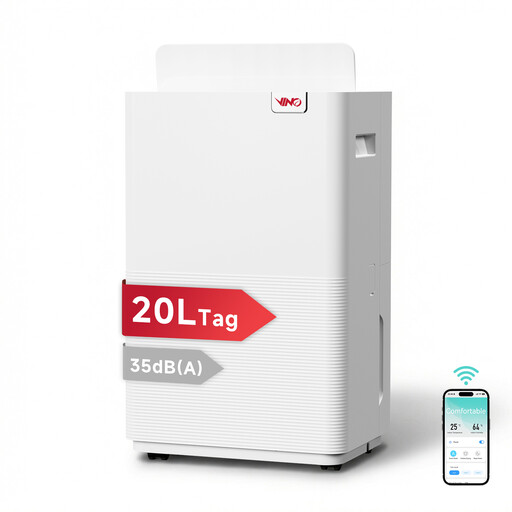
Why it’s a good fit: App control, 24-hour scheduling and night mode make this a great option for a connected home of up to around 40 m².
Its capacity, 2.5-litre tank and stated noise level are all clearly specified, rather than relying on the vague promise of ‘quiet’ operation.
Stated extraction of up to 20 L/day, app control, laundry-drying mode and hose drainage.
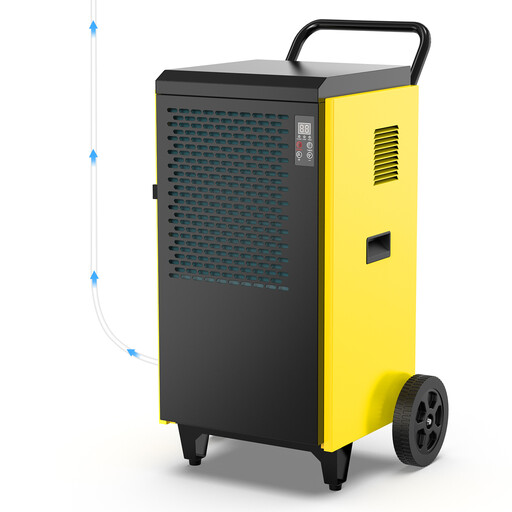
Why it’s a good fit: Its portable design and stated capacity make it suitable for cellars, warehouses, workshops and building sites where extended operation is needed.
The built-in pump allows continuous drainage up to a height of 5 metres, reducing the need to empty the tank by hand.
Stated extraction of up to 70 L/day, washable filter, wheels and automatic defrost.
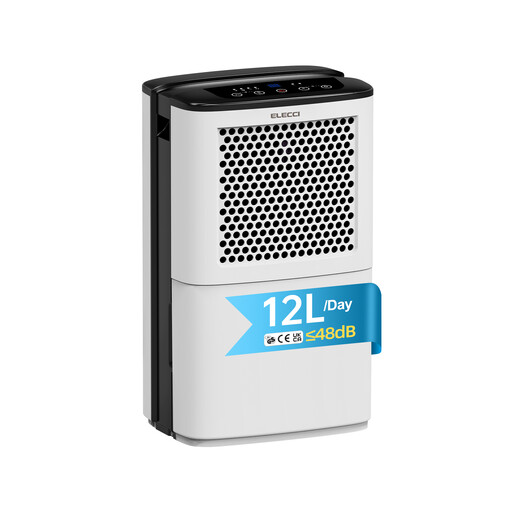
Why it’s a good fit: It’s suitable for rooms of up to around 25 m² and has a dedicated laundry-drying mode, making it particularly useful in flats.
The drainage hose, automatic tank shut-off and 24-hour timer are listed separately.
Up to 12 L/day under the stated conditions, a 3.8-litre tank and automatic defrost.
We’ve put together a comprehensive, regularly updated list of products that meet these strict selection criteria and comply with European safety regulations.
It depends on the humidity level, temperature, room size and ventilation. Start by running it for several hours, then use automatic mode with a target humidity setting. Keep the doors and windows closed while it’s running, but don’t neglect the ventilation your home needs.
It can be suitable for a wardrobe, small bathroom, bedroom with low humidity or caravan. However, for recurring condensation, a cellar, drying laundry or dealing with water ingress, an electric appliance will generally offer much greater extraction capacity. Moisture absorber refills should be replaced when saturated, following the instructions in the product manual.
Empty the tank before moving the appliance, clean the filter and let it dry completely before putting it back. Leave around 20 cm of clear space around the air inlets and outlets. If the appliance has been transported at an angle, wait for the period specified by the manufacturer before plugging it in. Finally, never use an electrical appliance in an area where it could be splashed with water.