
Livraison le jour même ou le lendemain

Qualité garantie

Débloquez vos offres de bienvenue: Livraison GRATUITE | Jusqu'à -80 % | 30 jours d'essai gratuits à JoyPlus
Téléchargez l'application
Is your dog struggling to digest certain foods, turning its nose up at regular recipes, or suffering from digestive sensitivities? Deer dog food could be a promising option – provided you choose a formula suited to its age, size and activity level. A nice picture of game on the bag isn’t enough to guarantee a good composition, though.
Here are the points to check before buying deer dog kibble, a game meat wet food, or a recipe designed for skin and coat health.
Just seeing the word “deer” on the packaging doesn’t mean that meat is the main source of protein. Check the ingredients list: it should state the form used – fresh meat, dehydrated meat or protein – as well as its position in the composition.
Some recipes combine several animal proteins. This can work for a dog with no particular sensitivities, but it makes it harder to identify which ingredient is causing a reaction if one occurs.
A grain-free formula isn’t automatically better than a recipe containing rice or other grains. What really matters is the complete composition, the digestibility you actually observe in your pet, and how well the food matches its needs.
If you suspect an allergy, don’t make long-term changes to its diet without speaking to a vet. An elimination diet needs to follow a consistent protocol, without introducing multiple protein sources at once.
A wet food or tin that looks rich in meat may not, on its own, cover all your dog’s nutritional needs. Look for the phrase “complete dog food” and double-check the species it’s intended for. Even when they contain venison or game, cat foods should not replace a dog’s daily ration.
If you’re looking for a protein-rich diet, start by examining the first ingredients on the list and the crude protein content. This figure alone isn’t enough to judge a recipe’s quality – it needs to be considered alongside the composition, the fat content and your dog’s profile.
Deer dog food comes as kibble or wet food. Kibble is easy to portion and store, while wet food provides more moisture. You can also combine the two, as long as you adjust the total daily amount accordingly.
Wet foods typically have a high water content. For example, MjAMjAM’s deer and wild boar wet food states 79% moisture. Once opened, it must be kept in the fridge and used within the time stated on the packaging.
Kibble should be kept in a sealed bag, away from moisture and light. The daily portion depends on your dog’s weight, age, activity level and build. The feeding guide provided by the manufacturer is a good starting point, but your dog’s physical condition should also guide any adjustments.
The needs of a small dog aren’t necessarily the same as those of a medium or large dog. Check the kibble size, its energy density and the recommended amount for your pet’s size.
When changing your dog’s food, plan a gradual transition over several days by mixing the old food with the new. This method reduces the risk of digestive upset caused by a sudden change.
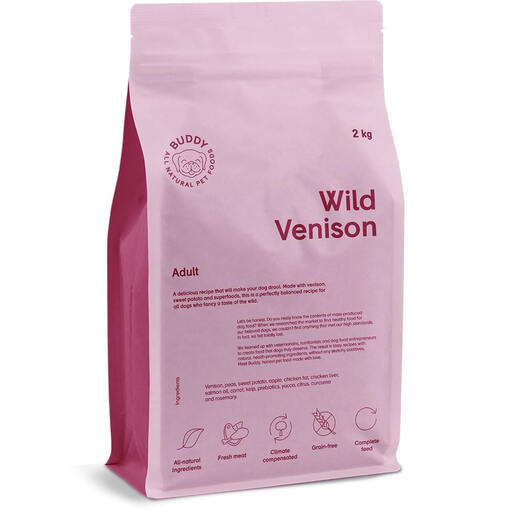
Why this choice suits this profile: At 2 kg, this size lets you try a deer recipe without committing to a large bag straight away.
The listing shows a grain-free recipe for adult dogs – but still keep an eye on how your own pet tolerates it.
The listing lists deer as the first ingredient and states there are no artificial colours, flavours or preservatives.
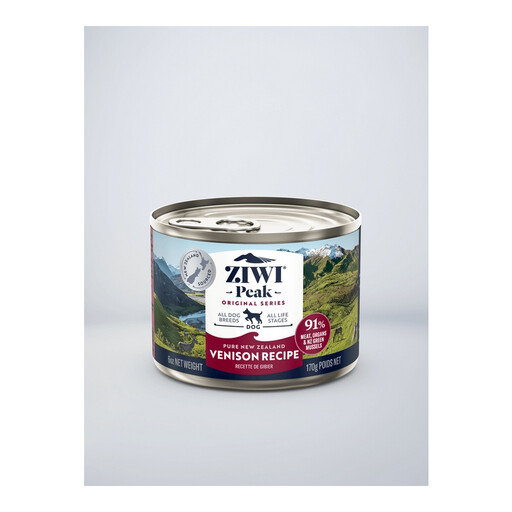
Why this choice suits this profile: This game meat wet food is for those who prefer a moist food with a clearly detailed composition.
The listing states it’s a complete food, provides the analytical constituents, and recommends a seven-day transition.
The recipe claims 92% deer, organs and bone, plus New Zealand green-lipped mussels.
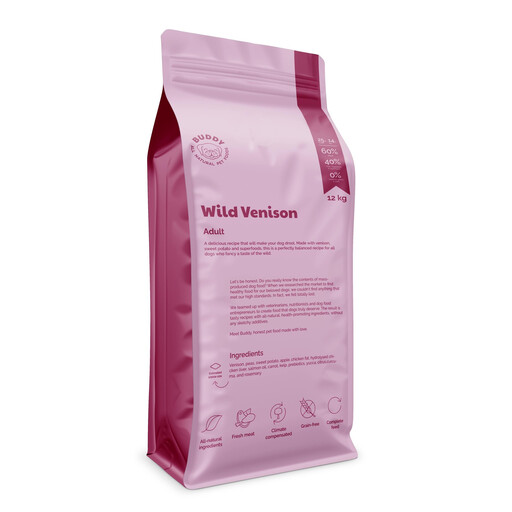
Why this choice suits this profile: This large bag is ideal for households that buy deer dog kibble regularly.
The composition and analytical constituents are detailed: 25% crude protein, 14% fat and 10% moisture.
The recipe contains 60% deer and also lists omega-3 and omega-6 among the declared constituents.
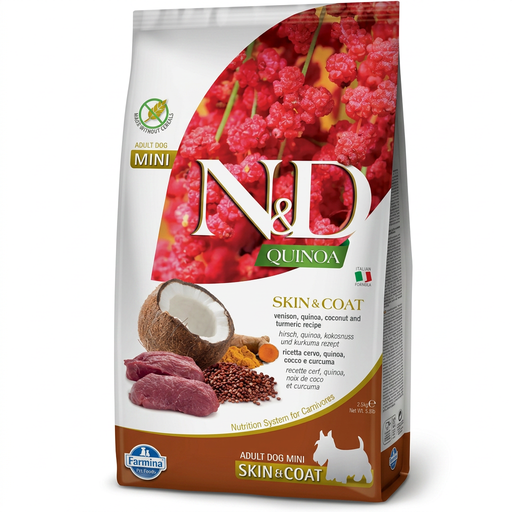
Why this choice suits this profile: The “small breed” label makes it easy to choose for a small adult dog, with a recipe that also targets skin and coat.
The listing clearly distinguishes the format for small dogs and details the ingredients, rather than relying on a vague promise.
The recipe combines deer, quinoa, herring oil and linseed; it also provides declared vitamins and minerals.
We’ve put together a comprehensive, real-time updated list of products that meet these strict selection criteria as well as European safety regulations.
It can be considered if your dog tolerates it well, but simply saying “sensitive” doesn’t guarantee any results. Introduce the new recipe gradually and monitor its stools, appetite and behaviour. If symptoms persist, consult a vet.
Kibble is practical to portion and store. Wet food, which is higher in moisture, also allows you to vary meals. The choice depends on your dog’s preferences, your routine, and sticking to the daily ration. In either case, make sure it’s a complete food.
Keep the opened tin in the fridge, in a sealed container if needed, and follow the time limit stated by the manufacturer. The product listings for the items shown generally recommend consuming the wet food quickly after opening. Serve it at room temperature if possible, and always leave fresh water available.