
Livraison le jour même ou le lendemain

Qualité garantie

Débloquez vos offres de bienvenue: Livraison GRATUITE | Jusqu'à -80 % | 30 jours d'essai gratuits à JoyPlus
Téléchargez l'application
Deer dog food appeals to owners who want to vary their dog’s protein sources or offer a recipe made with venison. However, claims such as “natural”, “grain-free” or “high in meat” are not enough to distinguish between products. The ingredients, nutritional status and packaging matter just as much.
A recipe can contain a high proportion of meat while still requiring a nutritional supplement if it is designed as a treat or topper. For everyday meals, look for the wording “complete food for dogs”. This means the product has been formulated to meet your pet’s nutritional needs when fed according to the manufacturer’s recommendations.
Grain-free dog food generally replaces wheat, maize or rice with pulses, potato, sweet potato or quinoa. This feature does not guarantee better digestion or rule out allergies. Hypoallergenic dog food should not be chosen by looking at the packaging alone: if you suspect a food reaction, ask your vet for advice.
Wet dog food contains a great deal of water. It may therefore suit dogs that drink little or enjoy soft textures. On the other hand, it needs to be stored carefully after opening. Dry dog food is easier to store and measure, but you should always provide fresh water. The right choice depends on your dog’s habits, your storage space and the daily cost—not just the price shown on the pack.
In high-meat dog food, the first ingredients should make it clear which animal parts are used. Venison may be combined with offal, stock or another meat. This is not necessarily a drawback, but it is worth knowing if you are looking for a recipe based on a single protein source.
For example, MJAMJAM wet dog food combines 50% venison and 50% wild boar in the wild-meat portion, with meat stock and pork, including heart and liver. According to the information provided, the recipe is grain-free, gluten-free, lactose-free, contains no added sugar and has no artificial preservatives or flavourings.
Protein and fat levels cannot be compared directly between wet food and dry food. Wet food often contains between 75 and 80% moisture, whereas dry food contains considerably less. You should therefore look at the full list of analytical constituents and follow the feeding portion stated on the packaging.
MJAMJAM venison and wild boar wet food contains 10% protein, 6% fat and 79% moisture. By comparison, BUDDY venison dry food lists 25% protein, 14% fat and 10% moisture. These figures alone do not show that one recipe is better than the other: they relate to two very different formats.
If you are switching to a new dog food for sensitive digestion, plan a gradual transition over several days. Mix the old food with the new one, slowly increasing the proportion of the latter. Monitor your dog’s appetite, stools and weight, without changing several dietary factors at once.
After opening, some wet foods need to be refrigerated and consumed within 24 hours, such as MJAMJAM recipes. Ziwi Peak venison tins also state that they should be refrigerated after opening and consumed within two days. Recommendations may vary from one product to another, so always refer to the label.
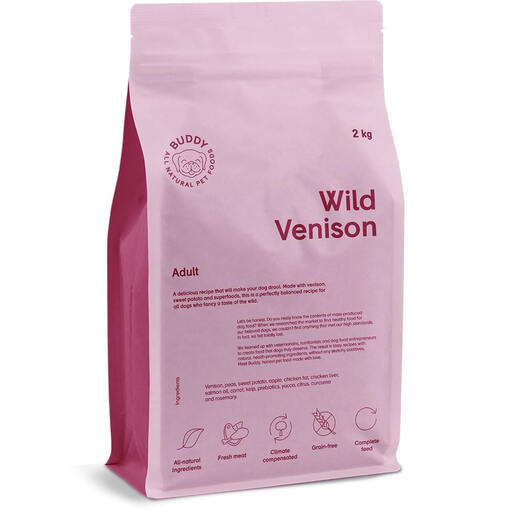
Why it suits this profile: The 2 kg bag lets you try venison dry food without committing to a large pack. The recipe is suitable for adult dogs and is easy to measure for everyday feeding.
The product listing presents venison as the first ingredient and states that the recipe contains no grains, colourings, flavourings or artificial preservatives. Nevertheless, check the full ingredient list before ordering.
2 kg format, 25 % crude protein and 10 % moisture according to the product listing.
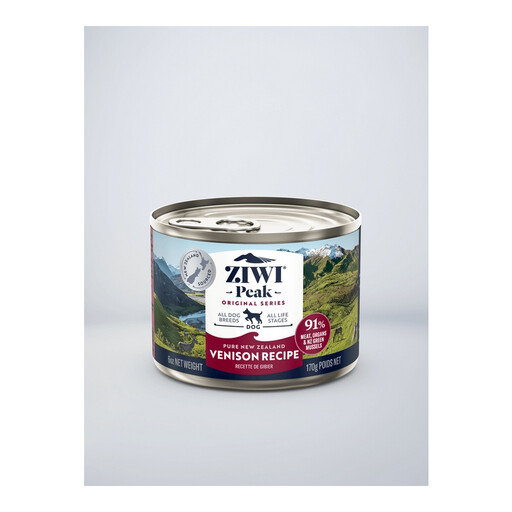
Why it suits this profile: This small format is aimed at owners who prefer wet venison food and want to control portions or alternate between several products.
The listing details a protein source focused mainly on venison and confirms that it contains no grains. The tin is presented as a complete wet food for dogs.
The recipe contains 92 % venison meat, offal and bone, with a maximum moisture content of 78 %.
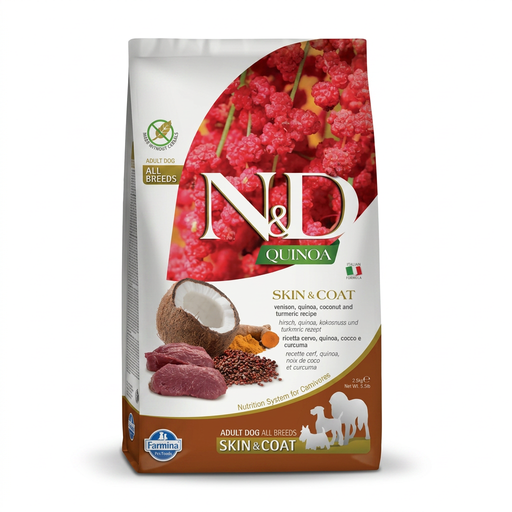
Why it suits this profile: Its format and formula are designed for medium to large adult dogs. It is aimed at owners looking for venison dry food with quinoa and several clearly declared nutritional supplements.
The ingredients list begins with venison and dehydrated venison. It also identifies the presence of peas, quinoa, herring oil and linseed.
Grain-free recipe with taurine, L-carnitine, vitamins and minerals declared per kilogram.
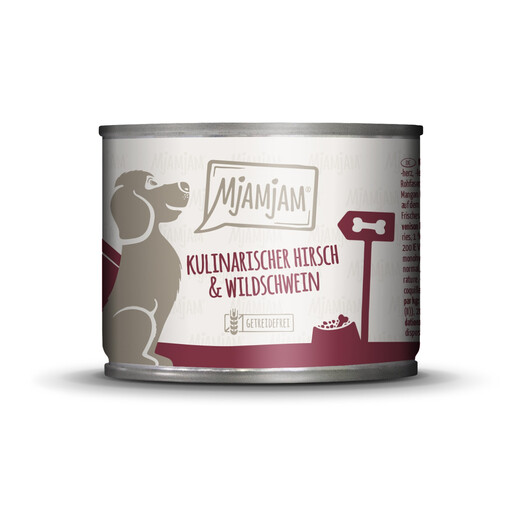
Why it suits this profile: This wet food is aimed at owners who prefer a moist texture, a detailed ingredients list and a 200 g format that is easy to serve over several meals.
The listing confirms that this is a complete food, provides a detailed composition and states the daily quantities according to the dog’s weight. It also recommends refrigerating the product after opening.
Venison and wild boar in the recipe, 79 % moisture and no grains, gluten or lactose stated.
We have brought together a comprehensive, real-time selection of products that meet these strict criteria, as well as European regulatory requirements for safety.
Cat food should not make up a dog’s main diet, and vice versa. MJAMJAM venison cat wet food combines venison and turkey with added taurine and is designed for adult cats. It is available in formats such as 300 g × 6 or 125 g × 12. For a cat weighing 3 to 5 kg, the listing recommends a daily portion of 200 to 400 g. Before ordering, always check the species and life stage stated on the packaging.
It may suit many adult dogs, but tolerance varies from one animal to another. Age, weight, activity level, dietary history and the recipe’s complete composition should all be taken into account. If a problem persists, it is best to ask your vet for advice.
Wet food provides more moisture and can be served on its own or as part of a mixed diet, provided that portions are recalculated. Dry food is easier to store and transport. To find out the real cost, calculate the daily price based on the recommended portion rather than relying solely on the price of the bag or tin.
Follow the manufacturer’s instructions. The products featured generally recommend refrigeration and consumption within 24 hours to two days. Use an airtight container, serve the food at room temperature when indicated and always provide fresh water.