Households that deep-fry regularly
If you regularly make chips, doughnuts or breaded foods, compare how much you can cook per batch with the cleaning and oil management each type of deep fryer involves.


For regular deep-frying, choose between a traditional hob-top setup and an electric deep fryer based on the space you have and how much oil management you’re prepared to take on. If you’d also like to roast, grill or reheat small to medium batches, an air fryer is worth considering. An oven or frying pan could also work, depending on your recipes and quantities.
If you regularly make chips, doughnuts or breaded foods, compare how much you can cook per batch with the cleaning and oil management each type of deep fryer involves.
If you’d also like to roast, grill or reheat everyday portions without a bath of oil, an air fryer is worth comparing with the appliances you already own. Que Choisir describes uses beyond making chips.
You’ll need to balance the space available with how much the basket can actually hold. A large stated capacity doesn’t mean you can skip checking the size of your food and how many batches you’ll need to cook.
Worth considering: for occasional deep-frying, if you already have a suitable hob and pan.
What to bear in mind: it takes up a hob and requires careful handling of hot oil. If you have an induction hob, check that the pan is compatible; Que Choisir recommends steel rather than cast aluminium.
Worth considering: for regular deep-frying, if you want to keep your hob free and are happy to manage a bath of oil.
What to bear in mind: the oil still needs to cool, be stored and be disposed of, even with a model that has a filter or removable bowl.
Worth considering: for small or medium batches, if you also plan to cook, roast, grill or reheat food.
What to bear in mind: you may need to cook several batches or mix the food in the basket. The appliance also takes up worktop space.
Stick with these: if they already work well for your recipes and quantities, particularly when you need to cook more than a basket can hold.
What to compare: don’t assume an oven is generally more or less energy-efficient without measurements for the same recipe and quantity.
| Criteria | What to check | Who it matters to |
|---|---|---|
| Portions and batches | Compare how much food you can cook per batch, the size of the basket or bowl, and the appliance’s external dimensions. For air fryers, Que Choisir distinguishes usable capacity from the stated capacity. | If I’m cooking for several people, I want to avoid having to switch the appliance back on to finish the same meal. Around 29% of consumers rank batch capacity as their top priority. |
| Odours and cleaning | Check which parts are removable and dishwasher-safe. For a deep fryer, also look at whether it has a filtration system and how to store and dispose of the oil. | After deep-frying, I’d rather minimise odours and the time spent cleaning or dealing with oil. This is the top priority for around 29% of consumers. |
| Uses and space | Decide what you’ll actually use the appliance to cook, then measure the space available and the clearance needed to open the basket or lid. | In a kitchen where every appliance takes up space, I want to be able to cook more than just chips. Around 21% of consumers prioritise this combination of versatility and size. |
| Electricity use per recipe | Compare measurements in kWh for the same recipe and quantity, with a similar cooking result, and include all batches. | Before choosing based on energy use, I want to know how much electricity it takes to cook my usual portions, not just read the wattage. For around 21% of consumers, this is their main priority. |
The bowl’s capacity doesn’t necessarily reflect how much food you can cook in one batch. The shape of the food and the space needed to arrange it matter too.
Before settling on a size, check the recommended portions or quantities for your recipes, how many batches you’re likely to need, and the appliance’s dimensions.
A filter or removable parts may make a model easier to use, but they won’t eliminate odours, the need to let the oil cool or the need to dispose of it.
Check which parts are actually removable and how the filtration system works. For used oil, ADEME advises against pouring it down the sink or toilet, or into the environment. Find out about local collection options.
A wattage figure alone doesn’t tell you how much electricity it takes to finish a recipe. Cooking time, preheating, quantity and number of batches all play a part. Les Numériques explains that its comparison test using 1 kg of fresh chips shows a trend, not figures that apply to every cooking situation.
To compare two options on this basis, look for kWh measurements using the same recipe and quantity, with a similar cooking result.
Filling the basket to its stated maximum capacity doesn’t guarantee even cooking. In its test method, Que Choisir mixes the chips at least once, and more often if the instructions recommend it.
Check the instructions for the recommended load and any steps required during cooking before estimating how much you can cook per batch.
The range includes electric deep fryers with different capacities and features.
The Easy Fry range includes basket-style air fryers for different batch sizes.
The Airfryer range includes single-basket models as well as designs with two stacked baskets.
These models include basket-style air fryers and electric deep fryers. Compare their size with your portions and cooking habits. An oven, frying pan or traditional hob-top setup is also worth considering as part of your overall decision.
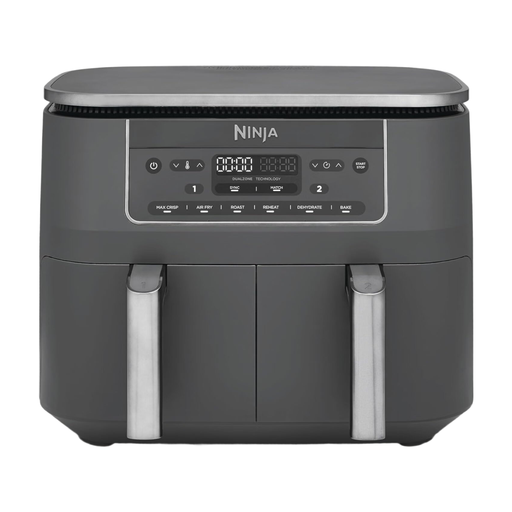 Image unavailable
Worth considering if you’d like to cook two foods in separate drawers rather than make several batches in a single basket.
The model name indicates six functions. Check the space the appliance needs and the recommended load for each recipe.
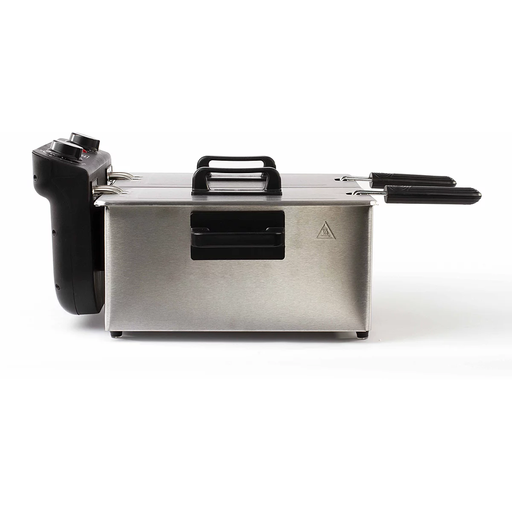 Image unavailable
Worth considering if you deep-fry in oil and would like two bowls to keep different foods separate.
The bowl capacity alone doesn’t tell you how much food you can cook per batch. You’ll also need to allow for cooling, cleaning and disposing of the oil.
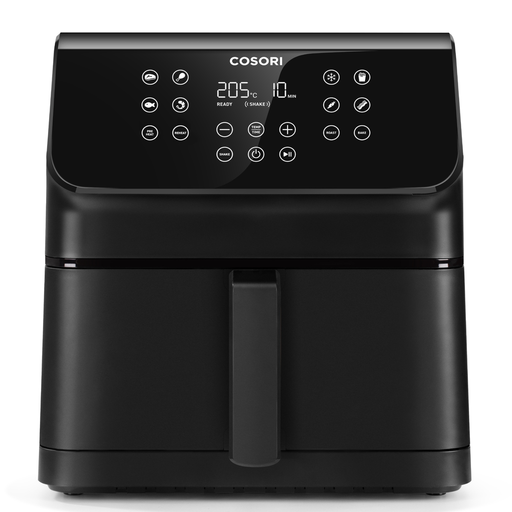 Image unavailable
A single-basket option to consider if your everyday meals fit into one batch.
The stated capacity doesn’t guarantee a specific quantity of chips. Check the recommended load for the food you’re cooking and the space available in your kitchen.
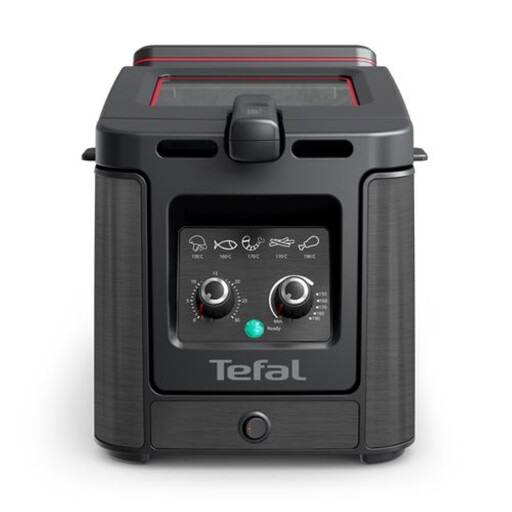 Image unavailable
Worth considering if you prefer deep-frying in oil and want to see your food as it cooks.
Check the recommended quantity for your portions: the bowl’s capacity doesn’t necessarily reflect how much food it can hold. The viewing window doesn’t remove the need to take care around hot oil.
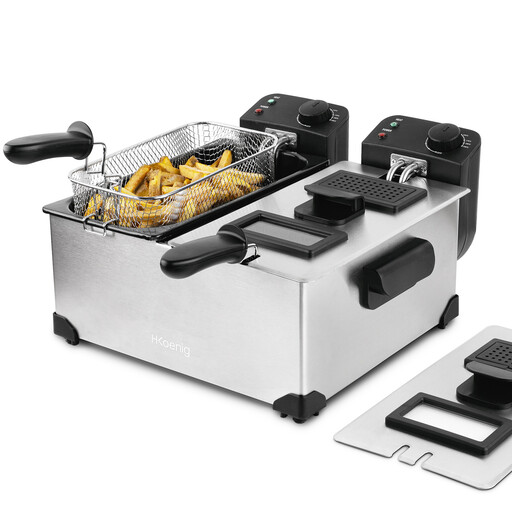 Image unavailable
Worth considering if you want to keep two different foods separate in an oil deep fryer.
The model name indicates two independent thermostats and odour filters. Check the recommended load for each basket and the appliance’s footprint; filters don’t guarantee an odour-free kitchen.
Start with your usual portions, then check how much of the food you plan to cook the basket can hold. Que Choisir gives 3 to 4 L for 1 to 2 people, 5 to 6 L for 3 to 4 people and 7 to 9 L for 5 to 6 people as a guide. Bulky foods or cooking two recipes at once may call for a different size.
Not necessarily: the two appliances use different cooking methods. If you regularly deep-fry in oil, compare deep fryers based on the cleaning and maintenance involved. If you’d also like to roast, grill or reheat without managing a bath of oil, consider an air fryer and how much it can cook per batch.
There’s no answer that applies to every recipe and portion size. Compare measurements for the same quantity and a similar cooking result, allowing for any extra batches. Les Numériques explains that its test using 1 kg of fresh chips shows a trend rather than absolute figures that apply across the board.
Let it cool and store it in a sealed container while you check your local council’s collection options. ADEME advises against pouring it down the sink or toilet, or into the environment. You may be able to take it to a household waste recycling centre or, depending on your local authority, a collection point.