
Livraison le jour même ou le lendemain

Qualité garantie

Débloquez vos offres de bienvenue: Livraison GRATUITE | Jusqu'à -80 % | 30 jours d'essai gratuits à JoyPlus
Téléchargez l'application
Deep-water trolling is a demanding discipline that leaves no room for error. To lure out the great predators lurking in the depths, your choice of lure is absolutely crucial. The wrong model—one that doesn't dive to the right depth or has an erratic swimming action—can mean an entire fishing trip is a complete waste.
This guide provides everything you need to select a high-performance, reliable deep-diving trolling lure capable of triggering strikes from the most impressive specimens.
Before you commit to a particular model, let's review the features that truly make a difference.
This is the number one criterion: the lure's ability to reach and maintain a specific diving depth. This performance is directly dependent on the size and angle of its lip. To target great depths, look for a minnow that dives to 10?m or more, equipped with a long, wide lip. Remember that trolling speed and your line's diameter also influence the actual depth: a higher speed and a thinner line generally allow you to go deeper.
A big game lure must be built to withstand extreme pressure and the powerful fight of marine predators. The body's structure, most often made of reinforced ABS plastic, must be flawless. The hardware is just as strategic: heavy-duty treble hooks (4X or 5X strength) and high-strength split rings are essential to set the hook properly and, most importantly, not lose the fish of a lifetime. A 165?mm hard lure is an excellent size for attracting large predators without scaring off medium-sized fish.
A good offshore trolling lure must maintain an attractive and stable swimming action over a wide range of speeds, typically between 3 and 8 knots. It must not blow out, rise to the surface, or veer to the side. An action that combines wobbling (side-to-side oscillation) and rolling (rolling on its axis) is often incredibly effective for triggering the aggression of a saltwater predator lure.
Enough theory, let's get practical. Here is a selection of gear that meets the demands of deep-water trolling.
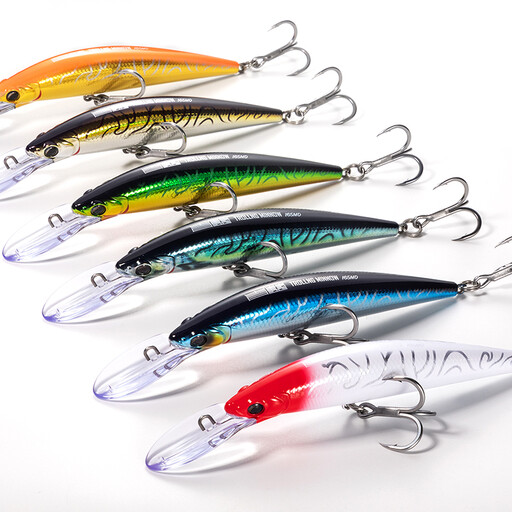
Why It Stands Out: The ECOODA 165DD is built for deep trolling. Its wide, long lip allows it to reach a maximum diving depth of 10 metres, placing it right in the strike zone of many predators. Its 165?mm body weighing 64?g presents an imposing silhouette, visible from a distance.
Advantages:
Who Is It For? This lure is for experienced anglers who troll in the sea or on large lakes and are looking for a reliable model to target predators holding in deep water.
An exceptional lure can only reach its full potential with a rod and reel combo that's up to the task.
Recommended Rod: ECOODA SEXL Lure Rod
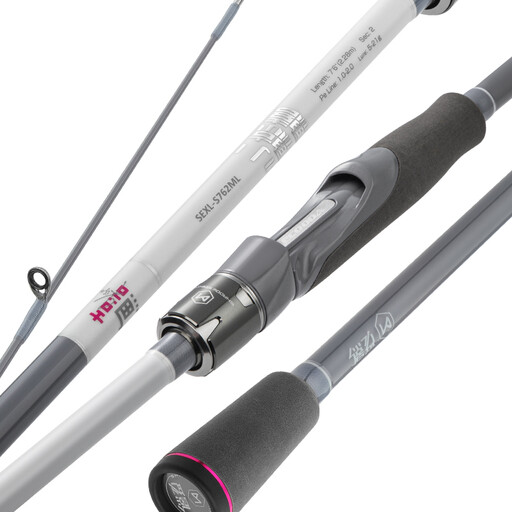
A trolling rod must offer plenty of backbone to control the fish and a tip soft enough to absorb the lure's vibrations. This model features a robust construction, perfectly suited to the demands of fishing for large species.
Suggested Reel: ECOODA SXF Shadow Seeking Spinning Reels
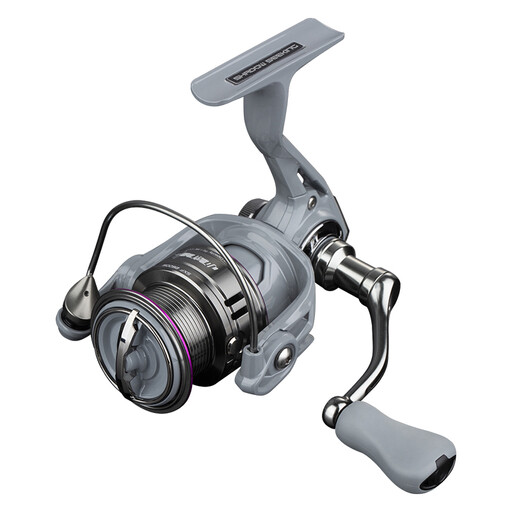
Although trolling is often done with conventional reels, a robust spinning model like the SXF is perfectly suitable for light trolling or for anglers seeking versatility. Its reliable mechanics and large capacity are valuable assets for demanding fights.
The choice of a lure also depends on the day's conditions, the target species, and, of course, each angler's personal preferences. If the model presented doesn't exactly match your needs, other solutions are available.
? Explore our complete collection of Fishing Lures to discover a much wider range of models, sizes, and colours.
The optimal speed varies depending on the lure and the target species, but it is generally between 2 and 6 knots (approximately 4 to 11 km/h). The easiest trick is to run the lure alongside the boat to observe its action. Start at a speed where it swims correctly, then adjust based on strikes or activity detected on the fish finder.
The most accurate method is to use a reel equipped with a line counter. Lure manufacturers often provide dive charts indicating the depth achieved based on the length of line let out and the speed. Without a counter, an angler's rule of thumb is to estimate that the lure reaches about one-third of the depth relative to the length of line out (e.g., 30 metres of line for 10 metres of depth), but this remains highly approximate.
Generally, no. These lures are highly specialised. Their enormous lip, designed to make them dive, creates considerable resistance on the retrieve and makes them almost unusable for casting and retrieving. Their use is almost exclusively reserved for trolling.