
Livraison le jour même ou le lendemain

Qualité garantie

Débloquez vos offres de bienvenue: Livraison GRATUITE | Jusqu'à -80 % | 30 jours d'essai gratuits à JoyPlus
Téléchargez l'application
A decorative vase can transform a shelf, a table or a mantelpiece. But you need to choose a model that’s genuinely suited to your needs. An opening that’s too narrow, an unstable base or a material not designed for water can quickly turn an appealing purchase into an impractical object.
Before you hesitate between a ceramic vase, a glass model or a set of several pieces, here are the main pitfalls to avoid.
For fresh flowers, the opening must allow stems to pass through without being squashed. A narrow neck holds a few long stems securely, while a wider opening is better suited to a full bouquet.
With dried flowers or pampas grass, focus mainly on the balance between height and base width. A vase measuring 20 to 27 cm can become the focal point of a mantelpiece or sideboard, provided it remains stable enough.
Some product descriptions still show dimensions in both inches and centimetres. Compare them with the space available on your furniture to avoid ending up with a vase that’s out of proportion.
A ceramic vase generally offers real visual presence. Matte, textured or ribbed finishes work equally well with boho, Nordic, contemporary or farmhouse décor. Ceramic is suitable for fresh flowers if the description confirms the vase is waterproof or compatible with water.
A glass vase brings more lightness to the arrangement. It’s ideal for fresh flowers, small cuttings, plants grown in water and centrepieces. On the downside, it remains fragile: check the quality of the packaging, the stated thickness and the stability of the base.
Porcelain and glazed ceramic are good options for versatile use. To care for them, use a soft cloth and a non-abrasive soap, following the recommendations on each product page.
Always place the vase on a flat surface, out of reach of children and pets. With a glass model, handle it carefully and check regularly that no cracks have appeared.
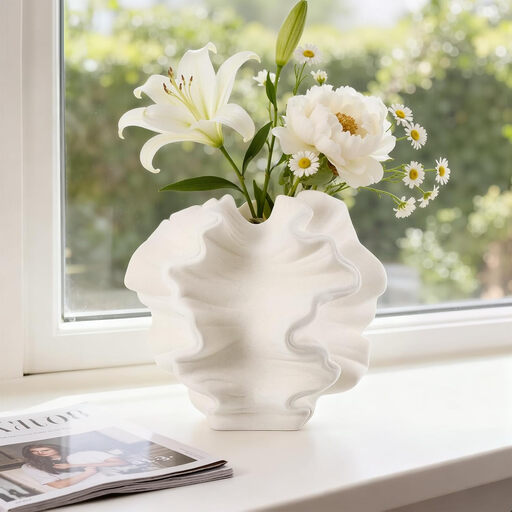
Why this choice suits this profile: at 17 cm tall and in a beige shade, it fits easily on a coffee table, shelf or desk. It can be used alone or with a few dried flowers.
The stated height helps you anticipate how much space it will take up. Its wavy shape adds texture without needing a large bouquet.
Matte ceramic, wavy silhouette, suitable for standalone decorative use or with dried stems.
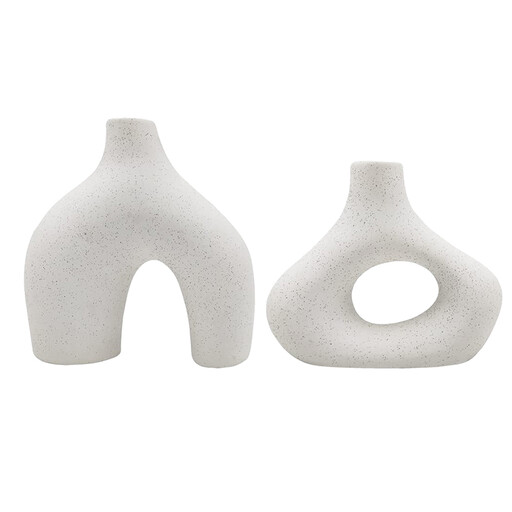
Why this choice suits this profile: these two different sizes allow you to create a structured arrangement in a living room, hallway or dining room.
Both heights are clearly stated in the description, so you won’t receive two almost identical pieces for a decorative arrangement.
Set of two white ceramic vases, irregular shapes, stated compatibility with both fresh and dried flowers.
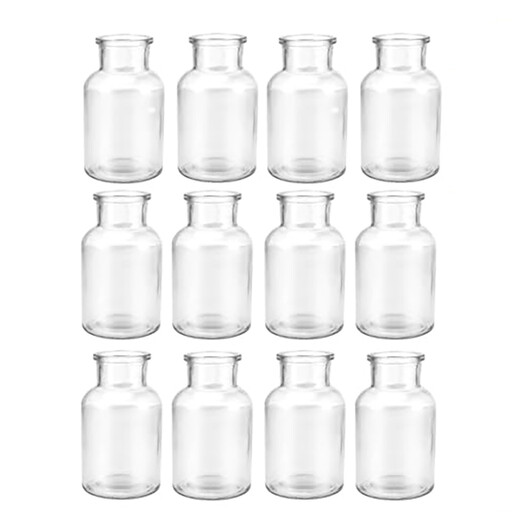
Why this choice suits this profile: this set of 12 pieces meets the needs of weddings, parties, birthdays and large matching table decorations.
The number of pieces and the 125 ml capacity are stated, so you can calculate exactly how many you need before an event.
Thick glass, 12 vases decorated with jute twine, dishwasher-safe according to the product description.
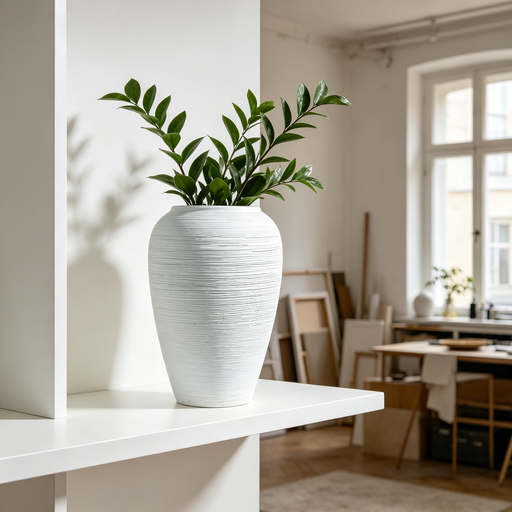
Why this choice suits this profile: at around 27 cm tall, it’s ideal for a mantelpiece, console or sideboard decorated with branches, pampas grass or dried flowers.
The opening, diameter and height dimensions are all provided, helping you choose stems that are suitable.
Textured ceramic, stated height of 27 cm, suitable for fresh, artificial or dried flowers.
We’ve put together a comprehensive, real-time updated selection of products that meet these exacting criteria, in line with European safety regulations.
Choose a model whose description mentions compatibility with water or fresh flowers. Glass allows you to easily monitor the water level, while a waterproof ceramic offers a more opaque finish. Also check that the base remains stable once the vase is filled and the bouquet is in place.
Empty the water regularly and rinse the inside of the vase. For ceramic, use a soft cloth and a mild soap. With glass, avoid thermal shock and handle delicate models with care. If the description states the vase is dishwasher-safe, follow the manufacturer’s instructions.
Its lifespan depends on the material, how often it’s handled and its environment. A well-maintained ceramic vase can stay in place for many years, while glass requires more care to avoid knocks. Place each vase on a flat surface and don’t overload it with flowers or branches.