
Livraison le jour même ou le lendemain

Qualité garantie

Débloquez vos offres de bienvenue: Livraison GRATUITE | Jusqu'à -80 % | 30 jours d'essai gratuits à JoyPlus
Téléchargez l'application
A decorative E27 LED bulb can sometimes transform a pendant light, bedside lamp or wall light into a real feature. But product photos don’t tell the whole story. A bulb might look beautiful when lit, yet give off very little light, cause glare at eye level or refuse to work with a dimmer.
To avoid any unpleasant surprises, focus on four things: colour temperature, light output, glass shape and electrical compatibility. Here’s what to check before choosing an E27 LED filament bulb, a vintage-style model or a smart bulb.
An amber E27 bulb or a smoked-glass E27 bulb generally gives off a soft light that’s perfect for creating atmosphere. However, it may not provide enough light to illuminate a kitchen, study or large room properly.
The lumen rating gives you a much more reliable idea of what to expect:
The colour of the glass also affects how bright the light appears. Smoked or amber glass absorbs some of the light and changes how it looks in the room.
ST64, G80 and G95 aren’t just different styles. They also indicate the bulb’s shape and diameter.
A G80 or G95 globe bulb may be too wide for a narrow light fitting. By contrast, an elongated Edison-style bulb often works very well in an open pendant. Before ordering, measure the space around the bulb holder and check the bulb’s overall length.
A dimmable E27 bulb needs to be paired with a dimmer that’s compatible with LEDs. Some older dimmers designed for halogen bulbs can cause flickering, a faint humming noise or a limited dimming range.
“Dimmable” simply means that the bulb’s brightness can be adjusted under the right conditions. It doesn’t guarantee that every existing setup will work perfectly without adjustment.
Colour temperature is measured in kelvins. The lower the figure, the warmer and more golden the light looks.
A 2,200 K bulb works particularly well with wood, black metal and industrial-style interiors. With an adjustable-colour-temperature bulb, you can tailor the atmosphere to the time of day or what you’re doing.
Power, measured in watts, tells you how much electricity a bulb uses. On its own, it doesn’t tell you how much light the bulb produces. To compare two LED models, check the lumens first, then the wattage.
For example, a 4.9 W bulb producing 400 lumens could work well for decorative lighting. A 7 W smart bulb rated at 806 lumens will be better suited to situations where you need brighter light.
To estimate running costs, use this formula: power in kW × hours of use × price per kWh. Your bill therefore depends on the bulb’s power, how long it’s switched on and the rate on your electricity tariff.
The E27 screw cap is the most common type in French homes. However, it’s still essential to check that it’s compatible with your light fitting. Always switch off the power before changing a bulb.
A bulb with an IP20 rating is designed for indoor use in dry environments. It shouldn’t be installed somewhere exposed to water splashes. Also, follow the maximum wattage shown on the light fitting and make sure the bulb has enough ventilation.
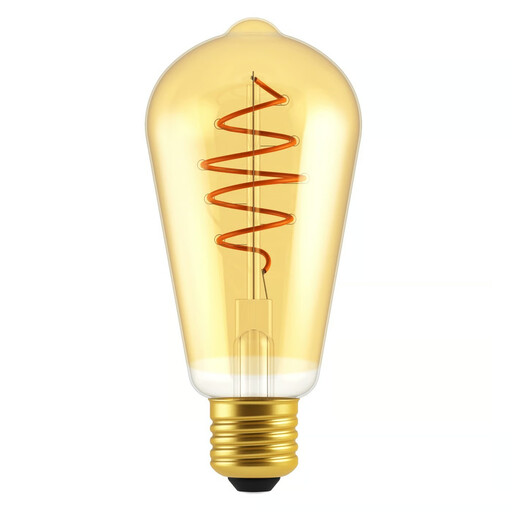
Why it’s a good match for this profile : Its standard E27 cap and ST64 Edison shape make it easy to replace an existing bulb in an open pendant or decorative lamp.
With 400 lumens and a colour temperature of 2,200 K, its specifications tell you more than a vague promise of warm light.
Amber glass, 4.9 W, compatible with dimmers, 220–240 V and a stated lifespan of up to 15,000 hours.
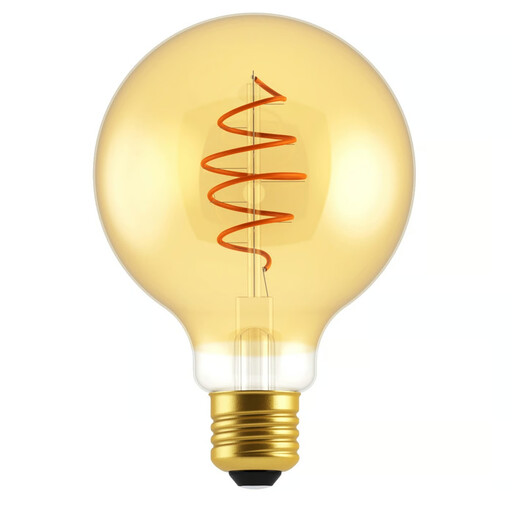
Why it’s a good match for this profile : With its 9.5 cm diameter and amber glass, it’s made to stand out in an open pendant and give your décor more character.
Its size is clearly stated: check the available space before fitting a large globe bulb.
G95, 400 lumens, 2,200 K, 4.9 W and dimmable, so you can adjust the brightness.
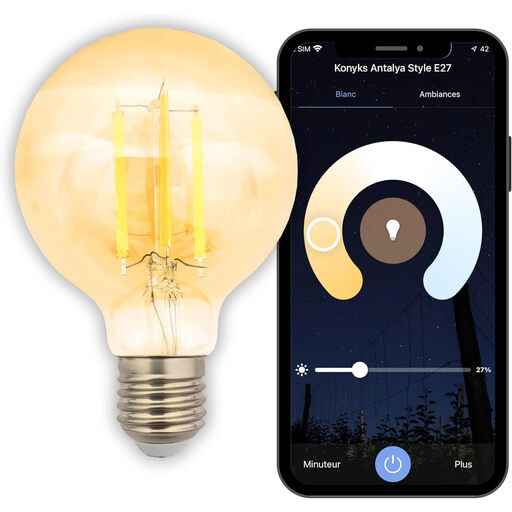
Why it’s a good match for this profile : Remote control, scheduled switching and adjustable colour temperature are ideal if you want to automate several lighting routines.
Its 2.4 GHz Wi-Fi compatibility is clearly stated: check this before installation, as a 5 GHz-only network won’t be supported.
806 lumens, adjustable colour temperature from 2,700 to 6,500 K, Wi-Fi and Bluetooth, Konyks, Smart Life and Tuya apps, and compatibility with Alexa and Google Home.
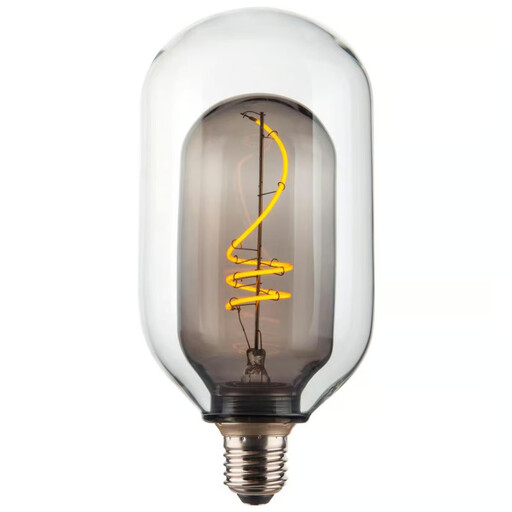
Why it’s a good match for this profile : Its low light output makes it a good choice for a restaurant table, a reading nook or a cluster of several bulbs.
Its 100-lumen output is clearly stated, so you won’t mistake it for a bulb designed to provide the main light source.
T95 smoked glass, 1,800 K, 100 lumens, 4.1 W, compatible with dimmers and Class II insulation.
We’ve brought together a comprehensive selection, updated in real time, of products that meet these strict criteria and European safety requirements.
It depends on its wattage and how long it’s used for. A 4.1 to 4.9 W bulb switched on for a few hours a day will generally use less electricity than a more powerful traditional model. To compare two specific bulbs, work out the cost using their wattage and your electricity rate.
For a very golden light, look for around 1,800 to 2,200 K. A colour temperature of 2,700 K gives you warm light that’s more versatile. Adjustable-colour-temperature smart bulbs let you switch from a warm ambience to a whiter light without changing the bulb.
The stated lifespan varies depending on the model and how it’s used. Some bulbs in this selection promise up to 15,000 hours. This is an estimate, though: ventilation around the light fitting, how often the bulb is switched on and off, and compatibility with the dimmer can all shorten or extend its lifespan.