Anyone looking for a sourdough croissant
You want to be able to spot sourdough in the ingredients or product information, rather than relying solely on the croissant’s appearance or artisan-style presentation.


For lunch on deck without an oven, choose a croissant that’s already baked. A frozen, ready-to-bake croissant is suitable if you can prepare it before you set off. If sourdough matters to you, check that it’s listed in the ingredients rather than assuming it’s present because the croissant is described as ‘artisan’ or ‘all-butter’. Also check the allergens, storage instructions and the time between preparation and eating.
You want to be able to spot sourdough in the ingredients or product information, rather than relying solely on the croissant’s appearance or artisan-style presentation.
You need to take a croissant that you can eat there and then, without defrosting or baking it. A croissant that’s already baked fits the bill.
You have access to a freezer and an oven before setting off. You could consider a frozen, ready-to-bake croissant, as long as you allow time to prepare it and plan how to transport it.
For lunch on deck, first decide whether you can bake the croissants before setting off. Then check the recipe and the instructions for the croissant you’ve chosen.
| Criteria | What to check | Who is it for? |
|---|---|---|
| Sourdough content | Does the ingredients list or product information explicitly mention sourdough? ‘All-butter’ answers a different question. | If sourdough is my deciding factor, I want to be able to check for it before I buy. Around 36% of consumers put this check at the top of their list. |
| Whether baking is required | Is the croissant already baked or ready to bake? For a frozen product, check the preparation instructions. | If there’s no oven where I’m having lunch, I need to be able to eat the croissant as I’ve brought it. Around 29% of consumers prioritise not having to bake it on site. |
| Storage and journey | Check the product’s storage conditions and the time between preparation and eating. | If there are several hours between setting off and lunch, I choose according to the instructions for that particular croissant. Around 21% of consumers prioritise planning for the journey. |
| Pack size and convenience | Compare the number of croissants with what you need, and check availability with your chosen retailer. | If I’m having lunch with others, I look for a pack that suits our needs without having to carry too many individual items. Pack size and availability are the main concern for around 14% of consumers. |
These terms describe different aspects of a recipe. Maison Kayser’s product information lists sourdough, while Lidl’s all-butter croissant lists baker’s yeast.
If you’re looking for sourdough, check that it’s listed in the ingredients for the specific croissant you plan to buy.
A frozen, ready-to-bake croissant isn’t a substitute for one that’s already baked if there’s no oven where you’re going. The Auchan product information states that its croissants need 15 minutes to defrost, followed by 15 to 20 minutes in the oven at 180 °C.
If you’re setting off straight away, take a croissant that’s already baked. Otherwise, allow the preparation time stated for your product before you travel.
Remember to add defrosting and baking time to the time you need before setting off.
The Maison Kayser, Auchan and Lidl products we looked at list ingredients made from wheat, milk and egg, among others; some also warn that traces of other allergens may be present. Ingredients vary by product.
Read the allergen information for your chosen croissant, or ask the seller if it’s not prepacked.
Auchan’s frozen croissant information says to store the product at −18 °C and not to refreeze it after defrosting.
Make sure you can transport it under suitable conditions before baking, and follow the instructions on the packaging for your chosen product.
Its product information describes a croissant that’s already baked and lists homemade natural sourdough in the ingredients.
The manufacturer’s catalogue includes a 90 g frozen sourdough croissant.
The retailer offers a pack of six frozen, ready-to-bake all-butter croissants.
Lidl France describes an all-butter croissant that’s already baked and ready to eat.
ALDI France offers a 360 g pack of six frozen, ready-to-bake MANNAPAIN all-butter croissants.
These two products are suitable if you can prepare lunch using a freezer and an oven before setting off. They’re sold as frozen, ready-to-bake croissants, not as croissants to eat straight away on deck.
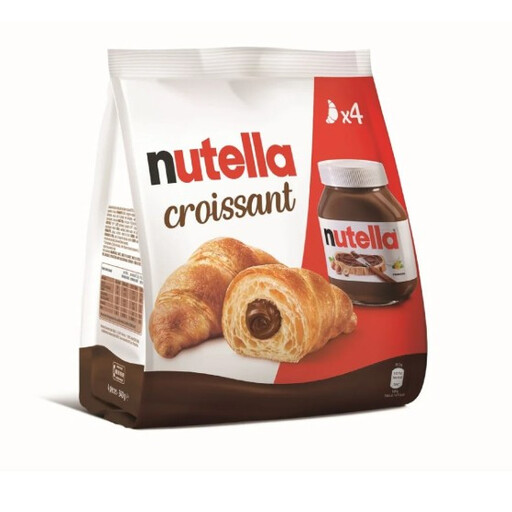 Image unavailable
Consider these if you can bake the croissants before setting off and would prefer a filled option to a plain croissant. If sourdough is important to you, check the packaging for it, along with the baking instructions and allergen information.
 Image unavailable
The six-piece pack could suit lunch with a group if you have access to an oven before setting off. Check the preparation instructions on the packaging. If you’re specifically looking for sourdough, check the ingredients for this product too.
No. The presence of sourdough doesn’t tell you how the croissant was made. For the croissant you’re thinking of buying, check the ingredients and the information about how it was made separately.
Yes, if you prepare it before setting off and follow the instructions for your product. For example, Auchan’s product information says to defrost its croissants for 15 minutes, then bake them for 15 to 20 minutes at 180 °C. These instructions won’t necessarily apply to other croissants.
Follow the storage instructions for the croissant you’ve bought. Maison Kayser says its own product can be kept at room temperature for 8 hours, in a dry place and in its packaging paper. Don’t assume the same applies to another product, especially a filled one.
In France, consumers must be informed about allergens present in non-prepacked food, under the rules set out by the Directorate-General for Competition Policy, Consumer Affairs and Fraud Control. If you can’t see the information, ask the seller before you buy.