For a quick evening cup, choose an instant coffee labelled “decaffeinated”. Then opt for a jar if you want to measure out each cup, or sticks if you prefer individual portions. However, “decaffeinated” does not mean “caffeine-free”: French Decree No. 2001-977 of 26 October 2001 sets a maximum caffeine level for products described this way, but it doesn’t tell you how much caffeine is in a cup.
Who are these formats suited to?
Parents looking to cut down on caffeine in the evening
If you’re already short on sleep, the word “decaffeinated” helps you tell these coffees apart from regular versions. France’s food safety agency, Anses, says caffeine can delay falling asleep and reduce both sleep duration and quality. However, decaf coffee isn’t necessarily caffeine-free.
Parents who make a cup whenever they need one
Instant coffee is made with hot water, so there’s no need for a coffee machine. A jar lets you measure out a cup with a spoon at home, while sticks provide individual portions to take with you.
People who are pregnant or breastfeeding and monitoring their intake
Choosing decaf doesn’t mean you can ignore other sources of caffeine throughout the day. If you need to know exactly how much caffeine is in each cup, ask the manufacturer for this information and speak to a healthcare professional for advice tailored to you.
What should you look for before choosing?
First, check that the coffee is labelled “decaffeinated”, then choose between the flexible dosing of a jar and the single portion in a stick. If you’re after black coffee, make sure you can tell instant coffee sticks apart from coffee-with-milk drinks.
| What to consider |
What to check |
Who it matters to |
| Caffeine in the evening |
Look for the word “decaffeinated”. If you need to monitor your intake closely, check for the caffeine content per prepared cup. |
When I’m short on sleep, I want to cut down on caffeine in the evening without assuming “decaffeinated” means “zero caffeine”. Around 50% of consumers put this need first. |
| Quick preparation |
Choose between a jar you can measure out with a spoon and individually portioned sticks; follow the product’s preparation instructions. |
If I’m making a cup between tasks, I want to be able to use hot water without getting a coffee machine out. Around 30% of consumers prioritise this. |
| Everyday format |
Check the packaging and availability at your shop or for your chosen collection option. |
Whether I want to take a portion with me or keep a jar at home, I need a format I can actually get hold of. Around 20% of consumers prioritise the format and availability. |
Common points of confusion
-
Assuming “decaffeinated” means “caffeine-free”
In France, Decree No. 2001-977 of 26 October 2001 allows coffee extract to be described as “decaffeinated” if its anhydrous caffeine content does not exceed 0.3% of the dry matter derived from coffee. This limit doesn’t tell you how many mg of caffeine are in a cup.
If you need to keep close track of your intake, consider all your sources of caffeine and ask the manufacturer for the amount per cup, or speak to a healthcare professional for advice tailored to you.
-
Choosing a product without checking where it’s available
Whether a jar or a box of sticks is available can depend on the shop and collection option. E.Leclerc, for example, recommends checking with the store to confirm that Plantation sticks are in stock.
Before setting off, check that your preferred product and format are available at your shop or in your area.
-
Taking the intensity rating as a measure of caffeine
The 6/10 intensity rating shown on Auchan decaf instant coffees is a guide to flavour from the retailer, not a measure of caffeine per cup.
Use this rating to choose a flavour profile, then check separately for the “decaffeinated” label and any stated caffeine content.
Brands to consider
NESCAFÉ
According to NESCAFÉ France, the Spécial Filtre Décaféiné range includes 100 g jars of instant coffee.
- The brand says to prepare it by adding hot water to a spoonful of coffee; Carrefour says its 100 g jar makes 50 cups.
- The stated number of cups doesn’t tell you how much caffeine is in each prepared cup.
Carrefour Extra
Carrefour describes its 100 g jar as freeze-dried decaffeinated instant coffee.
- The jar lets you measure out the coffee with a spoon; the product information recommends making it with hot, but not boiling, water.
- Check whether the jar is available at your shop or for your chosen collection option.
Plantation / Marque Repère E.Leclerc
E.Leclerc lists Plantation freeze-dried decaffeinated instant coffee in a box of 25 sticks, weighing 50 g in total.
- The sticks provide individual portions to take with you.
- E.Leclerc recommends checking availability with the relevant store.
Auchan
Auchan offers decaffeinated instant coffee in a 100 g jar and in a box of 25 sticks weighing 50 g.
- These two formats let you choose between measuring out coffee with a spoon and individual portions.
- The retailer’s 6/10 intensity rating doesn’t tell you how much caffeine is in each cup.
Joybuy products to suit your choice
These products suit two different needs: a jar of decaffeinated instant coffee that you can measure out, and decaffeinated coffee-with-milk sticks. Check the ingredients if you’re looking for black instant coffee only.
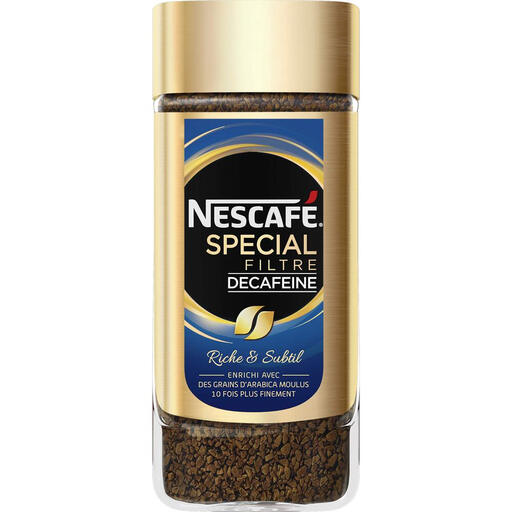 Image unavailable
NESCAFÉ Decaf Filter Coffee 100 g
For a cup whenever you fancy one at home, this decaffeinated instant coffee comes in a jar. Simply measure it out with a spoon and mix with hot water.
Size: 100 g. If you need to keep close track of your caffeine intake, check with the manufacturer how much caffeine is in a prepared cup.
View on Joybuy
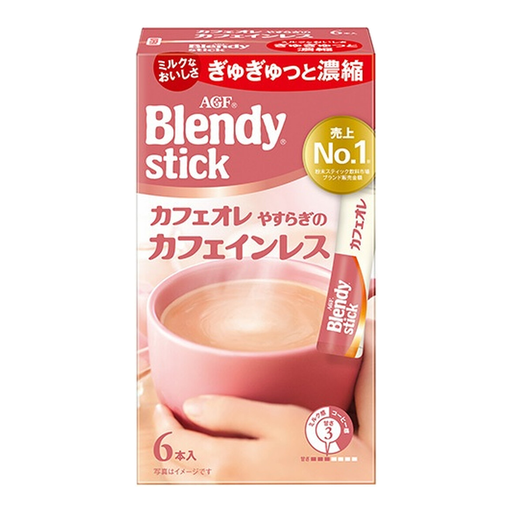 Image unavailable
AGF Blendy stick Cafe au Lait Decaffeinated, 6 pieces
If you want an individual portion without measuring it out with a spoon, just dissolve a stick in hot water. This is a decaffeinated coffee-with-milk drink, not black instant coffee.
Pack size: 6 sticks. The product description lists sugar and cream powder, but gives conflicting allergen information. If you have an allergy or avoid milk, check the full label before buying.
View on Joybuy
Frequently asked questions
Does decaffeinated instant coffee contain no caffeine at all?
Not necessarily. In France, Decree No. 2001-977 of 26 October 2001 sets a maximum of 0.3% anhydrous caffeine in the dry matter derived from coffee for products described as “decaffeinated”. This percentage doesn’t tell you how many mg of caffeine are in a prepared cup.
Is a jar or a box of sticks better for the evening?
A jar is a good choice if you want to adjust the amount of coffee each time you make a cup at home. Sticks are handy if you prefer individual portions to take with you. Check the ingredients, as some sticks are coffee-with-milk drinks rather than black instant coffee.
How should you store decaffeinated instant coffee?
Close the container after use and follow the storage instructions on the label. Carrefour recommends keeping its decaf jar away from heat and moisture; Auchan gives the same advice for its sticks.
During pregnancy or while breastfeeding, is the “decaffeinated” label enough?
No. The label alone doesn’t tell you how much caffeine you’re consuming. France’s health insurance service recommends limiting caffeine to 300 mg a day for women who are pregnant, planning a pregnancy or breastfeeding. You should consider all your sources of caffeine throughout the day and speak to a healthcare professional for advice tailored to you.


