If you’d like a hot, caffeine-free mint drink in the evening, choose an infusion that’s explicitly labelled “caffeine-free” rather than a classic green tea with mint. If you’re set on the taste of green tea, check that the product you choose is clearly labelled as decaffeinated. For a liquorice infusion, read the warnings before making it a regular habit.
Who are these options for?
People avoiding caffeine in the evening
You’d like to enjoy a hot cup of mint tea after dinner without confusing green tea with an herbal infusion. Look for a “caffeine-free” label and check the ingredients: France’s food safety agency, Anses, reminds consumers that tea naturally contains caffeine.
People who like mint on its own
You prefer a short ingredient list and a mint-forward taste, without other herbs. Auchan’s product information for Pages infusion lists 100% organic mint. It’s an infusion, not decaffeinated green tea.
People who pay attention to herbal blends
You enjoy mint combined with other ingredients, but want to know whether the box contains liquorice and what warnings apply. Anses advises caution with high and repeated consumption of liquorice.
What should you look for first?
For a hot mint drink in the evening, first decide whether you want the taste of green tea or need a caffeine-free option. Then choose an infusion with ingredients that suit you.
Mint infusion
Choose this if: you want a minty cup without green tea, and an ingredient list you can check item by item.
Bear in mind: an herbal infusion won’t taste like green tea with mint. Blends containing liquorice need particular care.
Green tea with mint
Choose this if: the taste of green tea matters more to you than avoiding caffeine.
Bear in mind: according to Anses, tea naturally contains caffeine. The presence of mint doesn’t mean a product is decaffeinated.
| What matters |
What to check |
Who is it for? |
| No caffeine |
The “caffeine-free” label and the ingredient list; if the recipe contains tea, look for an explicit decaffeinated label. |
I want a minty cup after dinner and don’t want to accidentally choose a classic green tea. Around 50% of consumers put this first. |
| Mint on its own |
The proportion of mint and whether the product contains other herbs or flavourings. |
I prefer to see mint in a short ingredient list, even if it doesn’t taste like green tea. This is the priority for around 30% of consumers. |
| Blend ingredients |
Whether it contains liquorice, the warnings on the box and how often you plan to drink it. |
If I regularly drink a blended infusion, I want to know about any precautions relating to its ingredients before choosing it. For around 20% of consumers, this comes before other considerations. |
Mistakes to avoid
-
Assuming “green tea with mint” means “caffeine-free”
Mint doesn’t remove the caffeine from tea. The ingredients published by Carrefour for Lipton and by Twinings France for its green tea with mint both include green tea. Anses reminds consumers that tea naturally contains caffeine.
If avoiding caffeine is essential, look for an explicit label on the product and check the ingredients. If it contains tea, it must be clearly labelled as decaffeinated to meet this requirement.
-
Choosing a mint and liquorice blend without reading the box
An infusion can be caffeine-free and still contain liquorice. Anses links high and repeated consumption with a risk of high blood pressure and hypokalaemia. Carrefour’s product information for Pukka peppermint and liquorice infusion carries a warning for people with high blood pressure.
Check the ingredients and precautions for the specific product before planning to drink it regularly, especially if a warning applies to you.
-
Assuming a product is available in every store
For some infusions, E.Leclerc asks customers to check availability with their chosen store. So finding a product online doesn’t guarantee it’ll be in the store where you plan to shop.
Select your store or Drive and check the product, pack size and ingredients shown before travelling or placing an order.
Brands to know when comparing ingredients
Pukka
Mint infusions, including Three Mints and a peppermint and liquorice blend.
- Carrefour’s product information for Three Mints says “naturally caffeine-free” and lists three varieties of mint.
- The liquorice blend carries a warning about excessive consumption for people with high blood pressure.
Pages
An organic mint infusion with a short ingredient list.
- Auchan’s product information lists 100% organic mint.
- It’s a mint infusion, not decaffeinated green tea with mint.
Les 2 Marmottes
An infusion combining spearmint, peppermint and liquorice.
- Auchan’s product information describes it as naturally caffeine-free.
- As it contains liquorice, read the warnings before drinking it regularly.
Lipton
A green tea with mint to consider if you’re looking for the taste of green tea.
- For the product in question, the ingredients published by Carrefour specify 64% green tea and 27% spearmint.
- Don’t assume it’s caffeine-free unless it’s explicitly labelled as decaffeinated.
Twinings
Another green tea with mint, distinct from an herbal infusion.
- Twinings France lists 73% green tea and 20% spearmint leaves in this recipe.
- This ingredient list alone doesn’t make it a caffeine-free drink.
Infusions available on Joybuy
These two infusions are a good fit for a hot mint drink in the evening: one combines three types of mint, while the other pairs mint with verbena. If avoiding caffeine is essential, check the label on the second one before buying.
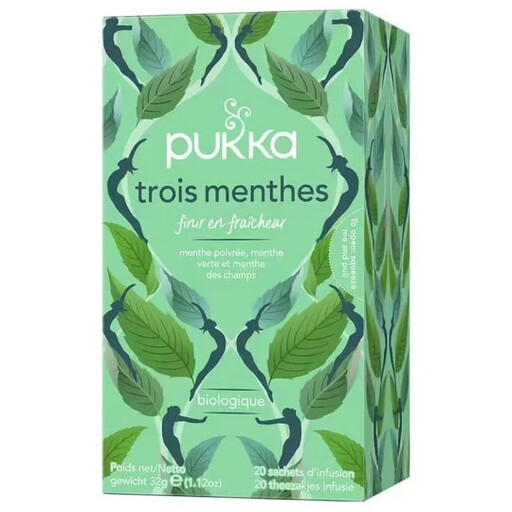 Image unavailable
Pukka Organic Three Mints Infusion, 36 g
For an evening cup that’s all about mint, this three-mint infusion is described as naturally caffeine-free. It won’t taste like green tea with mint.
View on Joybuy
 Image unavailable
Elephant Organic Verbena and Mint Infusion, 20 tea bags
For a cup combining mint and verbena rather than mint on its own, this product comes in a pack of 20 tea bags. If you need an explicit caffeine-free label, check the packaging. Also follow the brewing instructions on the box.
View on Joybuy
Frequently asked questions
Is green tea with mint always decaffeinated?
No. Adding mint to tea doesn’t decaffeinate it. The green tea with mint recipes published by Carrefour for Lipton and by Twinings France contain green tea, which naturally contains caffeine, according to Anses. If you want to keep the taste of tea without the caffeine, look for an explicit decaffeinated label.
What should I choose for an infusion made only with mint?
Look for an ingredient list that contains only mint. Auchan’s product information for Pages infusion lists 100% organic mint. Always check the ingredients on the specific box you’re buying.
How long should I brew Pukka Three Mints?
Carrefour’s product information for Pukka Three Mints recommends brewing for 5 to 15 minutes in freshly boiled water. Adjust the brewing time to suit your taste, and follow the instructions on your own box if they differ.
Should I avoid all mint and liquorice infusions?
No, but if an infusion contains liquorice, take the warnings and how often you drink it into account. Anses highlights the risk of high blood pressure and hypokalaemia with high and repeated consumption. Carrefour’s product information for Pukka peppermint and liquorice blend warns people with high blood pressure against excessive consumption.


