To serve matcha in the evening while limiting caffeine, choose a product explicitly labelled as decaffeinated and check how much caffeine remains per serving: ‘decaffeinated’ does not mean ‘caffeine-free’. If your guests want to avoid caffeine rather than simply reduce their intake, offer a separate drink that is explicitly described as caffeine-free. A matcha latte or standard matcha powder doesn’t meet this requirement just because of its name.
Who is this option for?
Matcha lovers who are sensitive to caffeine
You’d like to enjoy a matcha drink in the evening, but keep an eye on your caffeine intake. The word ‘decaffeinated’ alone doesn’t tell you how much caffeine remains in a serving. This is particularly important if you’re sensitive to caffeine.
People serving drinks at a Christmas market
You need to choose between matcha powder, a quick-to-mix latte preparation and a different caffeine-free drink. The ingredients list and preparation instructions help you describe each drink to visitors without confusing these categories.
People who want to avoid caffeine
Your priority isn’t just to consume less caffeine: look for a drink explicitly described as caffeine-free. A rooibos option is a different type of drink from matcha and won’t necessarily taste the same.
What should you look for in an evening drink?
For a Christmas market, first decide whether the drink needs to be caffeine-free, contain matcha with less caffeine, or simply be quick to prepare. Each priority points to a different product.
| What matters |
What to check |
Who it’s for |
| Caffeine-free |
Look for an explicit ‘caffeine-free’ statement on the alternative drink. Don’t assume it’s caffeine-free because it tastes mild or is marketed as an evening drink. |
I want to serve a hot drink without caffeine, even if it doesn’t taste like matcha. Around 42% of consumers would prioritise it being caffeine-free. |
| Reduced-caffeine matcha |
Check that it is labelled as decaffeinated, then look for the amount of residual caffeine and the corresponding serving size. |
I want to make matcha in the evening while limiting caffeine rather than avoiding it altogether. Around 33% of consumers would put reducing caffeine first. |
| Quick to serve |
Compare the format and preparation method, and check the proportion of matcha in instant blends. Check any caffeine information separately. |
If I have several drinks to prepare one after another, I’d prefer easy-to-mix individual portions. Speed would be the main priority for around 25% of consumers. |
What to watch out for before you buy
-
Assuming ‘decaffeinated’ means ‘caffeine-free’
A decaffeinated matcha may still contain some residual caffeine. This distinction matters most for people looking to avoid caffeine when choosing an evening drink.
Ask how much caffeine there is per serving and check the serving size before describing the drink to visitors.
-
Confusing instant lattes with pure matcha
Auchan’s product listings for Lipton sticks describe oat-based preparations containing either 5.3% or 6.2% matcha, depending on the variety. They are not made from matcha alone.
If you want to serve pure matcha or describe a latte’s ingredients accurately, check the product name and ingredients list.
-
Assuming standard matcha is suitable for everyone in the evening
Tea leaves naturally contain caffeine. Anses says it can delay falling asleep and reduce the duration and quality of sleep, although sensitivity varies from person to person.
For an evening menu, clearly distinguish standard matcha from a decaffeinated product and another drink explicitly described as caffeine-free.
-
Planning your menu around a limited-time offer
A product featured in a local promotion isn’t enough on its own to plan for a future Christmas market.
Before printing a menu, confirm availability with the relevant shop and check the labelling of the product you plan to use.
Brands and retailers to consider
These examples help you tell pure matcha apart from matcha-based preparations. Their inclusion here doesn’t mean they are decaffeinated.
Carrefour
A useful reference for comparing the ingredients in pure matcha powder with those in an instant blend.
- Carrefour Bio and SIPSTA product listings state ‘100% matcha green tea’ in the ingredients.
- This ingredient list doesn’t mean the product is decaffeinated. If you plan to serve it in the evening, check the caffeine information separately.
Auchan
The Lipton sticks featured by this retailer are an example of a matcha latte preparation.
- The product listings state that the vanilla version contains 5.3% matcha and the original contains 6.2%.
- These percentages describe the blend’s ingredients, not its caffeine content or decaffeinated status.
E.Leclerc
The retailer offers, among other products, a 300 g pack of organic matcha green tea powder.
- You can compare the powdered format with individual portions, depending on how you plan to serve the drinks.
- For evening use, check the product’s full ingredients list and any information about caffeine.
Lidl
The retailer has featured Japanese matcha powder in its promotional material.
- It’s an example of a powdered product rather than a latte preparation.
- Check when the offer is available, which shop it applies to and the product labelling before planning to use it at Christmas.
Aldi
The retailer offers a 40 g pack of Asia Green Garden matcha powder.
- The pack format makes it easy to distinguish from latte drink sticks.
- Don’t describe it as decaffeinated unless the product is labelled accordingly.
A hot drink option on Joybuy
If you’d like to offer a hot drink other than matcha, these rooibos milk tea sticks are one option. They are not a decaffeinated matcha. Check the caffeine information and ingredients if you need to describe the drink you’re serving accurately.
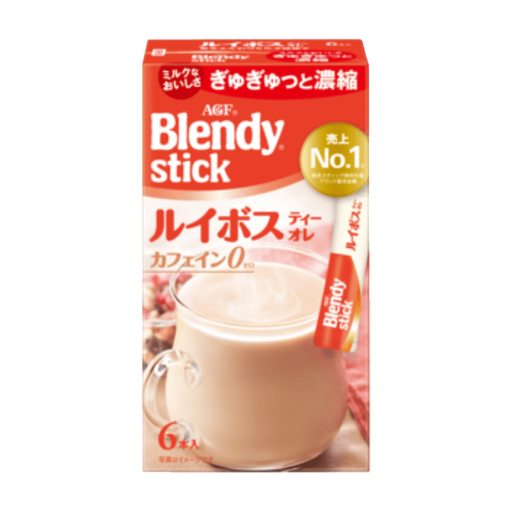 Image unavailable
AGF Blendy Stick Rooibos Tea with Milk, 6 sticks
If you’re serving rooibos rather than matcha, this pack of 6 sticks makes it easy to plan individual portions.
If caffeine-free status or particular ingredients matter to your guests, check the information on the packaging before serving it.
View on Joybuy
Frequently asked questions
Is decaffeinated matcha completely caffeine-free?
Not necessarily: some caffeine may remain after decaffeination. When choosing an evening drink, compare the stated caffeine content with the serving you plan to offer. Don’t present ‘decaffeinated’ as a guarantee that the drink contains no caffeine.
Do matcha latte sticks contain only matcha?
No, not the Lipton sticks listed by Auchan: their product information states that they contain an oat base and either 5.3% or 6.2% matcha, depending on the variety. By comparison, Carrefour Bio and SIPSTA powders are listed as containing 100% matcha green tea. Check the ingredients list for the product you choose rather than relying on the word ‘matcha’ on the front of the pack.
Can you serve standard matcha as an evening drink?
Yes, as long as you don’t describe it as caffeine-free. Matcha is made from tea leaves, which naturally contain caffeine; Anses says caffeine can disrupt sleep. If your visitors want to avoid caffeine, offer a separate drink that is explicitly described as caffeine-free.


