People looking to limit their caffeine intake
If cutting down on caffeine is your priority, the word ‘matcha’ alone won’t help you decide. Look for an explicit decaffeination claim and a caffeine content that matches the serving you’ll prepare.


For a quick breakfast, choose regular matcha if you want green tea powder and are happy to have the caffeine. If you’re looking to cut down on caffeine, check that any product described as decaffeinated states its residual caffeine content per serving. For a caffeine-free evening drink, consider another option and check its ingredients list.
If cutting down on caffeine is your priority, the word ‘matcha’ alone won’t help you decide. Look for an explicit decaffeination claim and a caffeine content that matches the serving you’ll prepare.
If you’re happy to have the caffeine in green tea, a powder with ingredients and a format that suit your routine could be a good choice. Read the ingredients to tell pure matcha apart from a mix that needs to be prepared.
If being caffeine-free matters more than the taste of matcha, consider another hot drink. Anses says caffeine can delay falling asleep and reduce the duration and quality of sleep.
The time of day affects your choice: regular matcha may suit breakfast if you’re happy to have the caffeine, while an evening drink calls for closer attention to its ingredients.
Choose it: if you want green tea powder for breakfast and aren’t restricting your caffeine intake.
Bear in mind: matcha naturally contains caffeine, even when it’s organic.
Choose it: if you want to stick with green tea powder while reducing your caffeine intake, after checking the label.
Check: the decaffeination claim and the amount of residual caffeine in the serving you’ll consume.
Choose it: if being caffeine-free matters more than the taste of matcha, particularly for an evening drink.
Bear in mind: it won’t be matcha, so check the ingredients in any blends too.
| Criterion | What to check | Who it’s for |
|---|---|---|
| Caffeine | Decaffeination claim and caffeine content per serving or per 100 g, taking the prepared serving size into account. | I want to limit my caffeine intake without confusing regular matcha with a decaffeinated product. Around 46% of consumers put this need first. |
| Type of product | Ingredients list: matcha green tea powder or a mix containing other ingredients. | I want a matcha-based drink, not a different mix by mistake; this comes first for around 27% of consumers. |
| Routine and timing | Preparation instructions and caffeine content, based on when you’ll drink it. | When I’m short on time during the week, I want something easy to prepare that also fits my schedule. A convenient routine comes first for around 27% of consumers. |
A study published in Nutrition Research describes matcha as powdered green tea that contains caffeine. Carrefour France says its Carrefour Bio matcha is made from 100% matcha green tea, so the organic label doesn’t tell you whether it’s decaffeinated.
If you want to cut down on caffeine, look for an explicit decaffeination claim and a residual amount suited to the serving you’ll prepare.
A powder made entirely from matcha and a mix containing other ingredients won’t have the same composition when prepared as a drink.
Read the ingredients list before choosing. If you make your own latte, you can choose the matcha and any added ingredients separately.
A retailer’s offer may depend on the shop or its validity period. Lidl France’s offer on LOYD matcha was dated 2 October 2026.
Before travelling to a shop or placing an order, check the current offer, collection options and the product page for the item you plan to buy.
Your caffeine intake can also come from other drinks. Anses highlights its possible effects on sleep in particular.
If you want to limit your caffeine intake, factor in your other drinks throughout the day and choose your evening drink accordingly.
These products let you compare different matcha formats, but their inclusion here doesn’t mean they’re decaffeinated.
Carrefour France lists a 55 g jar of organic matcha green tea made from 100% matcha green tea.
Lidl France has listed 40 g of Japanese matcha powder for hot or cold drinks.
ALDI France lists 40 g of Asia Green Garden matcha powder.
E.Leclerc lists 300 g of organic matcha green tea powder.
This selection is a rooibos and milk drink in stick sachets, for anyone happy to swap matcha for something else. If it’s essential that your drink is caffeine-free, check the information on the packaging before choosing.
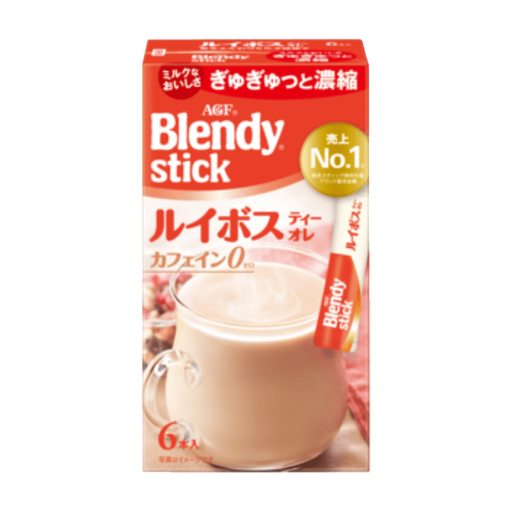 Image unavailable
A rooibos and milk option in stick sachets if you’d like to switch drinks rather than make matcha. If these points affect your choice, check the ingredients and caffeine information on the packaging.
No. Matcha is powdered green tea and naturally contains caffeine. A label such as ‘organic’ doesn’t mean it has been decaffeinated, so look for an explicit claim if that’s important to you.
Look for a decaffeination claim, then check the residual caffeine content and the serving size it refers to. Also read the ingredients to see whether you’re buying matcha powder or a mix containing other ingredients.
Regular matcha contains caffeine. If your evening drink needs to be caffeine-free, choose something with a different composition and check its ingredients. Anses says caffeine can delay falling asleep and reduce the duration and quality of sleep.
Don’t assume they are based on their names alone: the product pages from Carrefour France, Lidl France, ALDI France and E.Leclerc describe them as matcha or matcha green tea products. If you want to reduce your caffeine intake, check the decaffeination claim and residual caffeine content of the specific product you’re considering.