For a break at uni, choose an instant coffee labelled “decaffeinated”. A jar works well if you can keep it somewhere permanent, while sticks are easier to carry around, provided you have access to hot water. If you’re also looking for a drink for the evening, bear in mind that “decaffeinated” doesn’t mean caffeine-free. Check, too, whether it’s black coffee or a milky drink.
Who is this option for?
Students looking to cut down on caffeine
If you want a drink with lunch or in the evening, you may be looking to reduce your caffeine intake without assuming that decaffeinated coffee contains none at all. The Anses (French Agency for Food, Environmental and Occupational Health & Safety) notes that caffeine can disrupt sleep, and that people’s sensitivity varies.
People who make coffee without a machine
If you have a mug and access to hot water on campus, you can make instant coffee without a machine. A stick saves you from carrying a jar and measuring out the powder every time you take a break.
Fans of full-flavoured decaf
If flavour matters as much as convenience, check the intensity shown for each product. It can help you make an initial choice, but it can’t tell you on its own whether you’ll enjoy the coffee.
What should you look for?
For a break at uni, first check that the coffee suits your aim of cutting down on caffeine. Then choose a format that works for wherever you’re most likely to make your drink.
| What to consider |
What to check |
Who is it for? |
| Caffeine |
Look for the word “decaffeinated”; don’t assume this means there’s no caffeine at all. |
If I want to cut down on caffeine, especially in an evening drink, this matters more than the format. Around 42% of consumers are said to put reducing their caffeine intake first. |
| Taking it with you and making it |
Check that you have access to hot water, then choose between a single serving and a jar you can measure from. |
Between lectures, I’d rather carry a portion that’s ready to pour than a container to leave somewhere. Ease of carrying and preparation is said to be a priority for around 25% of consumers. |
| Flavour and intensity |
Check the stated intensity, but don’t assume that different brands use the same scale. |
If flavour is my top priority, I want to choose a product with a flavour profile that appeals to me, even though that doesn’t predict how it’ll taste in my cup. Around 25% of consumers are said to prioritise this first. |
| Format for regular use |
Compare the net weight and storage instructions if you’ll be keeping the coffee in one place. |
If I keep coffee in my room or a shared space, I look for a pack size that suits how often I take a break. For around 8% of consumers, this is said to be the main consideration. |
Mistakes to avoid
-
Assuming “decaffeinated” means “caffeine-free”
The term doesn’t guarantee that there’s no caffeine at all. This distinction is especially important if you’re highly sensitive to caffeine.
Check the product description and information, but don’t assume the caffeine content is zero. If you need to avoid all caffeine for medical reasons, seek advice that’s appropriate for your situation.
-
Choosing a jar you’ll have to carry every day
A jar is handy if you can keep it somewhere permanent, but you’ll need to carry it and measure out the powder if you make your coffee in different places. Sticks are pre-portioned, but create more individual packaging.
Think about where you’ll make your coffee most often before choosing a pack format.
-
Using the same amount for every coffee
Recommended amounts of powder and water vary between products, so the instructions for one won’t necessarily work for another.
Start by following the instructions on the pack you receive, then adjust the amount to suit your mug and taste.
Brands to know
NESCAFÉ
Auchan lists its Spécial Filtre Decaffeinated coffee in a 100 g jar, with a stated intensity of 7.
- Auchan’s product listing describes a decaffeinated Arabica-Robusta blend, decaffeinated using water.
- The stated intensity and flavour description can’t replace trying it for yourself to see if it suits your preferences.
AUCHAN
Auchan lists its intense decaffeinated instant coffee in a 100 g jar, said to make 50 cups, with an intensity of 6.
- The ingredients list for this product states that it contains freeze-dried decaffeinated instant coffee.
- Don’t compare its stated intensity directly with another brand’s as if they were using the same scale.
MAXWELL HOUSE
For its Qualité Filtre Decaffeinated range, Auchan lists a 200 g jar said to make up to 110 cups.
- The jar could suit you if you keep your coffee in one place and make it regularly.
- Follow the preparation and storage instructions for the pack you choose. A large jar isn’t necessarily convenient to carry around.
Products available on Joybuy
If you have access to hot water, these products offer two different options: decaffeinated instant coffee in a jar and decaffeinated café au lait in sticks. The latter isn’t black coffee with nothing added.
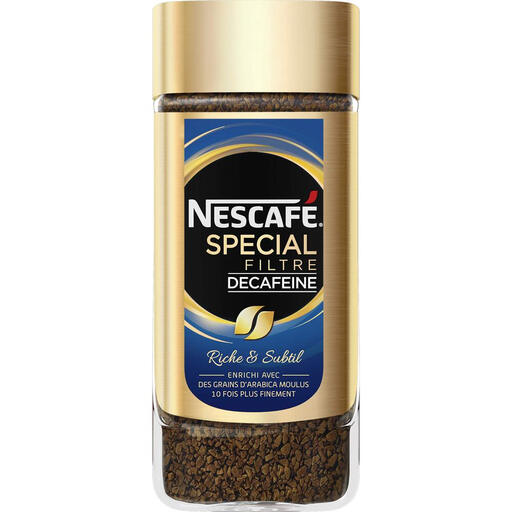 Image unavailable
NESCAFÉ Decaf Filter Coffee, 100 g
Decaffeinated instant coffee to make wherever you have access to hot water. The 100 g jar is better suited to keeping in one place than carrying individual portions around.
You’ll need to measure out the powder for each cup. The word “decaffeinated” doesn’t guarantee that there’s no caffeine at all.
View on Joybuy
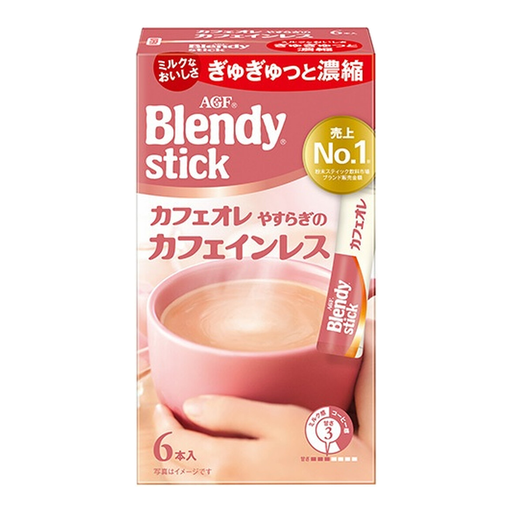 Image unavailable
AGF Blendy stick Cafe au Lait Decaffeinated, 6 sticks
Decaffeinated café au lait in sticks to dissolve in hot water, ideal if you prefer to carry individual portions. This isn’t black instant coffee.
The information about allergens and dairy ingredients is contradictory, so check the pack label before buying and consuming.
View on Joybuy
Frequently asked questions
Is decaffeinated instant coffee completely caffeine-free?
No. The word “decaffeinated” doesn’t mean there’s no caffeine at all. If this distinction matters to you, don’t rely on the product name alone.
Do you need a machine to make decaffeinated instant coffee at uni?
No, you just need access to hot water and to follow the product instructions. The recommended amount of powder and water may vary from one product to another.
Jar or sticks: which should you take to lectures?
Sticks are easier to slip into your bag if you make your coffee in different places. A jar is better if you can leave it somewhere permanent and measure out each cup. Check, too, whether the sticks contain black coffee or a drink such as café au lait.
How should you store decaffeinated instant coffee once opened?
Follow the instructions on the pack you buy. For its Qualité Filtre Decaffeinated jar, MAXWELL HOUSE’s product listing on Auchan advises keeping it somewhere dry, away from heat and light.


