For a holiday let, a 200 g jar is a good choice if several guests regularly drink decaffeinated instant coffee. For a short stay or uncertain consumption, a 100 g jar or individual sticks help you avoid opening more than you need. Sticks make portioning easy, but create more individual packaging. Also check whether you’re buying black coffee or a white coffee mix.
Who are these formats for?
Groups sharing coffee at their accommodation
If several guests drink decaf during their stay, a 200 g jar can save you from buying lots of smaller packs. Carrefour lists jars of this size from NESCAFÉ and MAXWELL HOUSE. Estimate how many cups you’ll need before choosing.
Guests on a short stay
If decaf will only be an occasional choice, a 100 g jar or individual portions make it easier to take just the right amount. NESCAFÉ offers a 100 g jar, while E.Leclerc lists Plantation sticks.
People keeping an eye on their caffeine intake
If you choose decaf to reduce your caffeine intake, check the product description rather than assuming that “decaffeinated” means “caffeine-free”. French legislation published on Légifrance sets out the rules for using this term on coffee extracts.
What should you look for?
When stocking a holiday let, start by estimating how many cups you’ll need. Then check how the coffee is prepared, whether it is labelled “decaffeinated” and what the product says about its flavour.
| What to consider |
What to check |
Who it matters to |
| No machine needed |
Check the amount of coffee and water listed on the pack. NESCAFÉ recommends one teaspoon of its 100 g jar of Spécial Filtre Décaféiné. |
When I don’t know what coffee-making equipment the kitchen has, I want to be able to make a cup with hot water. Around 31% of consumers prioritise this ease of preparation. |
| Quantity and storage |
Compare the net weight and, if stated, the number of cups. Carrefour says its 200 g jar of NESCAFÉ makes 100 cups, while its 200 g MAXWELL HOUSE jar makes up to 110. Auchan says its 100 g jar makes around 50 cups. |
For a group, I want to have enough coffee without leaving a large, opened jar behind after the stay. Getting the quantity right for how it will be used comes before other considerations for around 25% of consumers. |
| “Decaffeinated” label |
Look for the product description on the label. Under French legislation published on Légifrance, the anhydrous caffeine content of the relevant coffee extracts must not exceed 0.3% of the coffee-derived dry matter for them to carry this label. |
If I want to reduce my caffeine intake, I want to know exactly what “decaffeinated” means, without assuming there’s none left. Around 25% of consumers prioritise checking this. |
| Flavour and strength |
Use the stated strength as a guide for that particular product, rather than treating it as a universal scale that applies across all brands. |
When coffee is being shared, I want to find a flavour profile the guests will enjoy, while remembering that the stated strength can’t guarantee it will suit everyone. Taste is the top consideration for around 19% of consumers. |
Mistakes to avoid
-
Assuming “decaffeinated” means “caffeine-free”
For the relevant coffee extracts, “decaffeinated” means the product meets a legal threshold. It doesn’t mean it contains absolutely no caffeine.
Check the product description. If you’re reducing your caffeine intake for personal medical reasons, ask a healthcare professional for advice tailored to you.
-
Buying 200 g without working out how many cups you’ll need
A large jar can suit a group, but some may go unused after a short stay. The stated number of cups also varies by product and the amount used per cup.
Before choosing between 100 g, 200 g and individual portions, estimate how many people will drink it, how long you’ll be staying and how many cups you’ll need.
-
Leaving the jar open or loosely sealed
A damp cupboard or an open container can make it harder to keep instant coffee in good condition during your stay.
Seal the jar after use and keep it in a cool, dry place, following the storage instructions for Auchan decaffeinated instant coffee.
-
Comparing strength ratings as if they were universal
Auchan gives its 100 g decaffeinated coffee a strength rating of 6/10, while NESCAFÉ Spécial Filtre Décaféiné 200 g is rated 7. These ratings don’t mean every guest will have the same preference.
If flavour matters to your group, treat the strength rating as one indication among several, rather than a tasting result you can compare directly across brands.
Brands to know for these formats
NESCAFÉ
NESCAFÉ offers Spécial Filtre Décaféiné in a 100 g jar, while Carrefour lists it in a 200 g jar.
- Two sizes make it easier to match your purchase to how much coffee you expect to use.
- The number of cups stated for the 200 g jar depends on how much you use per cup; Carrefour says this product makes 100 cups.
AUCHAN
Auchan lists 100 g of decaffeinated instant coffee, advertised as making around 50 cups.
- The 100 g size lets you plan for a smaller amount during your stay.
- If you’re buying for a group, compare the number of cups you’ll need with the stated yield before choosing this size.
Plantation
E.Leclerc lists Plantation freeze-dried decaffeinated instant coffee in a 200 g jar and in a pack of 25 sticks weighing 50 g in total.
- The jar and sticks suit different needs, whether you’re sharing or prefer individual portions.
- Check availability with the relevant store or Drive service. E.Leclerc says these products aren’t sold directly on its website.
MAXWELL HOUSE
Carrefour lists MAXWELL HOUSE Qualité Filtre Décaféiné instant coffee in a 200 g jar, advertised as making up to 110 cups.
- The stated number of cups can help you work out how much coffee you’ll need for a group stay.
- The yield still depends on how much you use per cup, so check what quantity will suit your guests.
Products available on Joybuy
These products suit two needs for a short stay: a 100 g jar of decaffeinated instant coffee and sticks of decaffeinated coffee with milk. The sticks aren’t a substitute for a jar if you want to make black coffee only.
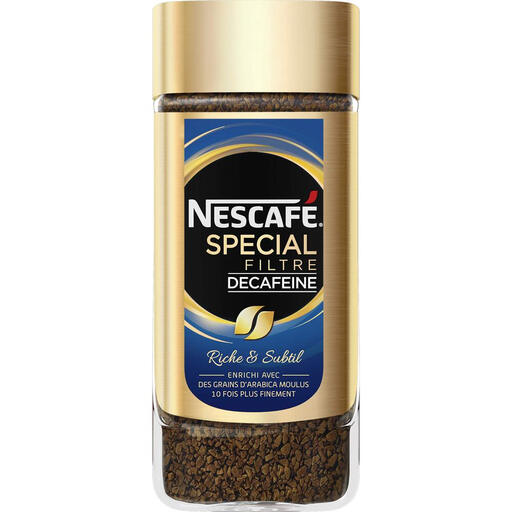 Image unavailable
NESCAFÉ Decaf Filter Coffee, 100 g
A 100 g jar is worth considering if only a few guests are likely to drink decaf during their stay.
Check the recommended amount on the product to estimate how many cups you’ll need for your group.
View on Joybuy
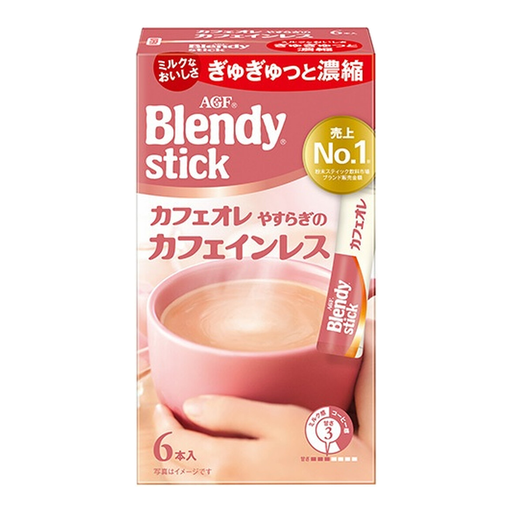 Image unavailable
AGF Blendy stick Cafe au Lait Decaffeinated, 6 sticks
The 6 sticks give you individual portions of decaffeinated coffee with milk for a short stay.
This is a coffee-with-milk mix, not a jar of black instant coffee. If these details matter to your choice, check the ingredients and the amount per stick before buying.
View on Joybuy
Frequently asked questions
Is “decaffeinated” coffee completely caffeine-free?
No. Under French legislation published on Légifrance, the label “decaffeinated” is permitted for the relevant coffee extracts if their anhydrous caffeine content does not exceed 0.3% of the coffee-derived dry matter. It doesn’t mean there’s no caffeine at all.
How much water should I use for a cup of decaffeinated instant coffee?
Follow the instructions for the product you’ve chosen. For its Spécial Filtre Décaféiné, NESCAFÉ recommends one teaspoon of coffee. Auchan’s product details for the 200 g size specify one heaped teaspoon per 100 ml of hot water, just off the boil.
How should I store an opened jar during a holiday?
Close it securely and store it in a cool, dry place. That’s Auchan’s advice for its 100 g decaffeinated instant coffee. In a shared kitchen, choose a cupboard away from steam.
Will a format I’ve seen online be available near my holiday let?
Not necessarily. Check the size and availability at the store or Drive service you plan to use. E.Leclerc notes, for example, that its Plantation products listed on its pages aren’t sold directly on the website.


