Iced coffee lovers keeping an eye on caffeine
You’d like an iced coffee for your mid-morning break and want to be able to check that your chosen product is decaffeinated.


If decaffeinated coffee is important for your mid-morning break, choose a product that is explicitly labelled as decaffeinated rather than relying on the word ‘iced’. You can make decaffeinated instant or ground coffee and let it cool, while a ready-to-drink option saves you the wait. Just be sure to check its labelling, ingredients and storage instructions separately.
You’d like an iced coffee for your mid-morning break and want to be able to check that your chosen product is decaffeinated.
You’re looking for an individual drink that needs no preparation. However, being iced doesn’t mean it’s decaffeinated: check the product label and storage instructions.
You also compare sugar content, whether it contains milk and any listed allergens, particularly if you’re considering an iced latte rather than coffee made from instant or ground coffee.
When choosing between decaffeinated coffee you prepare yourself and a ready-to-drink iced option, first check that the specific product is labelled ‘decaffeinated’. Then compare the formats based on how much preparation time you’re happy to spend and what’s in the drink.
| What to check | Things to look for | Who is it for? |
|---|---|---|
| Decaffeinated status | Look for ‘decaffeinated’ on the exact product you’re considering. Distinguish between instant coffee, ground coffee, concentrate and ready-to-drink beverages. | If I want to limit my caffeine intake, coffee served cold isn’t enough to meet my requirements: I look for an explicit statement on the product. Around 45% of consumers put this check at the top of their list. |
| Preparation time | Compare ready-to-drink options with the time it takes to make and cool decaffeinated coffee. Check the instructions for your chosen product. | When my break is short, I prefer a drink I can open without waiting for freshly made coffee to cool. Speed comes before other considerations for around 33% of consumers. |
| Ingredients and storage | Check the sugar per 100 ml, pack size, ingredients, allergens and storage instructions. | If this drink is part of my snack, I want to know what the whole serving contains and how to store it. Ingredients are the main priority for around 22% of consumers. |
An iced latte or a concentrate to dilute may contain coffee without its name indicating that it is decaffeinated. The temperature at which you drink it tells you nothing about this.
Look for the word ‘decaffeinated’ on the packaging of the product you plan to buy. Don’t assume it from the product category.
E.Leclerc’s product listing for PLANTATION iced coffee latte and Auchan’s listing for Starbucks Caffè Latte both state 8,4 g of sugars per 100 ml. These are milk-based drinks, so their ingredients deserve as much attention as their format.
Compare the nutritional information per 100 ml with the amount you plan to drink, then check the ingredients, allergens and storage instructions.
Ready-to-drink beverages and coffee you prepare yourself aren’t necessarily sold in the same aisles or available through the same shopping options.
Check whether the product is available from the shop or collection service you use. If necessary, compare it with a decaffeinated instant or ground coffee option.
These products illustrate different formats. Coffee that you prepare yourself and which is explicitly labelled decaffeinated shouldn’t be confused with iced lattes, where you need to check the label of each product individually.
NESCAFÉ’s product listing for Spécial Filtre Décaféiné describes a 100 g instant coffee to be made with hot water, then cooled for your break.
Carrefour lists Carte Noire Décaféiné 100 % Arabica, Intensité 7 ground coffee, which is brewed before being served cold if desired.
The PLANTATION iced coffee latte listed by E.Leclerc is a ready-to-drink milk-based beverage. Check it separately from decaffeinated coffees that you prepare yourself.
The 220 ml Starbucks Caffè Latte listed by Auchan is an example of an individual chilled milk-based drink.
These products offer a way to ‘make decaffeinated coffee, then let it cool’ for your mid-morning break. They include ground coffee, capsules and single-serve formats. Check the instructions and, for capsules, make sure they’re compatible with your machine.
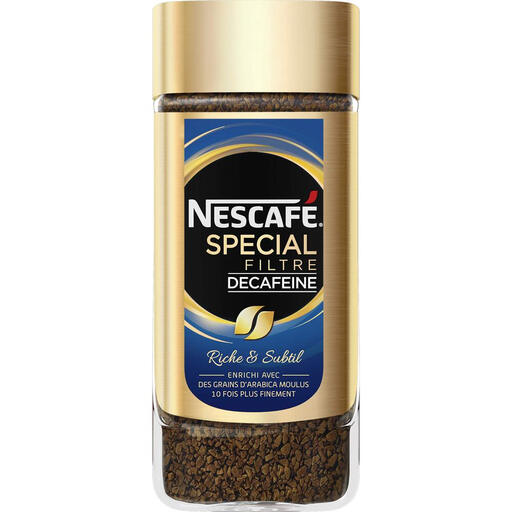 Image unavailable
For making decaffeinated coffee and letting it cool, instead of buying a ready-to-drink iced option.
100 g pack. Check the instructions for this product before preparing it; don’t follow instructions for a different NESCAFÉ coffee.
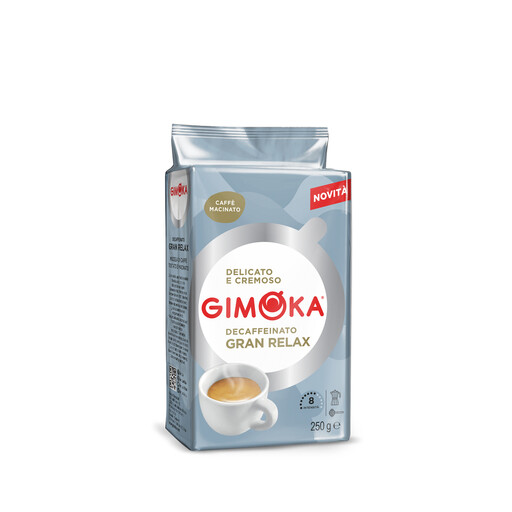 Image unavailable
Worth considering if you have a suitable way to brew ground coffee and are happy to let it cool after brewing.
250 g bag. Check the preparation instructions for the product you buy.
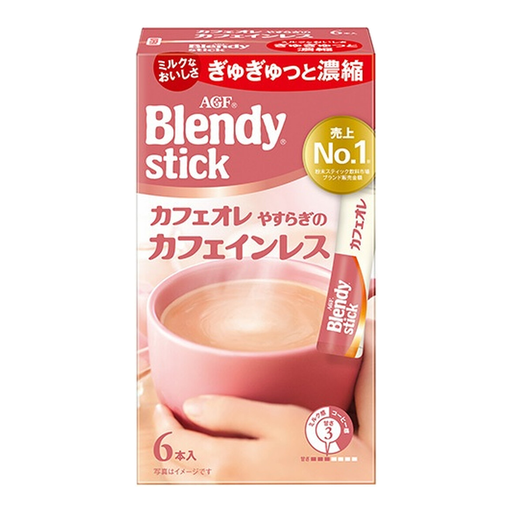 Image unavailable
Stick packs for making a single serving to cool, rather than a ready-to-drink iced coffee.
‘Decaffeinated’ appears in the product name, but check the packaging too, along with the ingredients and allergens if the contents of the coffee with milk matter to you.
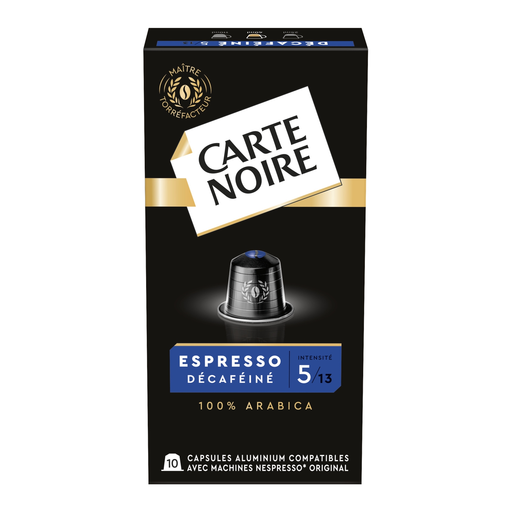 Image unavailable
For making a single serving of decaffeinated espresso, then letting it cool.
Box of 10 aluminium capsules. Check that they’re fully compatible with your machine before buying.
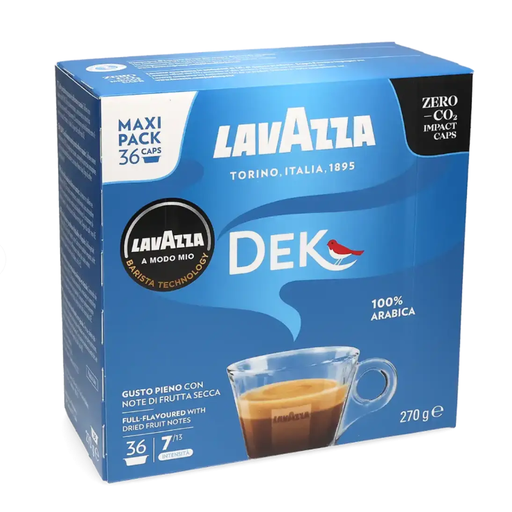 Image unavailable
For making a serving of decaffeinated coffee to cool, if you use the A Modo Mio system.
Box of 36 capsules. Check they’re compatible with your machine and follow the preparation instructions for this product.
No: ‘iced’ describes how the drink is served, not whether it’s decaffeinated. E.Leclerc’s listing for PLANTATION latte and Auchan’s listing for Starbucks Caffè Latte describe coffee drinks without confirming that they’re decaffeinated. Look for an explicit statement on the product you choose.
Make it according to the instructions for that particular product, then leave it to cool before serving it cold. For this product specifically, NESCAFÉ recommends one teaspoon of Spécial Filtre Décaféiné for 100 ml of hot water. Don’t apply this measurement to another instant coffee.
Compare the ingredients, allergens, sugar per 100 ml and the total amount you plan to drink. If it matters to you, also check whether it’s labelled ‘decaffeinated’, along with the storage instructions on the bottle.
Yes, if you’re relying on a specific product for your shopping: check its availability with the shop or collection service you use. If needed, you can plan to prepare another format that’s explicitly labelled decaffeinated.