For weekday breakfasts, first choose a decaffeinated ground coffee that suits your coffee maker, then compare the stated strength and decaffeination process to find one that matches your preferences. If you’d also like to drink it in the evening, remember that ‘decaffeinated’ doesn’t mean completely caffeine-free. The French Agency for Food, Environmental and Occupational Health & Safety (Anses) notes that caffeine can affect sleep, although the effects vary from person to person.
Who is this choice for?
People keeping an eye on their caffeine intake
You’re looking to cut down on the caffeine in your cup, particularly if you also drink coffee later in the day. Anses says caffeine can affect how quickly you fall asleep, as well as the length and quality of your sleep.
People in a hurry in the morning
You prefer coffee that’s already ground, with no need to grind the beans, and want to check that it’s suitable for your usual coffee maker.
People who care about the process and certifications
You’d like to choose a product that specifies its decaffeination method or certifications, rather than assuming these apply to an entire brand.
What should you look for first?
Start by considering how much caffeine you want to include in your day and which coffee maker you use. Then narrow down your choice by looking at the stated flavour profile, decaffeination process and pack size.
| Criteria |
What to check |
Who is it for? |
| Reducing caffeine |
Look for ‘decaffeinated’ on the product you choose, but don’t assume this means it’s completely caffeine-free. |
If I want to drink coffee in the evening too, I’d rather reduce my caffeine intake without assuming how I’ll personally react; around 37% of consumers make this their top priority. |
| Flavour and process |
Check the stated flavour profile and strength, as well as the decaffeination process if it matters to you. |
I want a flavour profile I enjoy and to know how the coffee I choose has been decaffeinated; this comes first for around 27% of consumers. |
| Making your morning coffee |
Check which brewing methods are recommended for your coffee maker: filter, cafetière, moka pot or espresso. |
Before heading to work, I want to use my usual equipment without grinding beans; making coffee is the top priority for around 18% of consumers. |
| Restocking |
Check the pack weight and whether you can find the same product through your usual retailer. |
For my weekday routine, I prefer a pack size I can buy regularly; around 18% of consumers make restocking their priority. |
Mistakes to avoid
-
Assuming ‘decaffeinated’ means ‘caffeine-free’
Decaffeinated coffee shouldn’t be considered completely caffeine-free. Anses says the effects of caffeine on sleep vary from person to person.
If you also drink it in the evening, take your other sources of caffeine and your own sensitivity into account.
-
Choosing based on strength alone
The stated strength doesn’t tell you whether the grind is suitable for a filter coffee maker, cafetière, moka pot or espresso machine.
Check the brewing methods listed on the pack first, then use the strength as a guide to flavour.
-
Assuming all decaffeinated coffee uses the same process
Lavazza describes several decaffeination methods. The water process stated by Malongo for Déca Aqua doesn’t apply to other products, even those from the same brand.
If the process influences your choice, look for details on the specific product you’re considering.
Brands to consider
Carte Noire
For comparing decaffeinated ground coffee by its stated strength: Carrefour lists a 100% Arabica Carte Noire, strength 7, in a pack of two 250 g bags.
- This product combines a decaffeinated label with the coffee type and a strength rating.
- Check the pack for recommended brewing methods and details of the process, if that matters to you.
Malongo
For a clearly stated decaffeination process: Malongo says its Déca Aqua ground coffee is decaffeinated using water. Its product information describes it as organic and fair trade.
- The Déca Aqua product information states that it is certified organic by Ecocert France.
- The process and details of this product don’t guarantee how it will taste to you or tell you about other Malongo coffees.
Carrefour Extra
For restocking at a supermarket: Carrefour lists a 250 g pack of 100% Arabica decaffeinated ground coffee.
- Carrefour’s product information lists ‘100% decaffeinated ground Arabica coffee’ in the ingredients.
- Check availability with your local store and read the brewing instructions for the exact product.
ECO+ / E.Leclerc
For a familiar pack size: E.Leclerc lists a 250 g pack of ECO+ decaffeinated ground coffee.
- The product information lists ‘decaffeinated coffee’ as an ingredient.
- E.Leclerc recommends checking availability with your local store.
Decaffeinated ground coffee on Joybuy
This pre-ground coffee lets you make a decaffeinated brew without having to grind the beans. Check the brewing instructions before choosing it for your morning coffee maker.
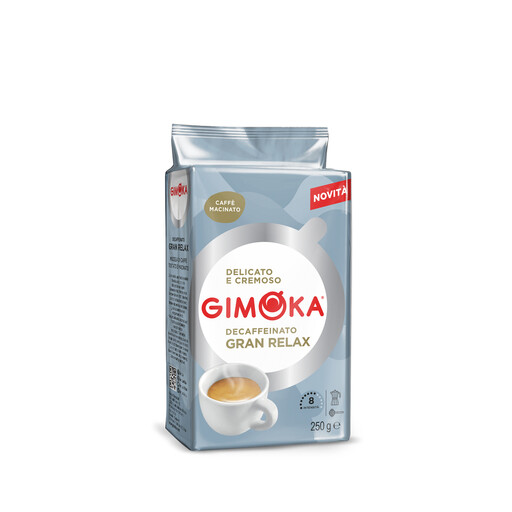 Image unavailable
GIMOKA GRAN RELAX, decaffeinated ground coffee 250 g
This 250 g pack contains coffee that’s already ground, so you can make a decaffeinated coffee in the morning without grinding beans. Check that the brewing instructions for this product suit your coffee maker.
View on Joybuy
Frequently asked questions
Is decaffeinated coffee completely caffeine-free?
No. ‘Decaffeinated’ doesn’t mean completely caffeine-free. If this distinction matters to you, check the information for the product you choose rather than assuming all decaffeinated coffees are the same.
Should you choose water-decaffeinated coffee to enjoy your coffee?
No. The water process is a factor to consider if it matters to you, but it doesn’t guarantee a particular flavour. Lavazza describes several decaffeination methods, while Malongo says it uses water for its Déca Aqua product.
How do you choose decaffeinated ground coffee for your coffee maker?
Check the recommended brewing methods for the product before relying on its strength rating. Once opened, Lavazza recommends storing ground coffee in an airtight container, away from light, moisture and heat.


