For an evening cup, first choose ground coffee that is explicitly labelled decaffeinated. Then check the recommended brewing method and tasting notes if you’d also like to serve it with a sweet breakfast. A mild-tasting coffee isn’t necessarily decaffeinated; conversely, ‘decaffeinated’ doesn’t guarantee that it’s completely caffeine-free.
Who is this coffee for?
Evening coffee drinkers
You’d like to enjoy your usual cup after dinner while reducing your caffeine intake. Look for the word ‘decaffeinated’, but don’t take it to mean ‘caffeine-free’: Lavazza points out that decaffeination doesn’t remove all the caffeine.
Fans of a sweet breakfast
Whether you’re having it with milk, a brioche or cereal, you’re looking for a flavour profile you’ll enjoy. Check the tasting notes and recommended brewing method for the specific product, rather than relying on the stated intensity alone.
Those who care about the process and pack size
If water-based decaffeination or organic and Fairtrade claims matter to you, check the packaging of the product you’re considering. Also compare the quantity in each pack and whether the product is available to buy.
What should you look for?
If you want to enjoy the same ground coffee in the evening and at breakfast, first check that it’s decaffeinated. Then consider its flavour profile and the brewing method recommended for your coffee maker.
| What to consider |
What to check |
Who is it for? |
| Caffeine for an evening cup |
The ‘decaffeinated’ label on the specific product and, if stated on the packaging, its residual caffeine content. |
I like to have coffee after dinner, but want to reduce my caffeine intake without assuming that the caffeine has been removed completely. This would be the priority for around 40% of consumers. |
| Flavour with a sweet breakfast |
The stated tasting notes and recommended brewing method for the pack you’re considering. |
With brioche, cereal or milk, I’d rather choose based on the stated flavours than assume that a low intensity means I’ll enjoy the taste. Around 30% of consumers would put flavour pairing first. |
| Pack size and availability |
The quantity per pack or multipack, and whether you can buy the product from your chosen retailer. |
If I buy regularly, I want to know whether a 250 g pack or multipack suits my consumption and whether I’ll be able to find the same product again. Around 20% of consumers would make these practical considerations their main criterion. |
| Process and certifications |
The exact decaffeination, organic certification or Fairtrade claims made on the product. |
If I’m specifically looking for water-based decaffeination or certain certifications, I need to be able to identify these claims on the coffee I buy. This would be the main criterion for around 10% of consumers. |
Common misconceptions to avoid
-
Confusing intensity with caffeine content
A decaffeinated coffee can have a high intensity rating, while a coffee described as mild can still contain caffeine. The intensity shown on the pack doesn’t measure residual caffeine.
For an evening cup, look for the word ‘decaffeinated’ first. Then use the intensity and tasting notes to help you choose a flavour you’ll enjoy.
-
Assuming ‘decaffeinated’ means ‘caffeine-free’
According to Lavazza, decaffeination doesn’t remove all the caffeine. This distinction is particularly important if you need to monitor your caffeine intake.
Check the information for the specific product. If you need advice tailored to your circumstances, speak to a healthcare professional.
-
Comparing packs by their apparent size alone
A 250 g pack and a multipack containing two 250 g packs aren’t the same quantity. Pack size can also affect how you store the coffee after opening.
Check the total quantity and storage instructions, then choose a pack size that suits the way you use it.
-
Assuming a stated process guarantees a particular taste
Malongo offers coffees that are decaffeinated using water and without solvents. These claims describe a process stated by the brand; on their own, they don’t prove that you’ll prefer the taste.
If the process matters to you, check that it’s stated on the specific product, then consider its flavour profile and brewing method separately.
Brands to consider
Malongo
Malongo describes Déca Aqua as a water-decaffeinated ground Arabica coffee intended for espresso.
- The Déca Aqua product listing specifies a 250 g pack, vacuum packaging, and organic and Fairtrade claims.
- The brand’s statements about preserving flavour aren’t an independent comparison of taste.
Carte Noire
Carrefour lists a decaffeinated, ground 100% Arabica Carte Noire coffee in a multipack of two 250 g packs.
- The product listing states ‘Intensity 7’, making it easy to identify the variant.
- This intensity rating doesn’t tell you about residual caffeine. Check the details that matter for your evening cup separately.
Carrefour Extra
Carrefour describes a 250 g pack of decaffeinated ground 100% Arabica coffee.
- Its decaffeinated status, pack size and vacuum packaging make it easy to identify.
- If the decaffeination process matters to you, check that it’s stated on the specific product’s packaging.
E.Leclerc : Eco+ et Bio Village
E.Leclerc lists a 250 g pack of Eco+ decaffeinated ground coffee, as well as a decaffeinated Bio Village product with organic and Fairtrade claims.
- These two products offer a choice between a standard pack size and products with organic and Fairtrade claims.
- For either product, check the details on the pack and whether it’s available from your chosen retailer.
Lavazza
Lavazza provides guidance on brewing methods and flavour profiles for its ground coffees. The brand describes Momento Dolce, for example, as having chocolate and cereal notes.
- Recommendations for brewing methods can help you find a coffee to suit your coffee maker.
- Momento Dolce isn’t a decaffeinated coffee, so its flavour notes alone don’t make it a suitable choice for reducing your caffeine intake in the evening.
Decaffeinated ground coffee on Joybuy
This decaffeinated ground coffee is an option if you’re looking for an evening cup. If you’d also like to enjoy it with a sweet breakfast, choose it based on your flavour preferences and check that its brewing recommendations suit your coffee maker.
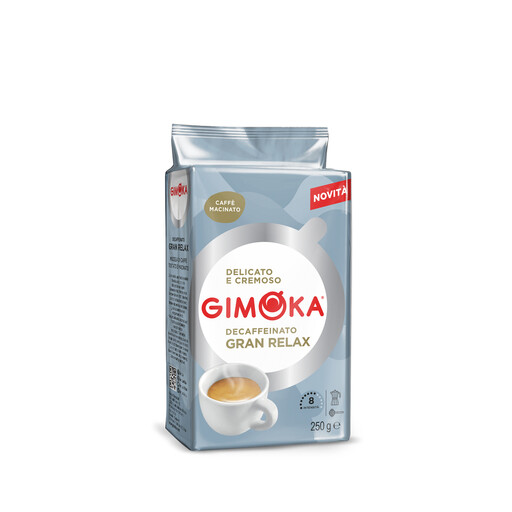 Image unavailable
GIMOKA GRAN RELAX Decaffeinated, 250 g ground coffee
Worth considering if you’re looking for decaffeinated ground coffee for an evening cup. The pack contains 250 g; check the brewing recommendations for your coffee maker, and don’t assume that ‘decaffeinated’ means caffeine-free.
View on Joybuy
Frequently asked questions
Is decaffeinated coffee completely caffeine-free?
No. According to Lavazza, decaffeination doesn’t remove all the caffeine. If the residual amount matters to you, look for information specific to the product rather than relying on the word ‘decaffeinated’ alone.
How do I choose ground coffee for espresso, filter or a moka pot?
Start by checking the recommended brewing method for the product you’re considering. Lavazza says its ground coffees come with brewing recommendations, while Malongo describes Déca Aqua as suitable for espresso. Don’t assume that advice for one coffee applies to another.
How should I store ground coffee after opening?
Store it in a tightly sealed container, away from light, moisture and heat, to help preserve its flavour. Also follow the instructions on the pack you’ve chosen.


