Coffee lovers who want to limit caffeine after a meal
You want to keep up your after-lunch coffee ritual without choosing your usual ground coffee. ‘Decaffeinated’ fits the bill, but it doesn’t guarantee that the coffee is entirely caffeine-free.


If you’re taking ground decaffeinated coffee with you for lunch on deck, first choose a product that suits the coffee maker you’ll use at home. Then compare pack sizes and, if they matter to you, the decaffeination method or any certifications listed. ‘Decaffeinated’ does not mean ‘caffeine-free’.
You want to keep up your after-lunch coffee ritual without choosing your usual ground coffee. ‘Decaffeinated’ fits the bill, but it doesn’t guarantee that the coffee is entirely caffeine-free.
If you make your drink at home before taking it on deck, check that the coffee you choose is suitable for your filter, moka, cafetière or espresso maker.
If you drink decaf occasionally, you might prefer a 250 g pack to a larger one. If water-based decaffeination or certifications matter to you, check that these are listed for the specific product.
If you’re making coffee before you head out, start by checking the recommended brewing method for the specific product. The stated flavour profile and pack size can then help you choose between the options that suit your equipment.
| Criteria | What to check | Who is it for? |
|---|---|---|
| Caffeine | Look for ‘decaffeinated’ on the pack; don’t assume this means ‘caffeine-free’. | I want to reduce the caffeine in my after-lunch coffee without assuming it has been removed completely; around 36% of consumers would put this reduction at the top of their list of criteria. |
| Brewing method | Check the recommended method for the specific product: filter, moka, cafetière or espresso. | I make my drink before heading out and want to use the coffee maker I already own. Around 29% of consumers would make compatibility their main criterion. |
| Flavour profile | Check the intensity and tasting notes stated by the brand, bearing in mind how you usually make your coffee. | If I drink coffee after a meal, I want to choose a flavour profile I enjoy rather than relying on the word ‘decaf’ alone; around 21% of consumers would make this their priority. |
| Pack size and commitments | Check the pack size and, if you’re looking for them, any product-specific statements about water-based decaffeination or certification. | I drink decaf occasionally or want to prioritise commitments stated on the pack; around 14% of consumers would base their choice mainly on these criteria. |
Decaffeinated coffee can still contain residual caffeine. This distinction is especially important if you need to avoid caffeine completely.
Check the labelling on the product you choose. If you have a health-related concern, ask a healthcare professional for advice rather than relying on the word ‘decaf’ alone.
Guidance for a whole range doesn’t necessarily tell you which brewing method is recommended for each coffee. Carte Noire recommends a filter coffee maker for its Décaféiné Pur Arabica, while Malongo presents Dolce and Déca Aqua primarily for espresso.
Before you buy, look for the recommended brewing method for the specific product. For Malongo Dolce, the brand also mentions filter brewing and manual coffee makers, with the dose adjusted to suit.
If you only make decaf from time to time, a 500 g pack will stay open for longer than a 250 g one.
Choose a pack size that suits how often you drink it. Store opened coffee in an airtight container, away from light, heat and moisture, as Carte Noire recommends.
Its ground Décaféiné Pur Arabica is a 500 g product that Carte Noire recommends preparing in a filter coffee maker.
Retailer Mocafino lists Jacobs Krönung Decaff as decaffeinated ground coffee in a 250 g pack.
Lavazza specifies the recommended brewing methods for the ground coffees in its range.
Malongo describes Dolce and Déca Aqua as water-decaffeinated ground coffees, primarily intended for espresso.
The Carrefour Extra product details describe a 250 g pack of 100% Arabica decaffeinated ground coffee.
E.Leclerc’s Eco+ and Plantation ranges include decaffeinated ground coffees in 250 g packs.
This product suits anyone looking for decaffeinated ground coffee in a 250 g pack to prepare before heading out. Check the recommended brewing method to make sure it’s right for your coffee maker.
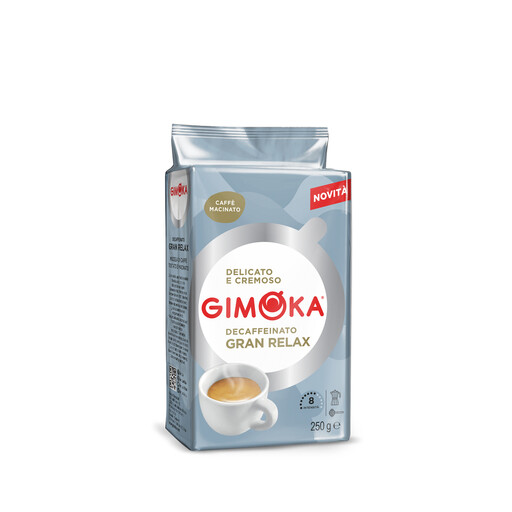 Image unavailable
Worth considering if you want to make decaffeinated ground coffee at home before taking it with you. The pack contains 250 g; check that the brewing instructions are suitable for your coffee maker. ‘Decaffeinated’ does not mean completely caffeine-free.
No. ‘Decaffeinated’ doesn’t mean ‘caffeine-free’. In its 2018 report, the DGCCRF refers to residual caffeine content. If you need to avoid caffeine completely for health reasons, check the labelling and ask a doctor or pharmacist for advice.
Choose a product whose instructions confirm that it’s suitable for a filter coffee maker. Carte Noire specifies this for its Décaféiné Pur Arabica. Malongo presents Dolce primarily for espresso, but also says it can be filter-brewed with the dose adjusted to suit.
Keep it in an airtight container, away from light, heat and moisture. Carte Noire recommends this to preserve the flavour of its ground coffee after opening.