After-dinner coffee drinkers mindful of caffeine
You want to keep up your evening coffee ritual while cutting down on caffeine. Decaffeinated coffee meets this first requirement, although it is not necessarily caffeine-free.


To enjoy coffee after dinner while limiting your caffeine intake, first choose ground coffee labelled ‘decaffeinated’, then check that the preparation method specified is suitable for your coffee maker. The flavour profile and decaffeination method can help you choose between products, but decaf is not necessarily caffeine-free. If you’re sensitive to caffeine’s effects on sleep, the time you drink it and how much you have also matter.
You want to keep up your evening coffee ritual while cutting down on caffeine. Decaffeinated coffee meets this first requirement, although it is not necessarily caffeine-free.
You’re looking for a grind that’s suitable for your equipment. The words ‘ground coffee’ alone don’t tell you whether a particular product is right for every brewing method.
You want to compare the stated decaffeination method, flavour profile or labels on the pack, while keeping the recommended brewing method in mind.
For an after-dinner coffee, check that it’s labelled ‘decaffeinated’ and is suitable for your coffee maker before comparing packs by their flavour descriptions or stated decaffeination method.
| Criterion | What to check | Who it matters to |
|---|---|---|
| Caffeine in the evening | The ‘decaffeinated’ label; don’t mistake a low intensity rating for an absence of caffeine. | After dinner, I want to enjoy a cup of coffee while limiting my caffeine intake. Around 50% of consumers put this first. |
| Suitable preparation method | The guidance for your coffee maker: filter, moka, cafetière or espresso, depending on the product. | With my usual coffee maker, I prefer a grind with clear preparation guidance. Compatibility is the main criterion for around 30% of consumers. |
| Taste, process and labels | The flavour description, stated decaffeination process and any labels on the pack. | To round off dinner, I want to choose according to the taste I’m looking for or a specified decaffeination method. These factors come first for around 20% of consumers. |
Decaffeinated coffee can still contain caffeine. The European Food Safety Authority says that caffeine consumed close to bedtime can affect some adults’ sleep.
If you want to limit caffeine in the evening, start with a product explicitly labelled decaffeinated, and also consider when you drink it and how much you have.
An intensity rating doesn’t tell you which brewing method the grind is intended for. Carte Noire recommends a filter coffee maker for its Décaféiné Pur Arabica; Malongo specifies espresso for its Dolce Décaféiné à l’eau.
Check the recommended use for the specific product you’re buying rather than assuming it applies to an entire range.
Malongo states that some products are decaffeinated using water. This tells you about the process, but doesn’t predict whether you’ll like their flavour profile.
If this method matters to you, check that it’s stated on the pack you choose, then look separately at the preparation guidance and the coffee description.
These brands provide information about specific products or ranges; their recommendations don’t automatically apply to all their ground coffees.
Carte Noire describes its ground Décaféiné Pur Arabica as having an intensity of 7/10 and being suitable for filter coffee makers.
Malongo says that its Déca Aqua and Dolce Décaféiné à l’eau are decaffeinated using water.
Carrefour offers Carrefour Extra 100% Arabica decaffeinated ground coffee in a 250 g pack.
E.Leclerc stocks decaffeinated ground coffees including Eco+, Plantation and Bio Village, with 250 g packs among the products listed.
Lavazza offers general guidance on the taste of decaffeinated coffee, but it doesn’t describe a specific ground coffee product here.
This decaffeinated ground coffee could be an option for an after-dinner cup; check its recommended preparation method before choosing it for your coffee maker.
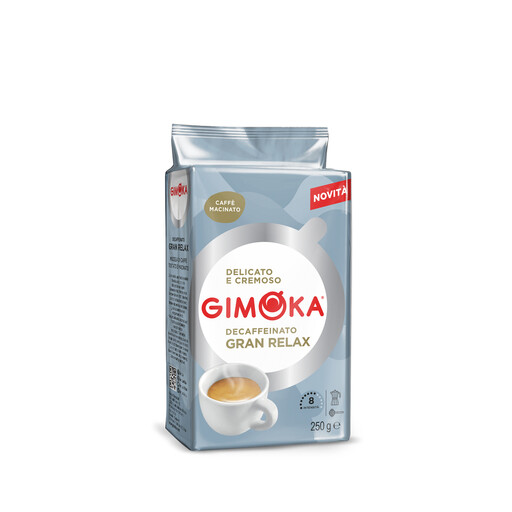 Image unavailable
A decaffeinated ground coffee to consider for an after-dinner cup; its description suggests a delicate, creamy profile. The pack contains 250 g. Before buying, check the packaging to see whether the recommended preparation method suits your coffee maker.
No. The label ‘decaffeinated’ doesn’t mean there’s no caffeine at all. The DGCCRF distinguishes decaffeinated coffee by its caffeine content, but this information alone doesn’t tell you how much caffeine is in a prepared cup.
Decaffeinated coffee contains less caffeine than regular coffee, but it won’t affect everyone in the same way. The European Food Safety Authority says that caffeine consumed close to bedtime can affect some adults’ sleep, so the time you drink it and how much you have are still worth considering.
Look for the preparation method specified for the particular product, either on its product page or pack. Carte Noire recommends filter coffee makers for its Décaféiné Pur Arabica, while Malongo specifies espresso for its Dolce Décaféiné à l’eau; guidance for an entire range doesn’t automatically apply to every coffee.
Choose this process if it’s one of your criteria and it’s clearly stated for the product you’re considering. Malongo specifies it for Déca Aqua and Dolce Décaféiné à l’eau, but this information alone won’t tell you whether you’ll like the taste or whether it’s suitable for your coffee maker.
Follow the storage instructions on your pack. For its Décaféiné Pur Arabica, Carte Noire recommends keeping it in a dry place away from heat; seal the pack carefully after use.