Late-night snackers keeping an eye on caffeine
You want to keep your after-dinner espresso ritual while limiting caffeine. Check the exact product: decaffeinated coffee can still contain some.


For a decaffeinated espresso with a late-night snack, first choose a format that works with your machine: a capsule for quick preparation, or ground or whole-bean coffee if you want to adjust the extraction with your equipment. Then compare the flavours in the cup, without confusing intensity with caffeine content: ‘decaffeinated’ does not necessarily mean ‘caffeine-free’.
You want to keep your after-dinner espresso ritual while limiting caffeine. Check the exact product: decaffeinated coffee can still contain some.
You want to make a cup quickly. The key is to choose capsules that work with your machine’s system.
You’re looking for a smooth or fuller-bodied profile to go with your snack. The flavour notes and intensity stated by brands can help you choose a taste, but not determine the caffeine content.
For a late-night cup, check the caffeine content and the format your machine accepts before choosing a flavour profile.
Worth considering: if you already own a machine that accepts your chosen capsule and want to make a cup quickly.
Bear in mind: your choice depends on your machine’s system. A capsule for Nespresso Original won’t automatically work with A Modo Mio or Dolce Gusto.
Worth considering: if your equipment lets you adjust the grind, dose or espresso length.
Bear in mind: preparation involves more adjustments. For whole beans, you’ll also need a grinder or a machine that grinds them.
| Factor | What to check | Consumers concerned |
|---|---|---|
| Residual caffeine | The ‘decaffeinated’ label and, where stated on the product, the caffeine content of the exact product. | When having an espresso after dinner, I want to limit caffeine without assuming decaffeinated means caffeine-free; around 36% of consumers prioritise this need. |
| Compatibility and preparation | The exact machine system and the coffee format you’ve chosen: capsule, ground or whole bean. | If I want to make a quick cup with my coffee machine, I need a format that works with it; compatibility and convenience come first for around 29% of consumers. |
| Flavour in the cup | The flavour notes and intensity stated for the product, without treating intensity as a measure of caffeine. | With a snack, I still want my espresso to have character, even when it’s decaffeinated; around 21% of consumers prioritise this flavour profile above all. |
| Box and packaging | The number of capsules, their material and the local disposal guidance to follow after use. | For several cups over a number of evenings, I consider the box size and what to do with used capsules; this comes first for around 14% of consumers. |
illy states that its decaffeinated espresso ground coffee contains no more than 0.1% caffeine. This figure applies to that product, not all decaffeinated coffees.
If caffeine is your main consideration for a late-night drink, look for information specific to the product you’ve chosen and take your other caffeinated drinks into account.
Carte Noire Décaféiné N°5 capsules are stated to be compatible with Nespresso Original, while Lavazza A Modo Mio uses a different system.
Check the system name on your machine, then compare it with the compatibility information for the exact capsule.
Carte Noire gives its Décaféiné N°5 an intensity rating of 5, while L’OR gives its Ristretto Decaffeinato an intensity rating of 9. These ratings describe the stated flavour profile in the cup, not a shared scale for residual caffeine.
Use intensity to narrow down your flavour options, then look separately for any information about caffeine.
The A Modo Mio range includes decaffeinated espresso capsules, including Dek Cremoso.
illy offers decaffeinated coffee in several formats, including ground coffee, whole beans, capsules and E.S.E. pods.
Carte Noire describes its Décaféiné N°5 as a capsule compatible with Nespresso Original, with a stated intensity of 5.
Carrefour’s product listing features a decaffeinated option with 10 Nespresso-compatible capsules, containing a total of 52 g of organic Arabica coffee.
Auchan offers decaffeinated espresso capsules compatible with Nespresso, in a box of 20 capsules, with a stated intensity of 6 out of 12.
These products offer options for making decaffeinated capsule espresso with a compatible Nespresso, A Modo Mio or Dolce Gusto machine, depending on the product. First, choose the system that works with your machine.
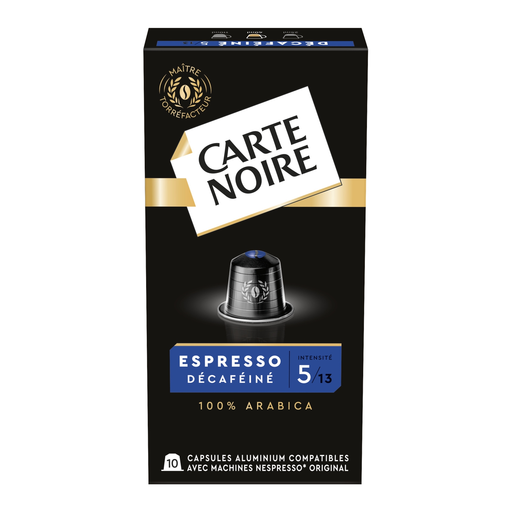 Image unavailable
For making decaffeinated espresso with capsules, if your machine accepts the Nespresso format specified for this product.
The box contains 10 aluminium capsules. If residual caffeine is an important consideration for your evening cup, check the information for the exact product.
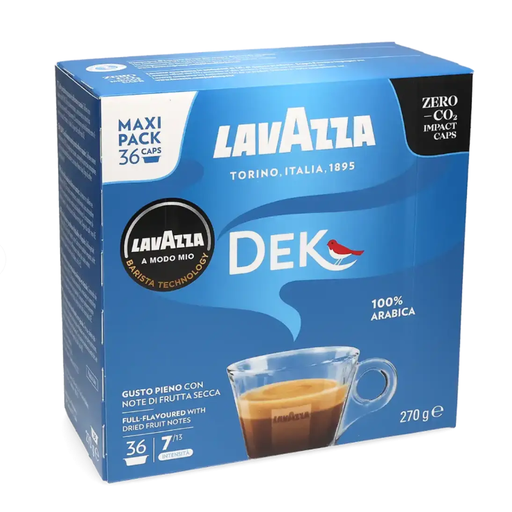 Image unavailable
For making decaffeinated espresso with a machine that uses the A Modo Mio system.
The box contains 36 capsules. Check that your machine accepts this system, and consult the details for the exact product if you’re looking for information about residual caffeine.
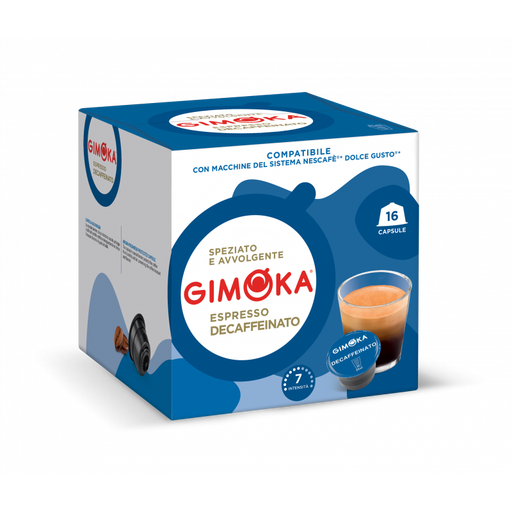 Image unavailable
For making decaffeinated espresso with capsules in a machine that uses the Dolce Gusto system.
The box contains 16 capsules, with a stated total weight of 112 g. Confirm your machine’s system and, if needed, check the residual caffeine information for the exact product.
No. The term ‘decaffeinated’ doesn’t guarantee that a product contains no caffeine at all. illy states that its decaffeinated espresso ground coffee contains no more than 0.1% caffeine. Check the product you’re planning to buy rather than assuming this figure applies to every format.
Choose capsules if you want a quick brew and they’re the right fit for your machine. Ground coffee or whole beans are suitable if you have the right equipment and want to adjust your extraction. Whole beans also require a grinder or a machine that grinds them.
No. The intensity stated for these products describes their flavour profile in the cup and doesn’t let you compare their residual caffeine content. Use it to choose a flavour, then check the caffeine information for the specific product separately.
According to Anses, caffeine can delay sleep and reduce its duration and quality, although the effects vary from person to person. Decaffeinated espresso may still contain caffeine, so check the product you’ve chosen and take your other drinks throughout the day into account.
Follow the information on the packaging and your local authority’s collection guidance. A capsule described as compostable and one made from aluminium and described as recyclable may not go through the same disposal route.