You already have a capsule machine
Your first consideration is the format your machine takes. As the catalogues of Carrefour and E.Leclerc make clear, the words “Nespresso compatible” aren’t enough when choosing a capsule for a different system.


First, choose a capsule or pod that’s explicitly compatible with your machine: Nespresso, Dolce Gusto and Senseo formats aren’t interchangeable. When serving coffee with biscuits, the stated intensity can help guide your choice, depending on the flavour you’re after, but brands don’t necessarily use the same scale. Also check that it’s decaffeinated coffee, rather than a tea preparation.
Your first consideration is the format your machine takes. As the catalogues of Carrefour and E.Leclerc make clear, the words “Nespresso compatible” aren’t enough when choosing a capsule for a different system.
You’re looking for a coffee profile that suits your preferences for this break. The intensity ratings and tasting notes given for Carte Noire, L’OR, Carrefour Selection and Auchan products are useful points of comparison, not a measure of how well they pair with a biscuit.
The number of capsules and the material they’re made from may influence your choice. When it comes to disposing of used capsules, ADEME distinguishes between aluminium or plastic capsules and paper capsules, and advises following the local recycling or composting options available.
When choosing decaffeinated coffee to serve with biscuits, check your machine’s system before comparing the coffee description, intensity and packaging.
| What to consider | What to check | Who might prioritise it? |
|---|---|---|
| Compatibility | Check your machine’s system and model, then confirm compatibility on the box or product page. | If my machine won’t take the pod, its taste doesn’t even come into it. Around 36% of consumers might put compatibility at the top of their list. |
| Coffee description | Look for “decaffeinated” in the product description or ingredients; a coffee capsule isn’t a tea pod. | For my break, I want coffee that’s clearly labelled as decaffeinated, not tea. This could be a priority for around 29% of consumers. |
| Intensity and flavour | Compare the intensity and tasting notes given for the specific product, without assuming that different brands use a shared scale. | With my biscuits, I’d rather choose a coffee I like than rely on the pod format alone. Around 21% of consumers might prioritise this taste-related factor. |
| Packaging and recycling | Check the number of pods and what they’re made from. Follow local disposal guidance; ADEME says aluminium or plastic capsules should go in the paper and packaging recycling collection. | I want packaging that suits how I use it, and to know what to do with the capsules after my break. This could come first for around 14% of consumers. |
An intensity you like won’t make a capsule compatible with your machine. E.Leclerc distinguishes Nespresso- or Dolce Gusto-compatible capsules from pods made for other systems, including Senseo.
Identify your machine’s system and check the product’s compatibility information before comparing coffee profiles.
Choose the wrong format and you’ll be left with a box you can’t use in your machine.
The decaffeinated products described by Carrefour and Auchan contain coffee; their intensity or tasting notes don’t change what the drink is.
If you want to make tea, look for a pod explicitly sold as tea and check separately that it’s compatible with your machine.
How you dispose of them depends on the material. In France, ADEME says aluminium or plastic capsules should be recycled with paper and packaging; options for composting paper capsules depend on what’s available locally.
Check the material listed on the packaging and the recycling guidance that applies where you live.
Carrefour lists a decaffeinated Carte Noire espresso in Nespresso-compatible capsules, in a box of 30, with a stated intensity of 5.
Auchan lists L’OR Decaffeinato capsules, with a stated intensity of 6, as compatible with Nespresso and L’OR Barista machines.
Carrefour lists a 100% Arabica decaffeinated coffee in Nespresso-compatible capsules, with a stated intensity of 4.
Auchan lists a decaffeinated espresso in Nespresso-compatible capsules, with a stated intensity of 6, in a box of 20.
This selection includes decaffeinated coffee capsules for Nespresso and Dolce Gusto systems, as well as pods for Senseo. Choose from the group that matches your machine: none of these products is a tea pod.
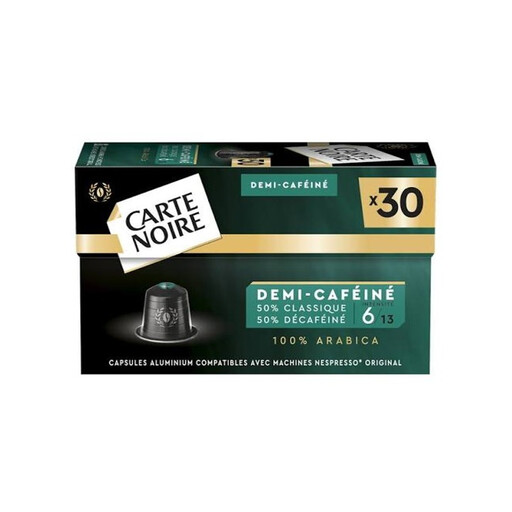 Image unavailable
Worth considering for a coffee-and-biscuit break if your machine model takes these capsules. The product page mentions biscuit and cereal notes, but they may not match your taste.
Before choosing this box, check that it’s compatible with your exact machine model.
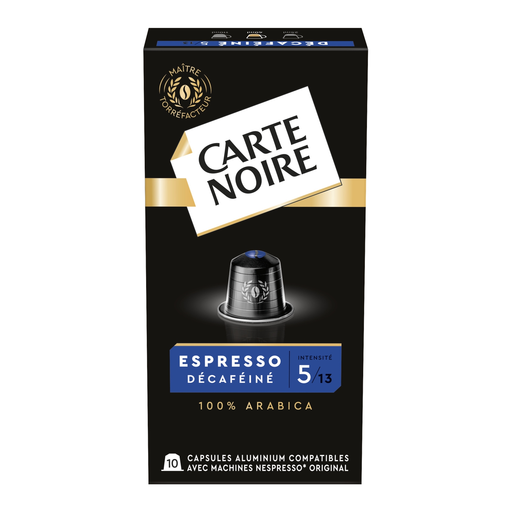 Image unavailable
For a biscuit break with a decaffeinated espresso, the stated intensity of 5 is one factor to consider, depending on your preferences; it can’t predict how well the coffee will pair with your biscuits.
The box contains 10 capsules. Check that the compatibility information for this product matches your exact Nespresso machine model.
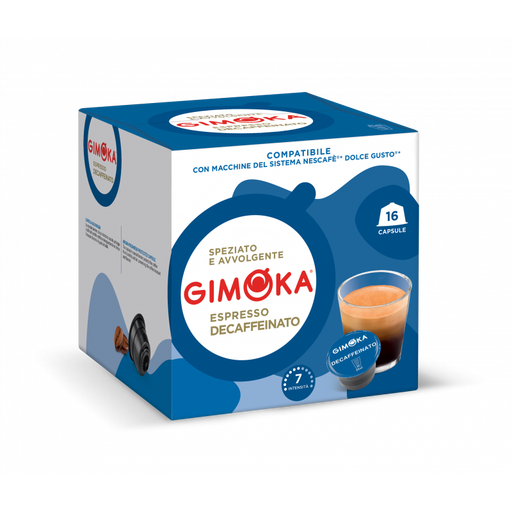 Image unavailable
Worth considering for a Dolce Gusto machine if you’d like to serve decaffeinated coffee with biscuits. The description for this product mentions lightly roasted notes, which you can judge according to your own taste.
Check compatibility with your machine model, and look at the packaging to find out what the capsules are made from and how to recycle them.
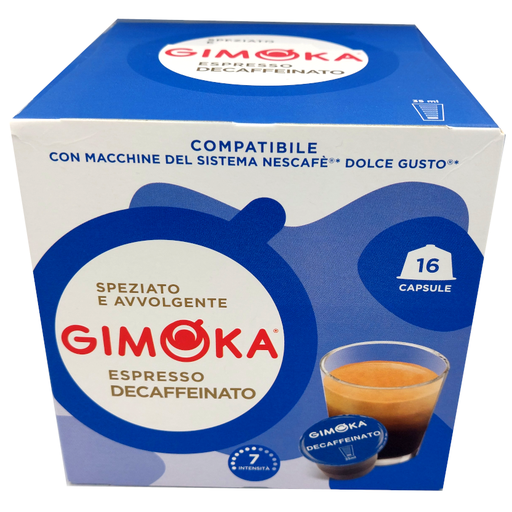 Image unavailable
This other Dolce Gusto product may appeal if you’re looking for coffee described as mild and decaffeinated. That tasting note is only a guide; compare products according to your own preferences.
Check the product reference and compatibility with your machine before buying; look at the packaging to find out what the capsules are made from and how to recycle them.
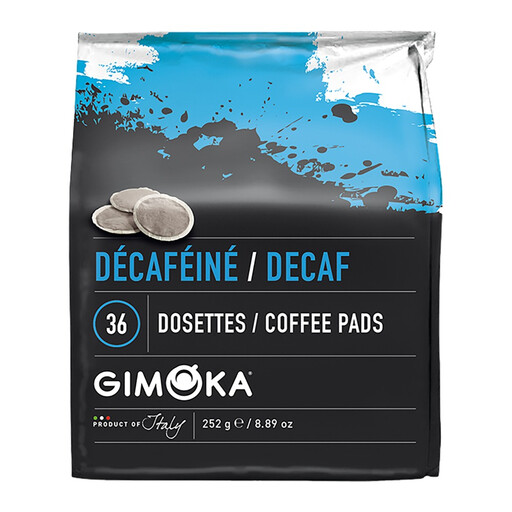 Image unavailable
If you use a Senseo machine, these pods let you choose decaffeinated coffee for your biscuit break, without confusing them with capsules for another system. The description suggests a mild taste, which you can judge according to your preferences.
Check compatibility with your Senseo model and look at the packaging for guidance on recycling the pods.
Don’t assume these formats are interchangeable. E.Leclerc distinguishes Nespresso- and Dolce Gusto-compatible capsules from Senseo pods; check the compatibility information for your machine model before choosing a decaffeinated product.
No: a capsule described as decaffeinated coffee contains coffee, not tea. If you’d like to serve tea with your biscuits, look for a preparation explicitly sold as tea and compatible with your machine.
Choose an intensity to suit the coffee profile you prefer, rather than treating it as a universal measure of how well it pairs with biscuits. Decaffeinated products listed by Carrefour and Auchan include stated intensities of 4, 5, 6 or 11. Compare their tasting notes too, as scales can vary between brands.
According to ADEME, aluminium or plastic capsules should go in the recycling bin, bag or container for paper and packaging. For paper capsules, check the home composting or local collection options available, as well as the packaging instructions.