Households with a filter coffee machine
When you make several cups at once, the ground coffee, pack size and how you store it after opening all matter. E.Leclerc, for example, distinguishes ground coffee intended for filter coffee machines.


When shopping for a large family, start by choosing a decaffeinated coffee that suits your machine and the number of cups you make: ground coffee works well for brewing several cups at once with a suitable method, instant coffee is handy for individual cups without a machine, and capsules or pods are only suitable for the system specified. Then compare the blend, the intensity of each product and the pack size, without assuming that 100% Arabica or a particular decaffeination process alone determines the flavour or residual caffeine content.
When you make several cups at once, the ground coffee, pack size and how you store it after opening all matter. E.Leclerc, for example, distinguishes ground coffee intended for filter coffee machines.
If everyone makes their coffee at a different time, instant coffee or a single-serve format can save you from brewing a whole pot. For capsules and pods, check your machine’s system first.
Check the stated ingredients, storage instructions and decaffeination claims for each individual product. For example, the Auchan Bio decaffeinated ground coffee mentioned here is labelled ‘solvent-free’; this does not apply to the whole brand.
Start with how your household makes coffee, then compare the compatible products by preferred blend and how much you can use after opening. The stated intensity describes a particular product; it does not, by itself, measure its residual caffeine content.
| Criterion | What to check | Who is it for? |
|---|---|---|
| Format and serving | Check whether the coffee is ground, instant, in capsules or in pods, as well as the exact machine compatibility and how many cups you need to make. | If I sometimes make a whole pot and sometimes just one cup, I want a format that suits both without choosing the wrong machine; around 36% of consumers would put this need first. |
| Blend and flavour | Read the ingredients and any roast or intensity information for the specific product; try a small quantity before stocking up. | When several people drink the same coffee, I look for a flavour profile that suits everyone rather than choosing solely on the Arabica label; this would be the main criterion for around 29% of consumers. |
| Quantity and storage | Compare the net weight with your household’s consumption, then check the storage instructions for after opening. | To make fewer shopping trips, I want enough coffee without leaving an opened pack unused for too long; around 21% of consumers would prioritise managing their stock over other criteria. |
| Decaffeination and labelling | Check the ingredients and any information about the process on the specific product you are interested in. | If the decaffeination method or residual caffeine content influences my purchase, I check the details for each product; this would be the priority for around 14% of consumers. |
Ground coffee, instant coffee, a Nespresso Original capsule and a soft coffee pod are prepared in different ways. Even a blend you like won’t make a product compatible with your household’s machine.
First identify your usual brewing method, then check the compatibility information on the capsules or pods before comparing coffee profiles.
Decaffeination does not mean that all the caffeine is removed, as NESCAFÉ explains. The intensity shown on a pack also tells you nothing about its residual caffeine content.
If you need to monitor your caffeine intake precisely, don’t rely on the product name alone: check the information for that specific product and, if you have medical guidance to follow, speak to the relevant healthcare professional.
A pack size suited to the family shop is only practical if your household can use it and store it as instructed after opening.
Choose a pack size that suits your actual consumption and follow the instructions for sealing and storage. Auchan and Carte Noire provide storage advice that varies between products.
These brands offer products that are useful for comparing formats and blends; the details below apply to the products mentioned, not their entire ranges.
Decaffeinated options in ground coffee, capsules compatible with Nespresso Original and soft coffee pods.
The brand describes its Spécial Filtre Décaféiné as an instant coffee blend of Arabica and Robusta.
The retailer offers decaffeinated ground coffees including Carrefour Classic and Carrefour Extra, in 250 g packs.
The retailer offers 250 g packs of 100% Arabica decaffeinated ground coffee, including an organic option.
E.Leclerc offers decaffeinated ground coffee under the ECO+ brand in a 250 g pack.
These products cover several ways to serve coffee at home: ground coffee, instant coffee, Senseo-compatible pods and capsules for the systems specified. First choose a format you can use at home; these pack types are not interchangeable.
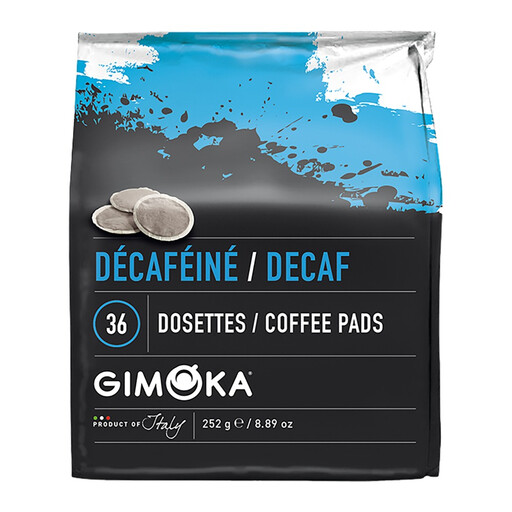 Image unavailable
A portioned format to consider for making individual cups, only with a compatible Senseo machine.
The pack contains 36 pods, with a net weight of 252 g.
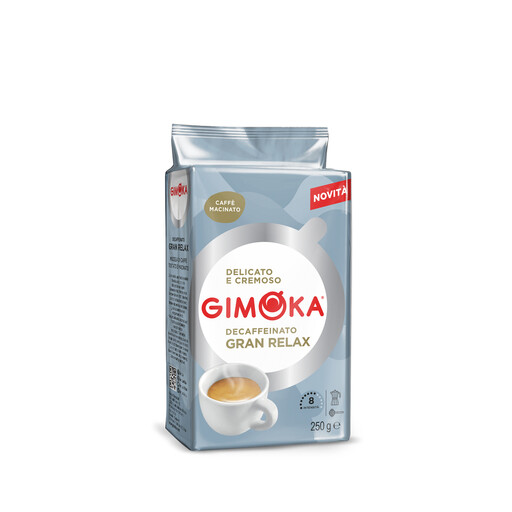 Image unavailable
Worth considering if your household makes ground coffee; check that the grind suits your brewing method.
The pack contains 250 g of decaffeinated ground coffee.
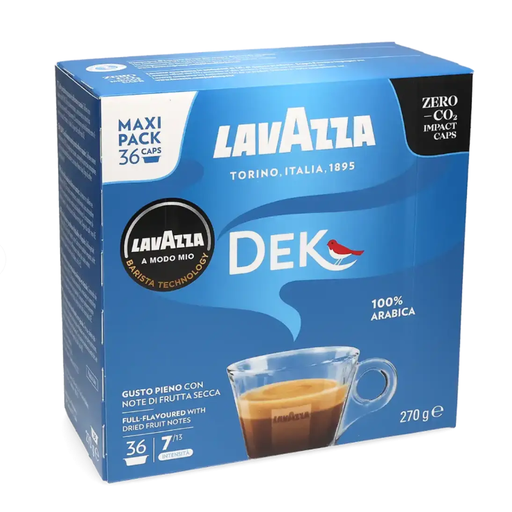 Image unavailable
For serving individual cups if your household has a machine compatible with the Lavazza A Modo Mio system.
The box contains 36 decaffeinated capsules.
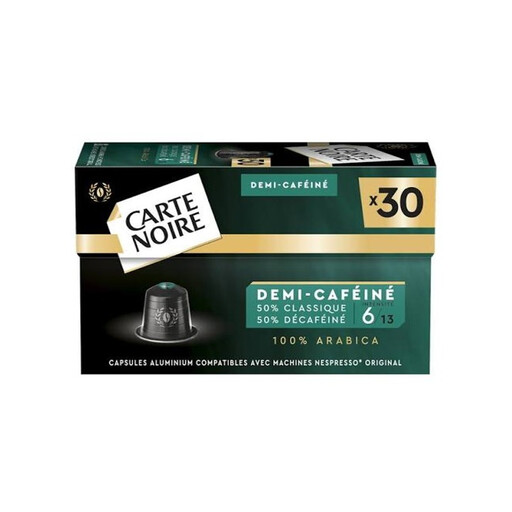 Image unavailable
A choice for making individual cups if your machine accepts capsules designed for Nespresso Original; check the system on the product before buying.
The box contains 30 capsules.
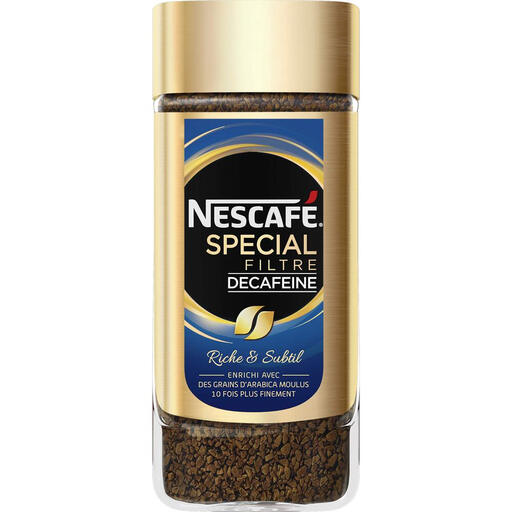 Image unavailable
This instant coffee is suitable for individual cups made with hot water, without a coffee machine.
The container holds 100 g; if the type of beans matters to your household, check the ingredients for this product before buying.
No, ‘decaffeinated’ does not mean ‘caffeine-free’. The DGCCRF distinguishes decaffeinated coffee from coffee that contains no caffeine at all; if you need to follow specific guidance, don’t infer the caffeine content from an intensity rating.
Not necessarily: these labels describe the beans used, but don’t, by themselves, establish a taste preference that will suit every household. Carte Noire and Auchan offer 100% Arabica ground coffee, while NESCAFÉ describes its Spécial Filtre Décaféiné instant coffee as an Arabica and Robusta blend. Also compare the format you can use at home.
Follow the instructions on the pack you buy, as they can vary by product. Auchan advises sealing its ground coffee bag tightly and recommends an airtight container in the fridge; Carte Noire recommends keeping its coffee in a dry place away from heat.
No, check the claim on the specific product you’re interested in. Auchan uses it for its organic decaffeinated ground coffee, but that does not mean it applies to the retailer’s other coffees.