Households looking for a full-bodied flavour
You want pronounced flavours while choosing a decaffeinated coffee. The intensity rating can help you find a flavour profile within a brand, but it doesn’t indicate the amount of caffeine.


For a large family shop, first choose a decaffeinated coffee that works with your equipment, then pick a pack size to suit how quickly your household gets through it. If you’re after a full-bodied cup, the stated intensity can help you find the flavour you like. However, it doesn’t measure caffeine content, and intensity scales aren’t directly comparable across brands. 250 g and 500 g packs of ground coffee, whole beans and individual portions all suit different ways of preparing and storing coffee.
You want pronounced flavours while choosing a decaffeinated coffee. The intensity rating can help you find a flavour profile within a brand, but it doesn’t indicate the amount of caffeine.
You make several cups at a time. Check that the grind or beans are suitable for your machine, then consider how much your household will use once the pack is open.
You’d rather make a single serving when you want one than brew a whole pot. Instant coffee or pods may suit you, provided you check the flavour profile you’re after and, for pods, that your machine accepts that system.
For a family shop, start with the brewing method you have at home. Then weigh up your preferred flavour against how much coffee you’ll use before the pack has been open for too long.
| What to consider | What to check | Who this matters to |
|---|---|---|
| Full-bodied flavour | The “decaffeinated” label, stated intensity and tasting notes; compare ratings mainly within the same brand. | If I’m mainly looking for a strong-tasting cup, I don’t want to confuse flavour intensity with caffeine content; around 42% of consumers would make this flavour profile their priority. |
| Pack size | The pack weight and storage instructions after opening, taking your household’s consumption into account. | When several people drink decaffeinated coffee regularly, I want to avoid frequent top-ups without leaving the coffee open for too long. Around 33% of consumers would put this need for a larger quantity first. |
| Preparation | The type of coffee accepted by your coffee machine or grinder; for pods, check which system your machine is compatible with. | If I serve coffee one cup at a time, I want a format that works with my equipment and is easy to prepare; around 25% of consumers would prioritise compatibility and preparation. |
Intensity describes the coffee’s flavour, not its caffeine content.
Choose the intensity that suits your taste. If caffeine content matters to you, check the product information on its listing or packaging.
The same number can refer to different scales. Nescafé says that brands may rate their coffees differently.
Use the rating to compare products from the same brand, and look at the tasting notes too.
A family-size pack should match how much coffee you’ll actually use once it’s open.
Compare the available sizes, then follow the sealing and storage instructions on the pack you buy.
Pods that aren’t suitable won’t work with your household’s machine. According to the brand, the Carte Noire decaffeinated soft pods mentioned here should not be put in a home compost bin either.
Before buying, check that the pods are compatible with your machine and read your local recycling instructions.
These products give you a few points of comparison for flavour, format and preparation. A numbered intensity rating isn’t a shared scale across all brands.
A ground decaffeinated coffee to consider for a filter coffee machine and family-size shopping.
A ground decaffeinated coffee to consider if a 250 g pack better suits your household’s needs.
Decaffeinated ground coffee and whole beans to choose between, depending on your household’s machine.
A point of comparison for ground decaffeinated coffee with a stated intensity rating.
A decaffeinated instant coffee option for making individual cups.
This option is for making individual cups with Senseo-compatible pods. If your household mainly wants ground coffee for a filter machine or beans for a grinder, choose a format to suit that equipment instead.
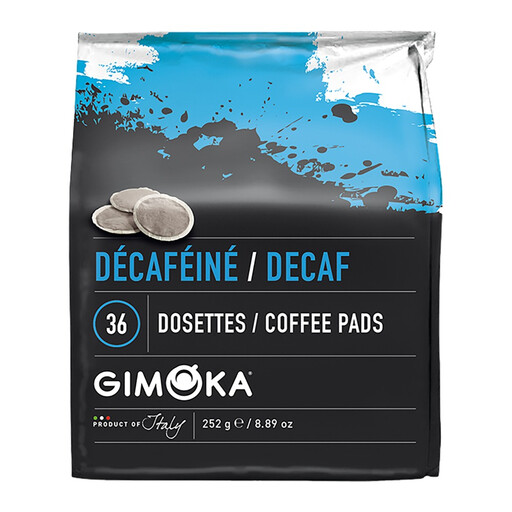 Image unavailable
If you’re serving individual cups in a large household, check that your machine accepts Senseo-compatible pods.
The pack contains 36 decaffeinated coffee pods, with a total weight of 252 g.
No. The intensity rating describes the flavour profile, not the amount of caffeine. Nescafé says that brands may use different scales; to compare caffeine content, check the information for each product.
Don’t assume so: the Carrefour listing for Ethiquable decaffeinated coffee states that its caffeine content is 0.1% or less. If this is an important factor in your choice, check the label on the coffee you’re thinking of buying.
Follow the instructions on the pack you buy and seal it carefully after opening. Brands may give different advice: Carte Noire recommends storing its coffee in a dry place away from heat, while Auchan recommends an airtight container, preferably kept in the fridge.
No. Carte Noire says these pods should not be put in a home compost bin. Check your local authority’s recycling instructions to find out how to dispose of them.