If you want to keep your afternoon coffee but avoid adding the caffeine from a black tea chai, start with a rooibos recipe that’s explicitly described as caffeine-free. A decaffeinated tea chai may be a better choice if you’re looking for the taste of tea, provided the product is labelled as decaffeinated. Either way, the coffee you serve alongside it remains a source of caffeine.
Who is this option for?
People who like to have coffee at teatime
You’d like to enjoy a chai with your coffee without adding the caffeine from a traditional black tea. A rooibos recipe explicitly described as caffeine-free meets this priority, but won’t change the caffeine in your coffee.
Spice lovers who want to avoid black tea
You’re mainly after cinnamon, cardamom, ginger or cloves. Compare the spices listed in each rooibos chai recipe: they matter more to your choice than the word ‘chai’ alone.
People who want a quick cup
You’d rather skip the brewing time needed for loose-leaf tea and add your own milk or sugar. An unsweetened instant preparation may suit you, as long as its ingredients meet your needs.
What should you look for at teatime?
First, check the chai’s base and what the packaging says about caffeine. Then compare the spices, preparation method and ingredients in the specific recipe you’re considering.
| What to consider |
What to check |
Who it matters to |
| Caffeine in the chai |
Look for a rooibos base described as caffeine-free or tea explicitly labelled as decaffeinated. Check the ingredients in a black tea chai. |
I want to keep my afternoon coffee but don’t want to add the caffeine from a black tea chai. Around 36% of consumers would make avoiding this extra caffeine their priority. |
| Spice profile |
Compare the spices named in the ingredients list, particularly cinnamon, cardamom, ginger or cloves. |
I want to recognise the spices I expect in a chai, even without the black tea. The spice profile would be the main consideration for around 29% of consumers. |
| Preparation |
Choose between loose-leaf tea, tea bags and an instant preparation. Check the product instructions and whether it contains sugar or milk powder. |
When I’m short on time, I want a cup that’s easy to make, with the option to add milk or sugar to taste. Around 21% of consumers would put this flexibility first. |
| Ingredients |
Read the ingredients list and check the allergens highlighted on the packaging of the recipe you choose. |
If I need to avoid certain ingredients, I want to understand what’s in the recipe before serving it. For around 14% of consumers, ingredients would be the main concern. |
Mistakes to avoid
-
Assuming all chai is caffeine-free
The spices don’t determine the drink’s base: chai can contain black tea. Kusmi Tea points out that theine and caffeine are the same molecule.
Check whether the recipe contains rooibos, another infusion described as caffeine-free, or tea explicitly labelled as decaffeinated. Don’t rely on the flavour name alone.
-
Forgetting about the coffee on the side
Caffeine-free chai avoids adding caffeine through that drink, but it doesn’t remove the caffeine in your coffee. The ANSES says caffeine can delay falling asleep and reduce both sleep duration and quality.
If the time you have your afternoon coffee matters to your choice, remember to factor in the coffee you plan to serve, too.
-
Choosing based on the recipe name alone
Two chais can differ in their spices and other ingredients. The word ‘chai’ doesn’t tell you whether a product contains sugar, milk or allergens.
Read the label on the product you buy. The DGCCRF states that allergens present in prepacked food must be highlighted in the ingredients list.
Brands to compare
Dammann Frères
A loose-leaf rooibos chai worth comparing with quicker-to-prepare options.
- Dammann Frères’ Rooibos Chaï N°597 product information lists rooibos, ginger, cinnamon, pink peppercorn, cardamom and cloves. It recommends infusing for 4 to 5 minutes at 90 °C.
- Loose-leaf tea needs time to infuse and requires a filter or teapot. Check the ingredients of the product you buy if you need to avoid anything in particular.
Blue Lotus Chai
An instant preparation to consider if you’d prefer to add milk or sugar separately.
- Blue Lotus Chai describes its Rooibos Masala Chai as a caffeine-free, unsweetened powder that dissolves in hot water and contains no milk powder. Its ingredients include ginger, cardamom and cinnamon.
- An instant powder is prepared differently from loose-leaf chai. Check the ingredients list for the product you choose.
Yogi Tea
A tea-bag option to compare with loose-leaf or instant rooibos chai.
- iHerb France’s product information describes Chai Rooibos as a caffeine-free recipe made with rooibos, cardamom, cinnamon and cloves, supplied in a pack of 16 tea bags.
- Check the ingredients and packaging on the product you actually buy.
Chai available on Joybuy
This selection features a chai in tea bags to consider alongside your afternoon coffee. Before choosing, check the packaging for information about caffeine and any ingredients that matter to you.
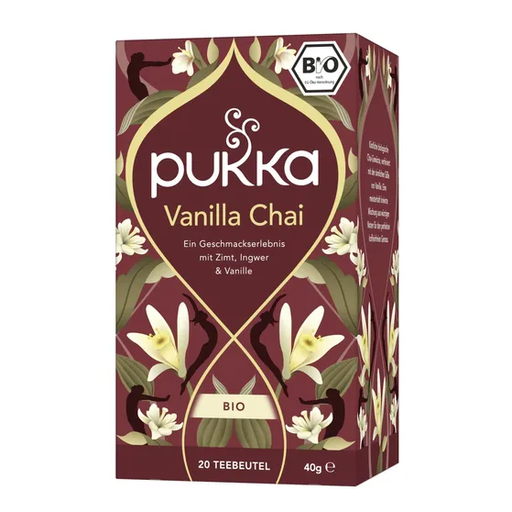 Image unavailable
PUKKA Vanilla Chai, 20 tea bags
This chai in tea bags could be a good choice with your afternoon coffee, as long as the caffeine information on the packaging meets your needs.
Box of 20 tea bags. If you need to avoid an ingredient or allergen, check the labelling on the product you buy.
View on Joybuy
Frequently asked questions
Is traditional chai caffeine-free?
Not necessarily: chai can be made with black tea. To enjoy it with your coffee without adding the caffeine from this tea, check that the rooibos recipe is described as caffeine-free or that the tea used is explicitly labelled as decaffeinated. Kusmi Tea points out that theine is the same molecule as caffeine.
Does caffeine-free chai change how much caffeine is in my coffee?
No. It avoids adding caffeine through the chai, but doesn’t change the coffee you have with your afternoon snack. If you choose your drinks based on the time of day, consider each cup separately. The ANSES says caffeine can disrupt sleep.
How do you prepare rooibos chai?
Follow the instructions for your chosen recipe, as loose-leaf tea and instant powder are prepared differently. Dammann Frères recommends infusing its Rooibos Chaï N°597 for 4 to 5 minutes at 90 °C. Blue Lotus Chai describes its Rooibos Masala Chai as a powder that dissolves in hot water.
What should I check on the label if I need to avoid certain ingredients?
Read the ingredients list for the product you buy and look for any allergens highlighted there. For prepacked food in France, the DGCCRF states that allergens must be identified in the ingredients list. The name ‘chai’ is no substitute for checking.


