To offer black tea to guests who want to limit their caffeine intake, choose a product whose packaging is clearly labelled ‘decaffeinated’ or ‘tea-decaffeinated’: classic English Breakfast tea does not meet this need. Then check the ingredients and packaging of the product you plan to serve. An herbal infusion can complement the buffet for guests who prefer to avoid caffeine, but it does not have the same flavour profile as black tea.
Who is this option for?
Hoteliers looking to offer a lower-caffeine option
They need a black tea labelled as decaffeinated or tea-decaffeinated, clearly distinguished from ordinary breakfast tea. The wording on the product should not be turned into a promise that it contains no caffeine at all.
Hotels serving a high volume of breakfasts
The number of tea bags, how they are presented and the information visible on the box all matter when organising the buffet and restocking, as well as the choice of drink.
Venues that still serve classic breakfast tea
They want to cater for guests who are mainly looking for an English Breakfast-style black tea, without presenting it as decaffeinated.
What should you look for?
Decaffeinated black tea
Choose this: if guests want to enjoy black tea while limiting their caffeine intake.
Bear in mind: the term ‘tea-decaffeinated’ does not, on its own, prove that the product contains no caffeine at all.
Classic breakfast black tea
Choose this: for guests asking for a breakfast black tea who are not looking for a decaffeinated option.
Bear in mind: it should remain distinct from the option described as decaffeinated.
An infusion as an additional option
Add this: for guests who want to avoid caffeine rather than enjoy the taste of black tea, after checking the chosen blend.
Bear in mind: an infusion is not black tea and should be presented under its own name.
| Criteria |
What to check |
Guests concerned |
| Limiting caffeine |
Read the name of the exact product; check any ‘caffeine-free’ claim with the manufacturer. |
To serve black tea to guests who are limiting their caffeine intake, I want to be able to identify the decaffeinated box unambiguously. Around 42% of the guests concerned would make this their top priority. |
| Serving and restocking |
Check the number of tea bags, whether they are individually wrapped and the supply arrangements. |
When the buffet needs frequent restocking, I prefer portions that are easy to display and a format suited to service. This would be the top priority for around 33% of the guests concerned. |
| Breakfast tea profile |
Compare the blend ingredients and follow the brewing instructions for each product. |
If my guests mainly ask for English Breakfast, I keep a classic black tea clearly separate from the other options. Around 25% of the guests concerned would prioritise this profile. |
Mistakes to avoid
-
Confusing English Breakfast with decaffeinated black tea
The English Breakfast blends described by Twinings and Kusmi Tea are black teas; their name does not mean they are decaffeinated.
Keep them as breakfast options, and reserve the ‘decaffeinated’ label for a product whose packaging states this explicitly.
-
Assuming ‘tea-decaffeinated’ means ‘caffeine-free’
Auchan describes Lipton Thé du Soir as a tea-decaffeinated black tea, but this product name does not specify its residual caffeine content.
Use the exact wording on the packaging. If you need to tell guests the precise caffeine content, ask your supplier for the product specification sheet.
-
Ordering a large pack without checking the packaging
The number of tea bags in a box does not tell you whether each one is individually wrapped or whether the format suits your buffet display.
Before ordering, confirm the packaging of your chosen product and the restocking arrangements with your supplier.
Brands and retailers to consider
Lipton
A product to consider for a tea-decaffeinated black tea option: Auchan lists Lipton Thé du Soir under this description.
- The ‘tea-decaffeinated black tea’ description distinguishes this product from the brand’s classic black teas.
- Check the exact product and its packaging before making claims about its caffeine content.
Twinings
A brand to consider if you want to keep a classic breakfast black tea on the buffet.
- Twinings France describes its Original English Breakfast as a blend of black teas from Kenya, Assam, Indonesia and China.
- Do not list this blend as a decaffeinated option unless the product you buy is specifically labelled as such.
Kusmi Tea
Another option for a breakfast black tea that is distinct from the decaffeinated choice.
- Kusmi Tea describes its organic English Breakfast, in a pack of 20 tea bags, as a blend of Assam and Ceylon black teas.
- This description is not enough to present the product as decaffeinated.
Carrefour
A retailer where you can compare classic black tea formats, depending on the store.
- Carrefour France offers, among other products, a Carrefour Classic’ English Breakfast in a box of 25 tea bags weighing 2 g each.
- Check separately for a decaffeinated label if you are looking for this option.
E.Leclerc
A retailer to consider when comparing bagged black teas.
- E.Leclerc offers, among other products, a Bio Village English Breakfast in a pack of 20 tea bags.
- This pack size does not mean the tea is decaffeinated; check the product name of the one you choose.
Joybuy products to complement the buffet
These two products offer complementary breakfast options: a classic English Breakfast black tea and an infusion. To offer decaffeinated black tea, choose a separate product whose packaging carries this label.
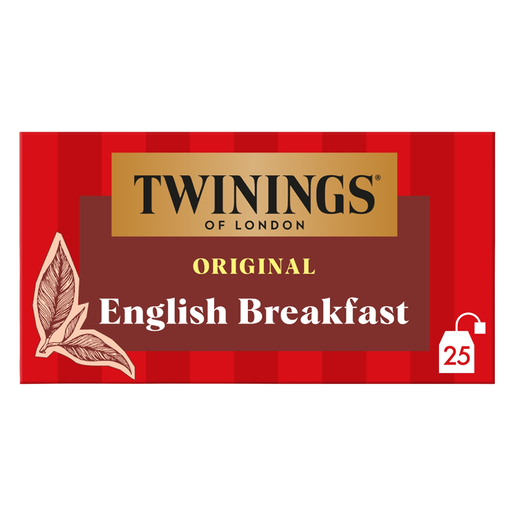 Image unavailable
Twinings English Breakfast, 25 tea bags
Keep a breakfast black tea option on the buffet, separate from the decaffeinated choice.
Box of 25 tea bags. Check the information on the packaging supplied before presenting it to guests as a decaffeinated option.
View on Joybuy
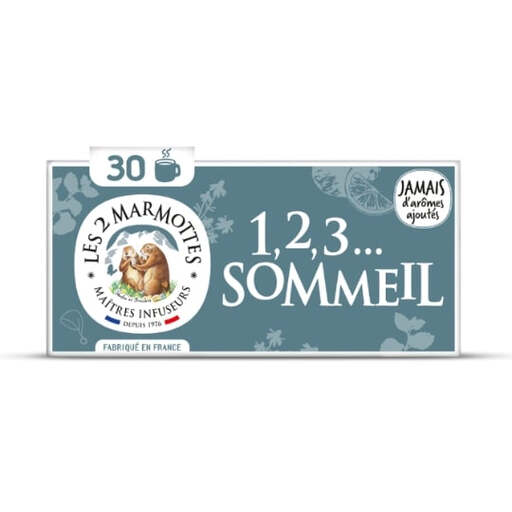 Image unavailable
LES 2 MARMOTTES Infusion 123 Sleep, 30 tea bags
An infusion to offer alongside black tea, without presenting it as English Breakfast.
Box of 30 tea bags. If you are offering it to guests who want to avoid caffeine, check the ingredients and the information on the packaging supplied.
View on Joybuy
Frequently asked questions
Is tea-decaffeinated black tea always caffeine-free?
No: the term ‘tea-decaffeinated’ is not enough to establish that it contains no caffeine at all. Auchan describes Lipton Thé du Soir as tea-decaffeinated black tea; to state a precise caffeine content or claim that it is caffeine-free, rely on the information for the specific product you serve.
Why offer a decaffeinated option at breakfast?
Some guests want to limit their caffeine intake throughout the day, even when choosing a morning drink. A black tea explicitly labelled as decaffeinated gives them that choice without confusing it with a request for classic English Breakfast.
What should you check on a box of tea for the buffet?
First check the name and ingredients of the product actually supplied, then the number of tea bags and how they are packaged. For prepacked food sold in France, the DGCCRF reminds businesses that labelling must clearly inform consumers and be written in French; also check the information on the packaging you make available to guests.


