People who drink coffee in the evening
You’d like to enjoy a cup of coffee in the evening while reducing your caffeine intake. Anses says caffeine can delay falling asleep and reduce both the length and quality of your sleep.


When choosing an evening coffee with diabetes in mind, pick a pod clearly labelled as decaffeinated, check its ingredients and make sure it’s compatible with your machine. ‘Decaffeinated’ doesn’t guarantee that there’s no caffeine at all; what’s in your cup also depends on what you add to it.
You’d like to enjoy a cup of coffee in the evening while reducing your caffeine intake. Anses says caffeine can delay falling asleep and reduce both the length and quality of your sleep.
When choosing products with diabetes in mind, you may prefer to check what’s in the pod first, then decide separately what to add. Assurance Maladie recommends checking ingredients and nutritional information, bearing in mind how much you actually consume.
You’ll need to tell apart pods that work with your machine from capsules designed for other systems. The number of pods and net weight can then help you choose a pack size that suits your consumption.
When choosing an evening coffee with diabetes in mind, check the pod’s ingredients and what you usually add to your coffee. Then look for the ‘decaffeinated’ label and make sure the pod is compatible with your machine.
| What to consider | What to check | Who is this for? |
|---|---|---|
| Ingredients and additions | Read the ingredients and nutritional information for the product you’re considering, then take into account what you add to your cup. | I want to make a simple coffee and decide for myself whether to add milk or sugar. Around 40% of consumers prioritise knowing what’s in their coffee and what they add to it. |
| Caffeine in the evening | Look for the ‘decaffeinated’ label. If you need to know the exact amount of caffeine per cup, ask the manufacturer. | In the evening, I’d like to enjoy coffee without choosing a standard coffee pod, as I’m mindful of my caffeine intake. Around 40% of consumers share this priority. |
| Machine and pack size | Check which type of pod your machine takes, then look at the number of pods and the pack’s net weight. | With my Senseo machine, I mainly need to buy the right type of pod in a pack size that suits how often I drink coffee. Around 20% of consumers prioritise compatibility and pack size. |
A plain coffee pod and a cup with added sugar, syrup or milk don’t have the same nutritional content. When choosing products with diabetes in mind, Assurance Maladie recommends considering nutritional information in relation to the amount you consume.
Check what’s in the pod, and remember to take your usual additions into account too.
The label identifies a type of coffee; it doesn’t tell you the exact amount of caffeine in your cup. Anses notes that people’s sensitivity to caffeine varies.
If you need an exact figure per cup, ask the manufacturer rather than trying to work it out from the ‘decaffeinated’ label alone.
Decaffeinated coffee comes in different formats, and they won’t necessarily work with your machine.
Before you buy, compare the type of pod shown on the pack with the type your machine takes. If you have a Senseo machine, look for Senseo compatibility.
Senseo describes its Decaffeinated product as a blend of decaffeinated Arabica and Robusta coffees in soft pods.
Carrefour lists Carte Noire Decaffeinated pods that are compatible with Senseo machines, with 100% Arabica coffee as the stated ingredient.
Carrefour Sensation’s decaffeinated product is described as compatible with Senseo machines, with 36 pods weighing 250 g.
Auchan lists Classico decaffeinated pods, intensity 4, compatible with Senseo machines, in a pack of 36 pods weighing 250 g.
E.Leclerc lists Plantation decaffeinated soft pods in a pack of 36 pods weighing 250 g.
This selection features a decaffeinated coffee pod described as compatible with Senseo machines. It may be worth considering if you make evening coffee with a machine that takes this format.
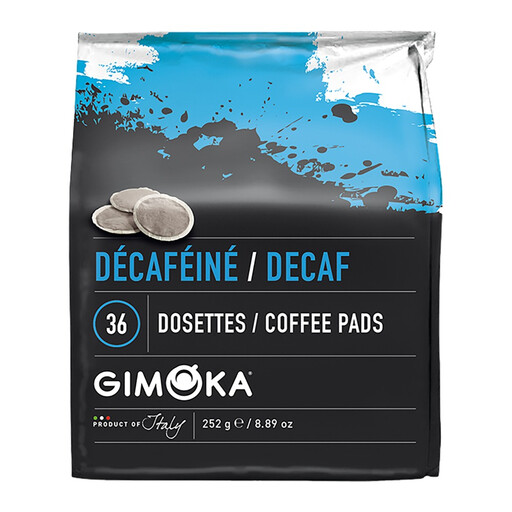 Image unavailable
This decaffeinated coffee is made for a machine that takes Senseo-compatible pods, making it an option for an evening coffee. The pack contains 36 pods and weighs 252 g. If the amount of caffeine per cup is important to you, ask the manufacturer.
No. Decaffeinated coffee pods aren’t a substitute for a diet suited to your needs. Assurance Maladie recommends checking products’ ingredients and nutritional information, while bearing in mind how much you consume. Remember to consider what you add to your coffee, too.
A decaffeinated pod gives you an alternative to standard coffee if you’d like to reduce your caffeine intake in the evening. Anses says caffeine can disrupt sleep, although people’s sensitivity to it varies.
No. The ‘decaffeinated’ label alone doesn’t guarantee that there’s no caffeine in your cup. If you need to know the exact amount per cup, ask the manufacturer of the product in question.