To go with a savoury breakfast, first choose a decaffeinated ground coffee that suits your coffee maker, then compare the flavour profiles to find one you like. If the decaffeination method or certifications matter to you, check the details for the specific product. The word ‘decaffeinated’ alone doesn’t tell you what these are, or mean that the coffee is completely caffeine-free.
Who is this guide for?
Fans of savoury breakfasts
Whether you’re having eggs, cheese or savoury toast, you want a coffee with a flavour profile you enjoy, rather than relying on the word ‘decaffeinated’ alone. The stated intensity can help guide your choice, but it doesn’t guarantee that the coffee will pair well with your meal.
Those looking to cut down on caffeine
You want to keep your coffee ritual while reducing your caffeine intake. However, decaffeinated coffee shouldn’t automatically be treated as caffeine-free.
Shoppers interested in decaffeination methods and certifications
You’re looking for water-decaffeinated coffee or organic and Fairtrade labels. Check these details for the specific coffee you plan to buy, rather than assuming they apply to every product from a brand.
What should you look for?
Start by checking that the pack says ‘decaffeinated’ and that the grind is suitable for your coffee maker. You can then compare the options that meet these two requirements by looking at flavour, packaging and how the coffee is produced.
| Criteria |
What to check |
Who is it for? |
| Caffeine reduction |
The word ‘decaffeinated’ on the pack; check the wording about caffeine if you need more precise information. |
I want to keep my morning coffee while cutting down on caffeine. Around 36% of consumers would put this need first. |
| Flavour profile |
The stated intensity and flavour notes. Don’t confuse these with a measure of caffeine content. |
With a savoury breakfast, I’m mainly looking for a cup that suits my taste. Around 29% of consumers would put this first. |
| Packaging |
The pack size and number of packs, considered in light of how much coffee you drink. |
I buy coffee regularly and want a practical size to use at home. Around 21% of consumers would prioritise this. |
| Method and certifications |
The stated decaffeination method and, if you’re looking for them, any organic or Fairtrade details specific to the product. |
I want to know which method was used or what certifications the coffee I choose has. This would be the priority for around 14% of consumers. |
Mistakes to avoid
-
Confusing intensity with caffeine content
Intensity describes the coffee’s stated character, while ‘decaffeinated’ answers a different question. An intensity rating doesn’t tell you how much caffeine the coffee contains.
First, check that the pack says ‘decaffeinated’, then use the intensity and flavour notes to guide your choice of taste.
-
Assuming all decaffeinated coffee uses the same method
Malongo says that Déca Aqua and Dolce are decaffeinated using water. You can’t assume that another coffee uses the same method just because it says ‘decaffeinated’ on the pack.
If the method matters to you, look for details on the product page or packaging for the specific coffee you’re considering.
-
Choosing a grind without checking your coffee maker
Malongo describes Dolce primarily as ground coffee for espresso and says you may need to adjust the amount used with other brewing methods.
Check the recommended brewing method before you buy, then follow the product’s own instructions for how much coffee to use.
Brands to know
These brands offer useful information about specific decaffeinated ground coffees or how to choose a brewing method. Their product features don’t automatically apply to their entire range.
Carte Noire
Carrefour describes a Carte Noire decaffeinated ground coffee made from 100% Arabica, with an intensity rating of 7, in two 250 g packs.
- The stated intensity and composition give you two useful details to consider when looking at this product.
- If you’re looking for a particular decaffeination method or certification, check the details for the product you choose.
Malongo
Malongo describes Déca Aqua as organic and Fairtrade ground coffee that is decaffeinated using water. The brand describes Dolce as water-decaffeinated coffee designed primarily for espresso.
- These two products help distinguish between looking for a particular decaffeination method and certifications, and choosing coffee primarily for espresso.
- For Dolce, Malongo says you may need to adjust the amount used with a different brewing method.
Carrefour Extra
Carrefour describes Carrefour Extra decaffeinated ground coffee made from 100% Arabica, in a 250 g pack.
- The product information specifies the stated composition and vacuum packaging.
- If you’re choosing based on the method or certifications, check the details on the pack you’re considering.
Eco+
E.Leclerc describes Eco+ decaffeinated ground coffee in a 250 g pack.
- The pack size and the word ‘decaffeinated’ make it easy to identify the product you’re looking for.
- Check the grind and any other details that matter to you on the pack.
Plantation
E.Leclerc lists two decaffeinated ground coffees in its Plantation range: a traditional blend and a 100% Arabica coffee.
- The product names help you tell these two options apart.
- The names alone don’t tell you which decaffeination method was used or whether the coffees taste the same.
Lavazza
Lavazza highlights the recommended brewing method and flavour profile as useful guides to choosing its ground coffees.
- These details help you choose between coffee for espresso, moka pots or filter coffee.
- For the type of coffee covered in this guide, also check that the product you’re considering is labelled ‘decaffeinated’.
Decaffeinated ground coffee on Joybuy
This product matches the search for decaffeinated ground coffee for breakfast. Before choosing it, check the grind and brewing instructions on the packaging to make sure they suit your coffee maker.
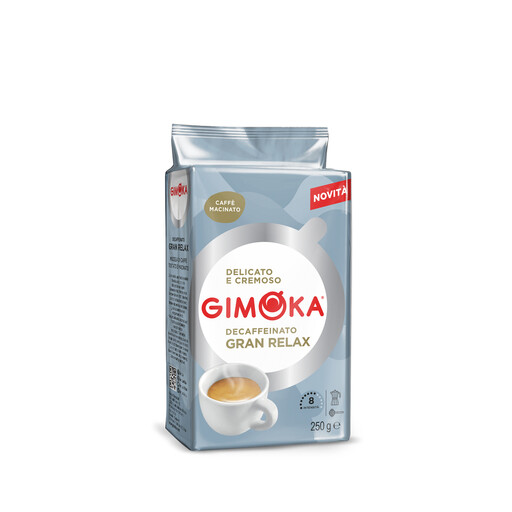 Image unavailable
GIMOKA GRAN RELAX, decaffeinated ground coffee, 250 g
A pack of decaffeinated ground coffee for enjoying a cup at breakfast. The pack contains 250 g; check the brewing instructions to make sure it’s suitable for your coffee maker. The product information gives a caffeine content of ≤ 0,10 g/100 g, so ‘decaffeinated’ doesn’t mean completely caffeine-free.
View on Joybuy
Frequently asked questions
Is decaffeinated ground coffee caffeine-free?
No. ‘Decaffeinated’ doesn’t guarantee that there’s no caffeine at all. If the amount left in the coffee matters to you, check the details for the product you choose. If you need to avoid caffeine for medical reasons, ask a healthcare professional for advice.
Can you use the same ground coffee for espresso and filter coffee?
It depends on the product instructions and the brewing method you use. Malongo recommends Dolce primarily for espresso, but says it can also be used for filter coffee or in a manual coffee maker with the amount adjusted accordingly.
How should you store ground coffee after opening?
Lavazza recommends storing it in an airtight container, away from light, moisture and heat, to preserve the flavour after opening.
Is decaffeinated coffee also suitable for an evening cup?
It may suit you if you’re looking to reduce your caffeine intake, but it doesn’t guarantee that there’s no caffeine at all. Anses says caffeine can disrupt sleep, so consider how sensitive you are to it and how many other caffeinated drinks you have.


