For evening service in a canteen, choose ground coffee labelled “decaffeinated” and check that it’s suitable for the equipment you use. The flavour in the cup, pack sizes and the ability to replenish supplies matter too. Water-based decaffeination or a certification label alone won’t tell you how the coffee will turn out in your machine.
Who is this choice for?
Evening service manager
You’d like to offer a cup of coffee with less caffeine at the end of the day. The French Agency for Food, Environmental and Occupational Health & Safety (Anses) notes that caffeine can delay sleep and that sensitivity varies from person to person.
Espresso or filter station manager
You need to choose ground coffee that’s suitable for the preparation method used in the canteen. Malongo describes its Dolce decaffeinated coffee as designed for espresso, with the dose adjustable for filter brewing or a manual coffee maker.
Purchasing manager
You’re considering pack size, restocking arrangements and, if your purchasing requirements call for them, the organic or Fairtrade labels on each product.
What should you look for?
For evening service, first check that the coffee is labelled “decaffeinated” and see which preparation method is recommended. Then consider restocking and the preferences of the people who’ll be drinking it.
| Criteria | What to check | Consumers concerned |
|---|
| Decaffeinated coffee |
Check that the product is labelled “decaffeinated”; don’t assume this means it contains no caffeine at all. |
For coffee served late, I want to limit caffeine without removing coffee from the menu; around 31% of consumers make this a priority. |
| Preparation |
Check the recommended method for the ground coffee and whether it suits the canteen’s machine. |
If the station uses an espresso machine or filter coffee maker, I want to be able to prepare the coffee with the equipment we already have; compatibility would be a priority for around 25% of consumers. |
| Restocking |
Check pack sizes and whether you can reorder from your chosen supplier. |
When I’m planning regular service, I need to be able to get the product I’ve chosen again; around 25% of consumers would prioritise this continuity. |
| Flavour and labels |
Check for organic or Fairtrade labels if required, then try the coffee to see how it tastes. |
I want the coffee to appeal to the people we serve while meeting the canteen’s purchasing requirements; this would be the main concern for around 19% of consumers. |
Mistakes to avoid
-
Assuming “decaffeinated” means “caffeine-free”
The decaffeinated label doesn’t guarantee that a product contains no caffeine at all. Anses notes that sensitivity to caffeine varies from person to person.
Present it as another option for evening service, without suggesting it has any medical benefits.
-
Relying on the word “espresso” alone
A product designed for espresso may need a different dose when used for filter brewing or in a manual coffee maker, as Malongo notes for its Dolce decaffeinated coffee.
Check which equipment you use, then try the coffee with your usual serving sizes before ordering more.
-
Choosing without planning for restocking
If you’ve chosen a product for regular service, you need to be able to get it as often as the canteen’s consumption requires.
Before making your final choice, check the ordering or collection arrangements with your prospective supplier.
-
Assuming the decaffeination method determines the flavour
Water-based decaffeination describes the process used; on its own, it doesn’t show whether the coffee will suit the people you serve.
Separate the details shown on the pack from personal taste preferences, which are best judged by trying the coffee.
Brands to consider for decaffeinated ground coffee
Malongo
Malongo offers several decaffeinated ground coffees, including Dolce and Déca Aqua.
- Malongo describes Dolce as designed for espresso; Déca Aqua is presented as organic and Fairtrade/Max Havelaar certified.
- For other preparation methods, check the guidance for the specific product and try it before serving.
Carrefour
Carrefour Extra offers a 250 g pack of decaffeinated ground coffee.
- Carrefour’s product information lists its ingredients as 100% decaffeinated ground Arabica coffee.
- Check the recommended preparation method for your equipment and the restocking arrangements at your chosen store.
E.Leclerc / Plantation
The Plantation product listed by E.Leclerc is a 250 g pack of decaffeinated ground coffee.
- The pack size makes it possible to try the coffee before arranging regular supplies.
- Check the recommended preparation method and collection options with your chosen store or click-and-collect service.
Decaffeinated ground coffee on Joybuy
This 250 g pack of decaffeinated ground coffee could be worth trying for evening service. Check that it’s suitable for the canteen’s machine before planning to use it regularly.
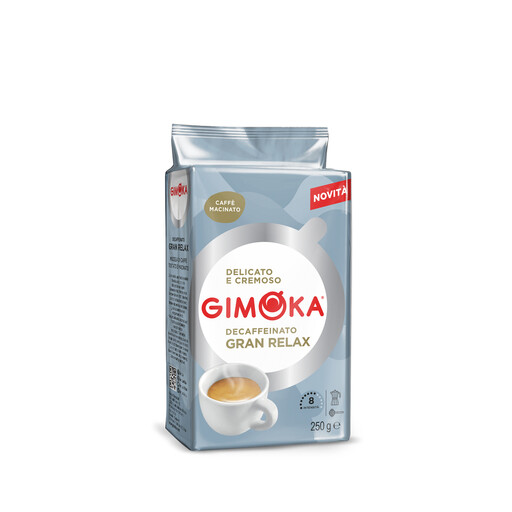 Image unavailable
GIMOKA GRAN RELAX, decaffeinated ground coffee, 250 g
This pack is suitable for trying decaffeinated ground coffee for evening service. Before choosing it for regular canteen use, check which preparation method suits your machine and whether you can restock it.
View on Joybuy
Frequently asked questions
Why offer decaffeinated coffee at evening service?
Decaffeinated coffee gives you a way to serve a cup of coffee while limiting caffeine compared with regular coffee. Anses notes that caffeine can delay sleep and that its effects vary from person to person, so decaffeinated coffee shouldn’t be presented as a guarantee for any individual.
Is the same decaffeinated ground coffee suitable for every coffee maker?
No. Check the recommended preparation method for each product and try it with the canteen’s equipment. Malongo describes its Dolce decaffeinated coffee as designed for espresso and says you can adjust the dose for filter brewing or a manual coffee maker.


