What should you check?
For an evening coffee, first check the “decaffeinated” label and that the pods fit your machine. Then compare compatible options based on the flavour and composition details that matter to the person drinking them.
| What matters |
What to check |
Who this matters to |
| Caffeine in the evening |
The “decaffeinated” label on the pack and, if you need an exact amount, the available information about caffeine in the prepared cup. |
I want to enjoy coffee after dinner without accidentally choosing regular pods. Around 42% of consumers make reducing caffeine a priority. |
| Compatibility |
The type of pod your machine takes and the compatibility information on the pack. |
When I’m buying for someone else, I want to make sure the pack works with the machine they usually use. This is the top priority for around 33% of consumers. |
| Flavour and composition |
The coffee used, the stated flavour intensity and any information about the decaffeination process. |
I want a cup with a flavour profile I enjoy, while understanding what the stated intensity means. Taste and product information are the top priority for around 25% of consumers. |
A pick from Joybuy
This product is decaffeinated coffee in pods compatible with Senseo machines. It may be worth considering if that’s the system used to make an evening coffee.
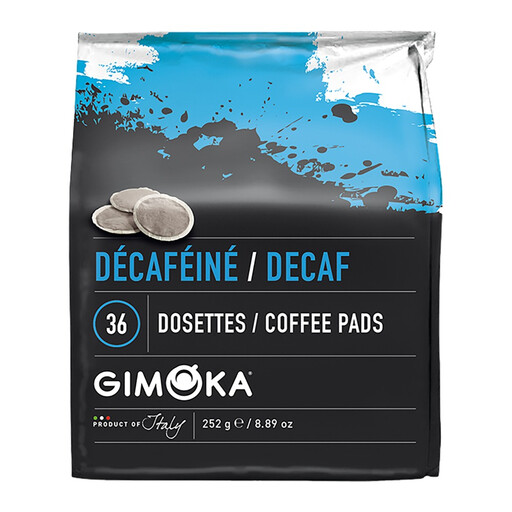 Image unavailable
GIMOKA Decaffeinated, 36 pods compatible with Senseo, 252 g
If you use a Senseo machine to make an evening coffee, this product is labelled decaffeinated and states that it is compatible with the system.
Pack of 36 pods, with a total weight of 252 g. If you need a specific amount of caffeine per cup, check the information on the packaging.
View on Joybuy
Frequently asked questions
Are decaffeinated pods suitable for an older person’s evening coffee?
They may suit someone who wants to reduce their caffeine intake while keeping up the coffee ritual, but they won’t necessarily be right for everyone. Anses says caffeine can disrupt sleep and that its effects vary from person to person. If the person is particularly sensitive or under medical care, ask the relevant healthcare professional for advice.
Does “decaffeinated” mean there’s no caffeine at all?
No. The label shouldn’t be taken as a guarantee of zero caffeine. Krups France explains that decaffeination removes most of the caffeine from the bean. If the exact amount matters to you, look for information relevant to the product and the prepared cup.
Does a lower intensity mean less caffeine?
No, the stated intensity doesn’t let you compare the caffeine content of different pods. Carrefour France and Auchan France list decaffeinated products with intensity ratings of 5, 6 and 4. Choose based on the “decaffeinated” label and compatibility first, then consider the flavour you’re looking for.
Can decaffeinated coffee replace a snack?
No. The products featured are decaffeinated coffee pods, not snacks. If the person needs to adapt their diet because of a medical condition, ask a healthcare professional for advice rather than relying on a choice of drink.


