First, choose decaffeinated coffee in a format that works with your machine: Nespresso-compatible capsules, Dolce Gusto capsules, Senseo soft pods and Tassimo T DISCs are not interchangeable. For your weekly shop, compare the number of servings and the type of coffee you want. The intensity rating describes the flavour profile, not the caffeine content.
Who is this guide for?
Households that already own a machine
If you use a capsule or pod machine, its system determines which format to buy. Nespresso, for example, has Original and Vertuo systems; products for Dolce Gusto, Senseo and Tassimo have different compatibility labels.
Decaf drinkers who enjoy a coffee after a meal
If you want to make a decaffeinated espresso without changing machines, check both the required system and the type of drink listed on the box. The products featured by Carrefour and Auchan vary in intensity and serving size.
Households planning their weekly shop
Think about how many decaffeinated coffees you expect to drink when choosing between pack sizes. A smaller box is also a good way to try a flavour profile before buying more servings.
What should you check?
Filter products by machine system before comparing pack sizes and the coffee on offer. A box that suits your consumption is no use if its capsules don’t work with your machine.
| What to consider |
What to check |
Who is it for? |
| Machine compatibility |
Check the exact system on your machine, then look for the matching compatibility information on the box. With Nespresso, distinguish between Original and Vertuo. |
If I already have a machine, I want to avoid buying servings I can’t use. Around 36% of consumers make compatibility their top priority. |
| Number of servings |
Once you’ve confirmed the machine format, compare the number of capsules or pods with how many decaffeinated coffees you expect to drink that week. |
When I shop for the household, I want a box that matches our consumption without leaving lots of half-open packs. This is the priority for around 29% of consumers. |
| Flavour and drink type |
Check the intensity and the type of drink, such as espresso or lungo where specified. Don’t take the intensity rating as a measure of caffeine. |
For my decaf break, I mainly want the flavour and coffee style I enjoy. Around 21% of consumers put flavour first. |
| Recycling the servings |
Check what the capsule is made from and find out which local recycling instructions apply. |
When buying single servings, I want to know where to dispose of used capsules and avoid buying more than I need. Recycling is the main concern for around 14% of consumers. |
Mistakes to avoid
-
Assuming every “Nespresso-compatible” capsule works with your machine
Nespresso describes Original and Vertuo as two separate systems. So a general claim on a product page isn’t enough to confirm compatibility with both.
Check which system your machine uses and make sure the box explicitly states that it’s compatible.
-
Taking the intensity rating as a measure of caffeine
An intensity rating of 5 or 6 describes the flavour profile; it doesn’t tell you how much caffeine the decaffeinated coffee contains.
Use the intensity rating to choose a flavour, and check the product information if its ingredients matter to you.
-
Choosing a large box without counting how many coffees you’ll make
A pack with lots of servings is only useful if it matches your household’s consumption.
Estimate how many decaffeinated coffees you’ll make that week before choosing a box size.
-
Putting all capsules in the general waste
In France, ADEME says that aluminium and plastic capsules can go in the recycling container for paper and packaging.
Check what your capsules are made from and consult local guidance if you’re unsure about the format or collection scheme.
Brands to know by format
The products featured here illustrate different formats. A brand name never replaces the need to check which machine the product is designed for.
Carte Noire
Carrefour lists a box of 30 Espresso Décaféiné intensity 5 capsules, described as compatible with Nespresso machines.
- The product page describes decaffeinated ground coffee in aluminium capsules.
- Check which Nespresso system your machine uses before choosing this product.
Nescafé
Products featured by Carrefour and Auchan include decaffeinated Nespresso-compatible capsules and capsules for Dolce Gusto machines.
- The Dolce Gusto Espresso Decaffeinato product listed by Auchan comes in a box of 16 capsules and has an intensity rating of 5.
- Nespresso-compatible and Dolce Gusto capsules are not interchangeable.
Jacobs Douwe Egberts / L’OR
L’OR decaffeinated products include capsules described as compatible with L’OR BARISTA and Nespresso, as well as Tassimo T DISCs.
- The Auchan product page specifies which machines the L’OR Decaffeinato capsules it features are compatible with.
- L’OR Espresso Décaféiné for Tassimo requires T DISCs, not Nespresso capsules.
Carrefour Selection / Carrefour Bio
Carrefour lists, among other products, a Selection Décaféiné intensity 4 and a Bio Décaféiné intensity 6, both described as compatible with Nespresso machines.
- These two products let you compare the intensity ratings shown on their product pages.
- Confirm the exact compatibility on the box, particularly if your machine uses the Vertuo system.
Auchan
Auchan lists a box of 20 decaffeinated espresso capsules with an intensity rating of 6/12, described as compatible with Nespresso machines.
- The product page specifies 100% Arabica coffee for espresso-style preparation.
- Always check the format against the exact system your machine uses.
Marque Repère Plantation (E.Leclerc)
E.Leclerc lists a box of 30 Plantation aluminium capsules containing roasted, ground and decaffeinated coffee.
- The listed pack contains 30 capsules and weighs 156 g.
- Check the packaging in store for the required machine system; the product description featured here doesn’t specify it.
Joybuy products by machine system
These decaffeinated coffees are available for several machines: Nespresso, Dolce Gusto, Lavazza A Modo Mio and Senseo. First choose the format that works with your machine, then compare the number of servings and, for Dolce Gusto, the type of coffee on offer.
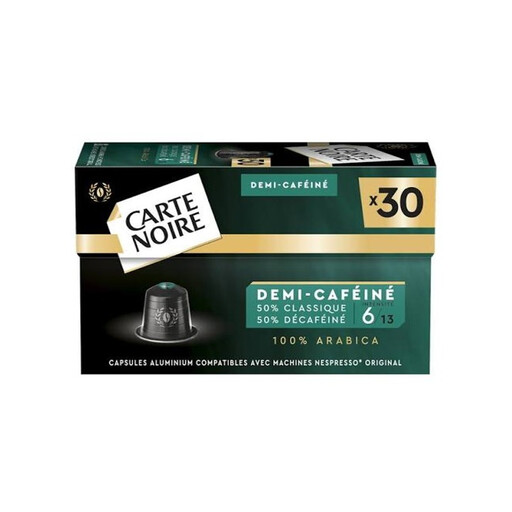 Image unavailable
Carte Noire Demi, Nespresso-compatible decaffeinated capsules, 30 capsules
Worth considering if you’re looking for decaffeinated capsules for a compatible Nespresso machine. Check your machine’s exact system.
Box of 30 capsules.
View on Joybuy
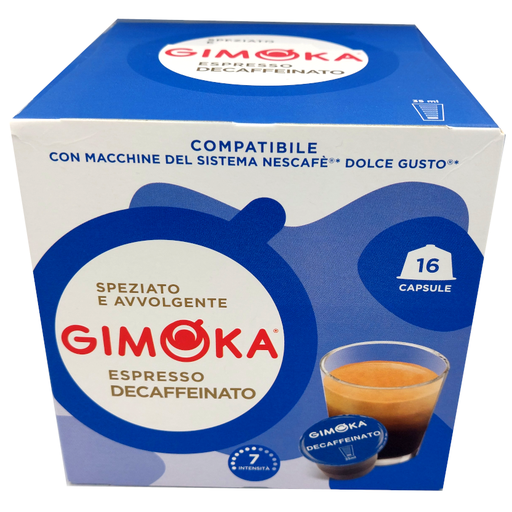 Image unavailable
Gimoka decaffeinated espresso compatible with Dolce Gusto, 16 capsules, 112 g
For a Dolce Gusto machine and anyone who prefers decaffeinated espresso. These capsules aren’t a substitute for Senseo pods.
Box of 16 capsules, 112 g.
View on Joybuy
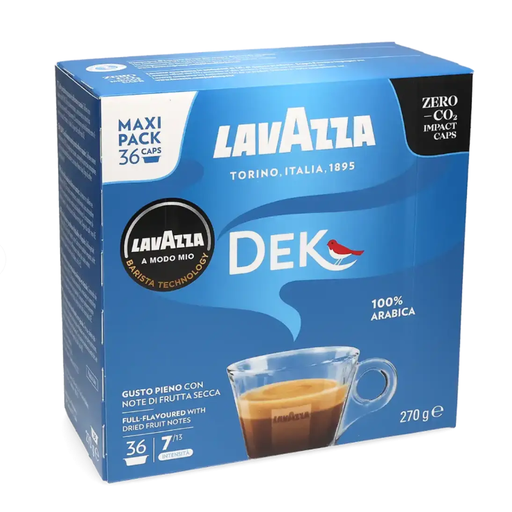 Image unavailable
Lavazza A Modo Mio, decaffeinated capsules, 36 capsules
Choose these only if your machine uses the Lavazza A Modo Mio system.
Box of 36 capsules; consider how many you expect to use.
View on Joybuy
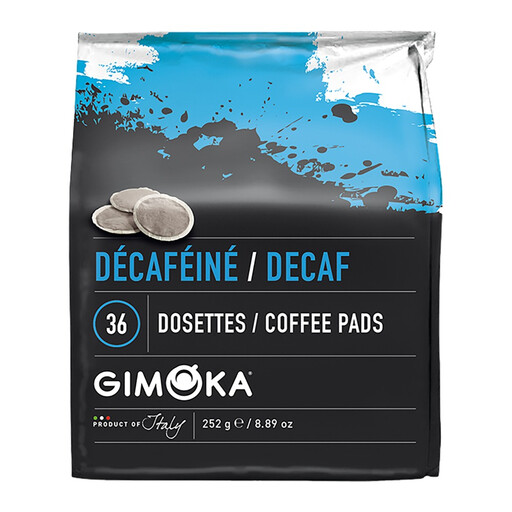 Image unavailable
Gimoka, decaffeinated pods compatible with Senseo, 36 pods, 252 g
For a Senseo machine that uses pods. Don’t confuse this format with a rigid capsule.
Pack of 36 pods, 252 g.
View on Joybuy
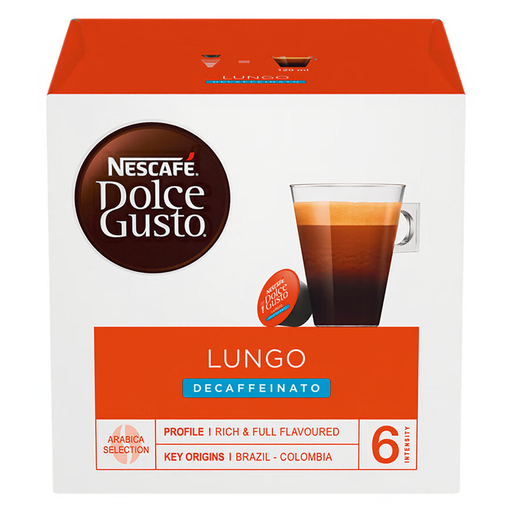 Image unavailable
Nescafé Dolce Gusto Lungo Décafe, 16 capsules
For a Dolce Gusto machine if you prefer a decaffeinated lungo to an espresso. Check that this type of drink is what you’re looking for.
Box of 16 capsules.
View on Joybuy
Frequently asked questions
How can I tell if decaffeinated capsules will work with my machine?
Compare your machine’s exact system with the compatibility information on the box. Nespresso has Original and Vertuo systems; Dolce Gusto capsules, Senseo pods and Tassimo T DISCs are designed for different systems.
Are there decaffeinated capsules for Dolce Gusto?
Yes. Auchan, for example, lists Nescafé Espresso Decaffeinato capsules described as compatible with Dolce Gusto, in a box of 16. Check for this information on the box when you buy.
Does the intensity rating tell me how much caffeine is left in decaffeinated coffee?
No. Intensity describes the flavour profile and mouthfeel, not the amount of caffeine. It can help you choose a flavour, but it doesn’t replace the product-specific information.
Where should I dispose of used coffee capsules in France?
According to ADEME, aluminium and plastic capsules go in the recycling bin, bag or container for paper and packaging. Check what your capsules are made from, and consult local guidance for other formats or if you’re unsure.


