
Livraison le jour même ou le lendemain

Qualité garantie

Débloquez vos offres de bienvenue: Livraison GRATUITE | Jusqu'à -80 % | 30 jours d'essai gratuits à JoyPlus
Téléchargez l'application
A dashcam for your car can provide invaluable video evidence after a collision, dispute, or act of vandalism. However, buying one isn't just about picking the highest resolution. A 4K image isn't necessarily readable at night, while a "24-hour parking mode" may require a separately sold accessory.
This guide to the car dashcam helps you compare the criteria that truly matter, taking into account common driving scenarios in France: city commutes, highway driving, street parking, night driving, or campervan trips.
A 4K dashcam displays more pixels than a 1080p model, but actual quality also depends on the sensor, lens, exposure, and video compression. A poorly exposed 4K clip can remain difficult to use in the dark or facing headlights.
Before choosing, look at:
24-hour parking mode generally doesn't work with a simple cable plugged into the 12V socket. On many models, you need to add a hardwiring kit, sold separately. This must be installed properly to minimize the risk of draining the vehicle's battery.
Before ordering, check the exact pack contents: microSD card, rear camera, mount, cable length, charger, and wiring kit. The list can vary significantly from one model to another.
A dashcam records continuously. When the memory card is full, loop recording overwrites unprotected clips. The G-sensor can automatically lock a video after an impact, but it's better to regularly check important files and format the card directly from the camera, as the manufacturer recommends.
For a 4K dashcam or a front-and-rear model, choose a sufficiently fast microSD card, typically U3 or equivalent, and verify that its capacity is supported by the device.
A 1080p front camera is sufficient for basic use and generates relatively light files. 2K models often offer a good compromise between detail and storage space. 4K can be justified for long trips, commercial vehicles, or when you need to examine a scene closely after an incident.
A front-and-rear dashcam extends coverage to impacts from behind. Three or four-channel systems can also film the cabin and sides of the vehicle. However, they require more cables, storage space, and installation time.
The field of view should be wide enough to cover the road without excessively distorting vehicles and license plates. An advertised angle between 120° and 170° should always be evaluated based on the mounting position and windshield shape.
A car camera with night vision must remain effective in several situations: poorly lit streets, tunnels, parking garage exits, or oncoming headlights. A light-sensitive sensor, a wide-aperture lens, and HDR processing can improve readability. The result, however, also depends on the cleanliness of the windshield and the camera's placement.
Avoid installing the device behind a heavily tinted area or in the line of dashboard reflections. Regularly cleaning the windshield in front of the lens can sometimes be as effective as a software feature highlighted on the spec sheet.
A GPS dashcam can record position, speed, and route, depending on the settings enabled. WiFi is mainly used to view or download videos from a smartphone without removing the memory card. It does not necessarily provide an internet connection.
A WiFi dashcam with an app simplifies sharing a clip. However, check compatibility with your phone, the app's language, and the permissions requested. 4G functions or cloud storage may also require an additional module and a subscription.
In France, a camera must not become a distraction. Configure it while stationary and install it so it doesn't reduce your field of vision. If you share a video where people or license plates are recognizable, consider privacy rights and blur identifiable elements.
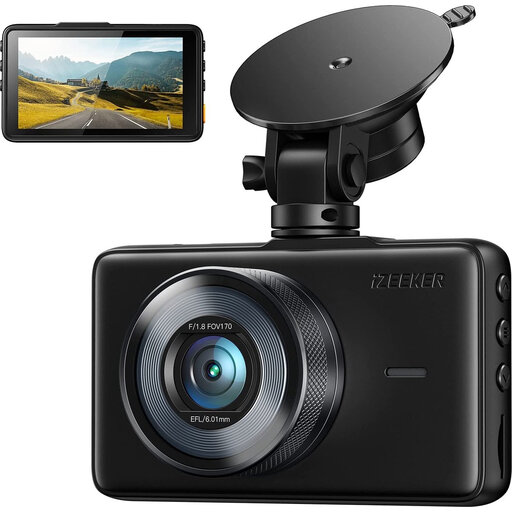
Why this model fits this profile: this front camera with a 3-inch screen is suitable for drivers who want to check settings and clips directly on the device.
The spec sheet states that the microSD card is not included and requires a Class 10 or higher card. This expense should be factored in from the start.
1080p recording, 3-inch LCD screen, G-sensor, and loop recording. Two mount options are indicated.
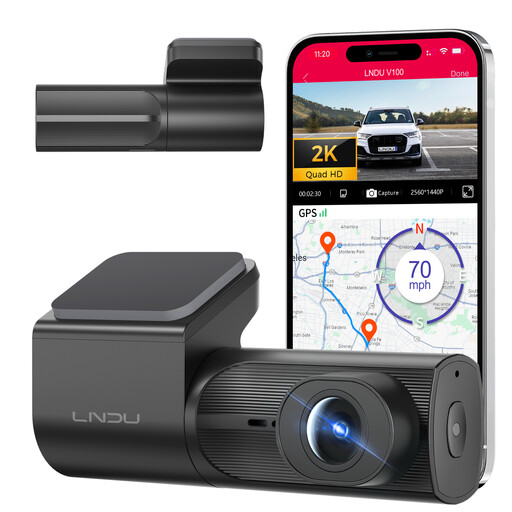
Why this model fits this profile: its WiFi and app allow you to view and download videos from a smartphone without having to handle the memory card on every trip.
24-hour parking mode is advertised with a separately sold LNDU JYX05 hardwiring kit. It should not be confused with standalone surveillance available out of the box.
2K resolution, F1.8 lens, WiFi, G-sensor, night vision, and loop recording. This is a single-channel front camera.
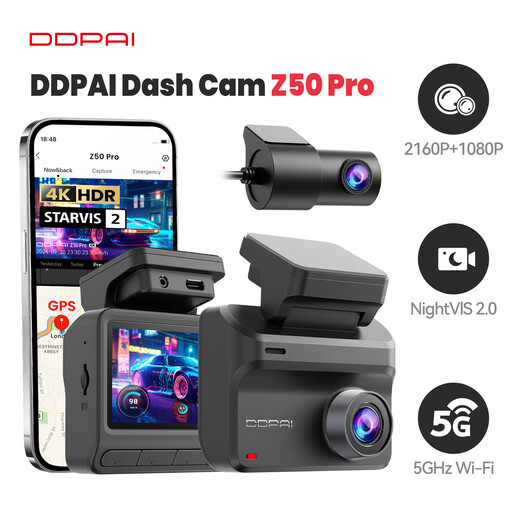
Why this model fits this profile: it combines a 4K front camera with a 1080p rear camera, an interesting setup for highways, business trips, or vehicles that regularly sleep outside.
The spec sheet indicates that parking mode and the rear camera may depend on the chosen configuration. The hardwiring kit and some modules are offered as options.
3-inch screen, built-in GPS, 5 GHz WiFi, support for microSD cards up to 512 GB, and advertised ADAS functions.
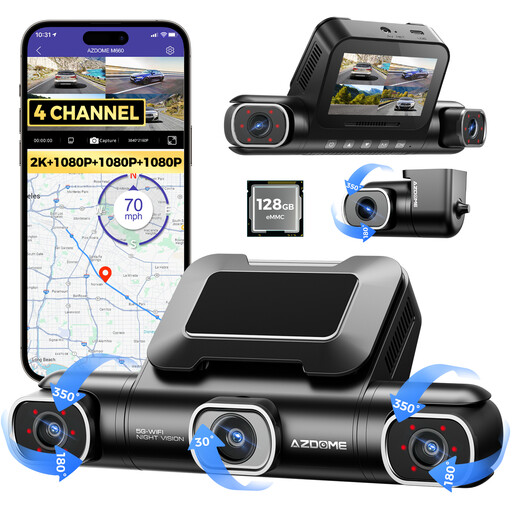
Why this model fits this profile: its four channels are aimed at SUV, commercial vehicle, and campervan drivers, as well as those who want to monitor multiple sides of their vehicle.
Installing four cameras requires more cables and adjustments. The advertised parking mode also requires a separate hardware kit.
Advertised 2.5K front configuration and three 1080p channels, GPS, 5 GHz WiFi, voice control, and 128 GB built-in eMMC storage.
Discover an updated selection of car dashcams, with different configurations, resolutions, and surveillance features.
Using a car video recorder is generally possible to document a trip or an incident, provided the camera does not obstruct driving. Sharing images where people are identifiable may fall under image rights and data protection laws. Keep videos for relevant use and blur faces or license plates before any public sharing.
While driving, it is powered by the 12V socket or a suitable connection. Once the engine is off, parking mode can draw from the vehicle's battery. Models with low-voltage protection or a dedicated kit reduce this risk, but don't eliminate it in all situations. For extended parking, check the settings and battery condition.
Keep useful clips for as long as necessary for an insurance claim or administrative process, then delete files that are no longer needed. For daily use, loop recording prevents the memory card from filling up quickly. Before a long trip, check the capacity, speed, and compatibility of the microSD card with your car security camera.