
Livraison le jour même ou le lendemain

Qualité garantie

Débloquez vos offres de bienvenue: Livraison GRATUITE | Jusqu'à -80 % | 30 jours d'essai gratuits à JoyPlus
Téléchargez l'application
Navigating the dashcam market can quickly become an overwhelming task. Between marketing promises and lengthy spec sheets, it's easy to get lost. As a product expert at Joybuy, my role is to help you see things more clearly. This guide gets straight to the point: breaking down the features that really matter and helping you avoid common pitfalls, so you can find the perfect in-car camera for your needs.
Before we dive into the features, let's start with the common mistakes that could make you regret your purchase.
To make an informed decision, focus on these non-negotiable technical parameters.
Resolution is important, but it's far from the whole story. A 4K dashcam (3840x2160 pixels) offers a much higher level of detail than a 1080p model, which is crucial for reading a license plate from a distance. But the true clarity of the image, especially at night, depends primarily on the image sensor.
A dashcam should cover the widest possible field of view without creating excessive image distortion (the "fisheye" effect).
Modern features make life easier and enhance security.
Rather than an endless catalogue, here are models that target specific needs and user profiles, keeping in mind the criteria we've just discussed.
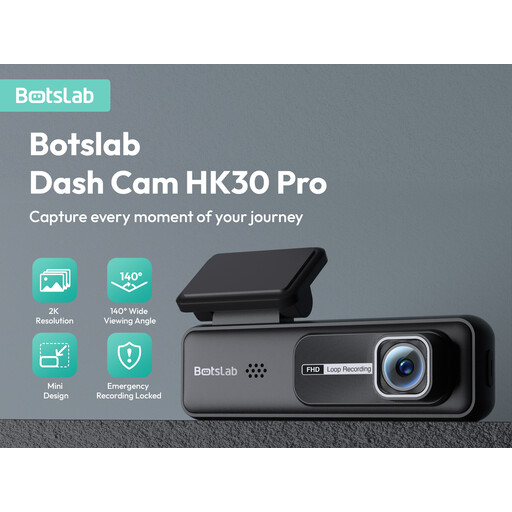
The profile: Ideal for those looking for a discreet and effective "set-it-and-forget-it" solution for daily commutes. Its mini design is barely noticeable on the windscreen, and its 2K resolution is the perfect balance between image quality and file size.
Its night vision technology is genuinely effective, producing sharp images in low light. It's a world away from the unfulfilled promises of entry-level models with unusable footage.
2K QHD resolution for precise detail. Wi-Fi connectivity for easy access to videos via the dedicated app.
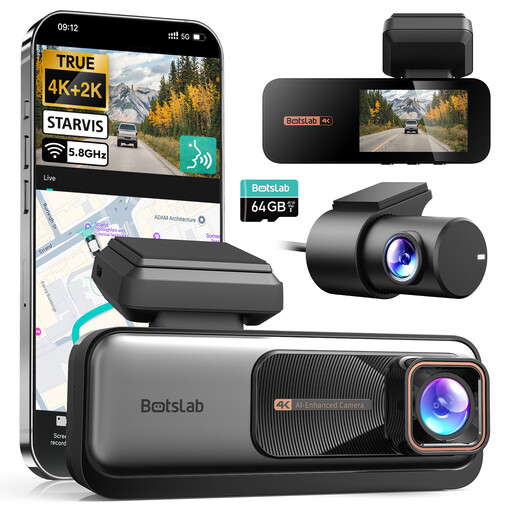
The profile: For drivers who demand the best and refuse to compromise. This dual-channel system offers 4K front image quality, built-in GPS, Advanced Driver-Assistance Systems (ADAS), and comprehensive surveillance.
Its Sony STARVIS IMX415 sensor guarantees excellent night-time performance, going far beyond mere marketing claims. Its 24/7 parking mode (with the optional kit) provides active and reliable surveillance.
4K UHD front and 2K rear image quality. Built-in GPS for tracking routes and speed. Supercapacitor for enhanced durability.
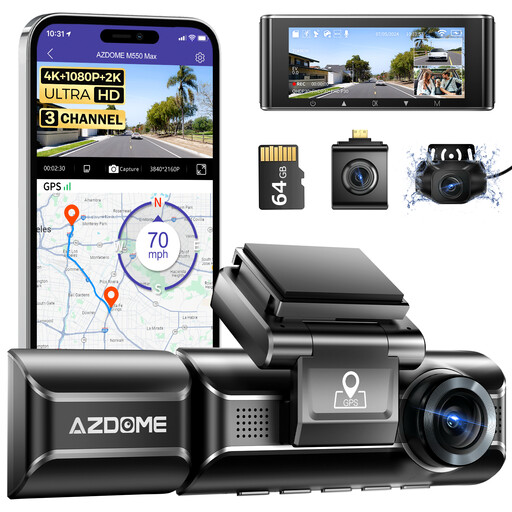
The profile: Designed for those who need comprehensive surveillance. With its three cameras (front, rear, and cabin), it's perfect for ride-sharing drivers, taxis, or parents who want to keep an eye on everything happening on board.
This three-channel system covers all the blind spots (rear, cabin) often missed by standard dashcams. It offers far more complete protection than a simple front-facing model.
Simultaneous 3-channel recording (4K + 1080P + 2.5K). Infrared night vision for the cabin, ensuring visibility even in complete darkness.
Explore our full selection of products that meet our quality standards and UK regulations.
Yes, using an in-car camera is perfectly legal in the UK for private use. The recordings are also admissible as evidence in the event of an accident. However, be aware that sharing this footage online or on social media is strictly regulated: you must blur faces and license plates to comply with privacy laws and GDPR.
For a dashcam, especially a 4K model, it is essential to use a "High Endurance" microSD card. These are the only cards designed to withstand intensive recording and rewriting cycles. Aim for at least a Class 10, U3, or V30 card from a reliable brand to ensure sufficient speeds and prevent file corruption.
Absolutely, that's the main risk if the installation isn't done correctly. For 24/7 surveillance, the safest solution is to use a hardwire kit. This type of kit connects directly to the vehicle's fuse box and includes a crucial safety feature: it cuts power to the camera as soon as the battery voltage drops below a critical threshold. This ensures you'll be able to start your car the next morning.