
Livraison le jour même ou le lendemain

Qualité garantie

Débloquez vos offres de bienvenue: Livraison GRATUITE | Jusqu'à -80 % | 30 jours d'essai gratuits à JoyPlus
Téléchargez l'application
By Joybuy, our product experts | Published: August 26, 2026
Equipping your car with a dashcam is no longer a tech enthusiast's gadget, but a genuine safety asset for a growing number of drivers in France. In the event of an incident, a car camera provides video evidence that is often decisive. The only problem: the market is saturated with marketing promises that too often lead to disappointment.
Rather than drowning you in indigestible spec sheets, let's focus on the three most common pitfalls and how to outsmart them to make the right choice.
Finding your way through the hundreds of available models is a real headache. Too many drivers regret their purchase, trapped by overrated features or well-hidden flaws. Here are the points to watch closely.
To avoid falling into the trap, simply focus on the features that truly make a difference in daily use.
Forget the "4K" label and look closer at:
The number of cameras and their field of view determine what you will actually record.
These options simplify your life and add valuable information to your recordings.
Because every driver is different, here is our selection designed for several profiles, keeping in mind the reliability criteria we've just covered.
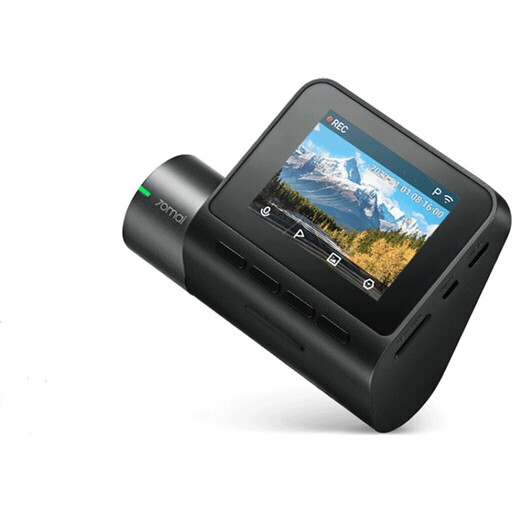
Why we chose it: Ideal for those seeking a simple and effective solution. It gets straight to the point: Full HD recording, a G-sensor, and security, all without frills and at a budget-friendly price.
It doesn't promise an illusory 4K, but a solid 1080p resolution, supported by HDR technology and 60 fps recording for optimal smoothness. It powers up via the cigarette lighter, avoiding internal battery issues.
Recording at 60 fps (frames per second) delivers much smoother video, a major asset for reading details on fast-moving objects.
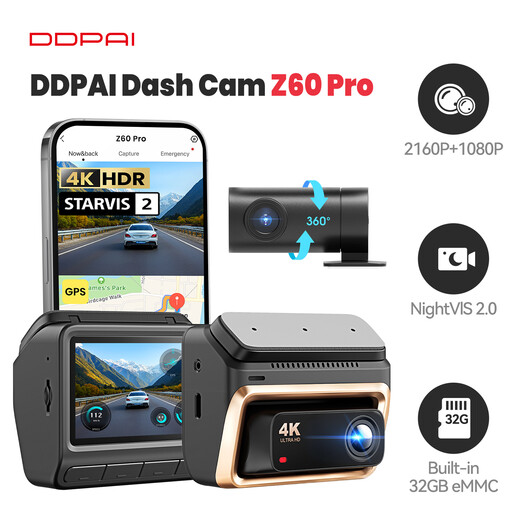
Why we chose it: For those who demand flawless image quality and complete protection. This front/rear camera duo ensures crystal-clear video evidence, day or night.
Here, the 4K resolution isn't an empty marketing claim: it's backed by an excellent Sony STARVIS 2 IMX678 sensor. It integrates a supercapacitor for optimal heat resistance and, with welcome transparency, its product page clearly states the need for a hardwire kit for parking mode.
The dual Sony STARVIS 2 sensor (front and rear) with HDR technology on both channels guarantees exceptional image quality, even in the most challenging light conditions.
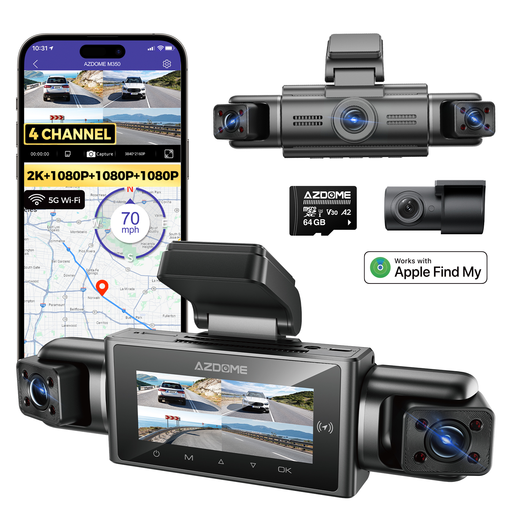
Why we chose it: For drivers who demand total surveillance and the latest innovations. This 4-camera system offers full coverage and a unique location feature for Apple users.
It provides true 360-degree coverage thanks to four separate cameras, not just a single ultra-wide-angle lens. Its location feature is a concrete capability, not just an empty promise.
It's one of the first dashcams to natively integrate with the Apple Find My network, allowing you to locate the vehicle's position anywhere in the world via the Apple network, without a third-party app.
We have selected a full range of products that meet our reliability criteria and comply with current regulations.
Yes, the use of an in-car camera is legal in France for private use. Recordings can be admitted as evidence in court. However, the distribution of these images on the internet is regulated: you must blur faces and number plates to respect the right to privacy and image rights. It is also recommended to inform passengers of the camera's presence.
The recording duration depends on the memory card's capacity and the video resolution. All modern dashcams operate on a "loop recording" basis: when the card is full, the oldest files are automatically overwritten by new ones. As a guide, a 128 GB card can store approximately 8 to 12 hours of 4K video, and much more in 1080p.
This is a valid concern. Quality hardwire kits, which are necessary for parking mode, include protection against battery drain. They monitor your car's battery voltage and automatically cut power to the dashcam if the voltage drops below a predefined threshold (e.g., 11.8V), thus preserving the energy needed to start the engine.