
Livraison le jour même ou le lendemain

Qualité garantie

Débloquez vos offres de bienvenue: Livraison GRATUITE | Jusqu'à -80 % | 30 jours d'essai gratuits à JoyPlus
Téléchargez l'application
Equipping your car with a dashcam is no longer just for tech enthusiasts; it's a practical safety decision for thousands of drivers. In the event of an incident, an in-car camera provides video evidence that is often irrefutable. The problem? The market is flooded with marketing promises that lead to disappointing surprises. Before you buy, it's crucial to understand the most common pitfalls so you can invest in a truly reliable model.
Here are the three most common mistakes to avoid?:
Fortunately, understanding a few key technical criteria is all it takes to make an informed choice and avoid these setbacks.
To ensure you make the right choice, focus on these few characteristics that make all the difference in performance and durability.
Image clarity doesn't just depend on the resolution printed on the box. The most important component is the image sensor. Industry-leading sensors, like Sony STARVIS, are specifically designed to provide excellent low-light sensitivity.
This is an often-overlooked technical detail, but it's fundamental to your camera's reliability.
It all depends on the level of protection you're looking for.
Other features like GPS (for geotagging and recording speed) and an intelligent parking mode (which requires a dedicated hardwire kit with battery protection) are also valuable assets to consider.
To help you see more clearly, we've selected models that meet these reliability criteria, each tailored to a specific user profile.
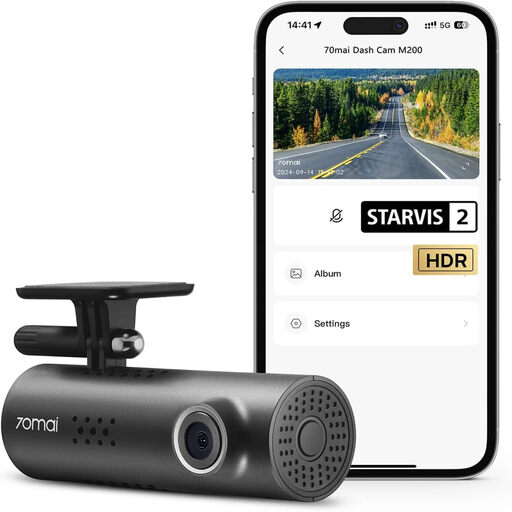
Why it's a great choice: Ideal for daily commutes, this model gets straight to the point: a sharp image and rock-solid reliability. It offers effective protection without superfluous features, making it an excellent entry-level device.
Instead of promising a fake 4K, it relies on an excellent Sony STARVIS 2 sensor and HDR technology to deliver a perfectly sharp 1080p image, even at night. This avoids the blurry video trap.
Excellent low-light performance for its category thanks to its latest-generation sensor. Voice control allows you to manage the camera without taking your hands off the wheel.
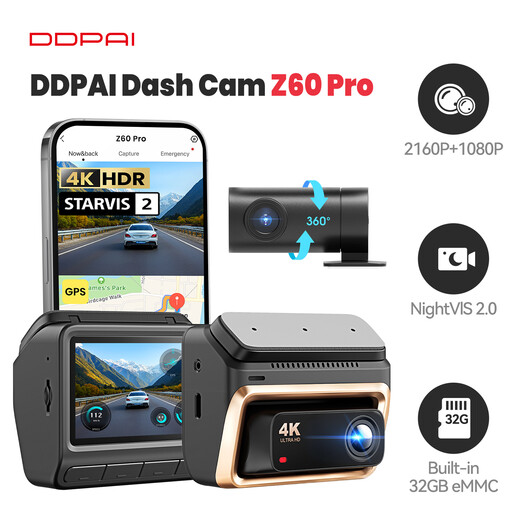
Why it's a great choice: For those who want no compromises on image quality and features. This front and rear system offers complete protection, with 4K clarity and modern connectivity.
It combines true native 4K resolution (Sony STARVIS 2 IMX678 sensor) with a supercapacitor for foolproof reliability. Its dual storage (internal eMMC + SD card) provides a second layer of security for your recordings.
4K HDR image quality at the front and 1080p HDR at the rear. The 32 GB internal eMMC storage takes over if the microSD card fails.
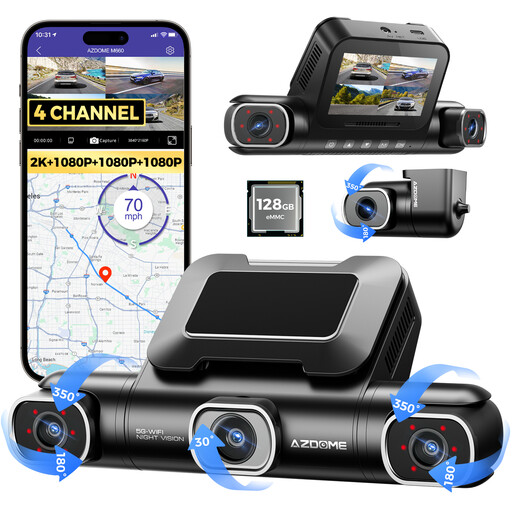
Why it's a great choice: Designed for those who demand surveillance with zero blind spots. Ideal for professional vehicles, large family vans, or for maximum protection against vandalism and parking lot scrapes.
With its 4 cameras, it leaves no area uncovered. The built-in 128 GB eMMC storage prevents the SD card reliability issues that are a common pitfall with multi-channel recording.
Total 360° coverage (2.5K front camera + three 1080p cameras). The integrated eMMC storage offers absolute peace of mind: no need to purchase an SD card.
We've compiled a complete selection of products that meet our reliability criteria.
Yes, this is a real risk if parking mode is used without the proper equipment. To prevent this, it is essential to use a dedicated hardwire kit. This kit connects to the fuse box and includes low-voltage protection: it automatically cuts power to the camera if the vehicle's battery voltage drops, ensuring you have enough power to start the engine.
Loop recording subjects memory cards to very intensive wear. A standard microSD card isn't designed for this and can fail within a few months. It is therefore highly recommended to choose "High Endurance" cards, which are specifically designed for video surveillance. Their lifespan is typically 1 to 3 years, depending on usage. Remember to format the card monthly to maintain its performance.
Yes, in most regions, using a dashcam for private purposes is perfectly legal. You are generally allowed to film on public roads from your vehicle. However, be cautious: sharing this footage online or on social media is often strictly regulated by privacy laws (like GDPR) if people or license plates are identifiable. In the event of an accident, recordings are generally admissible as evidence by law enforcement and insurance companies.