
Livraison le jour même ou le lendemain

Qualité garantie

Débloquez vos offres de bienvenue: Livraison GRATUITE | Jusqu'à -80 % | 30 jours d'essai gratuits à JoyPlus
Téléchargez l'application
Equipping your car with a dashcam is no longer a gadget reserved for tech enthusiasts. Today, it's an invaluable ally for many drivers, whether for daily commutes, family road trips, or for professionals on the road. In the event of a fender-bender, hit-and-run, or vandalism, an onboard camera can make all the difference.
However, the market is flooded with models whose marketing claims are often misleading. Between "4K" resolutions that aren't what they seem and parking modes of questionable effectiveness, it's easy to get duped. This guide is here to decipher the jargon, avoid the traps, and help you find THE dashcam that truly meets your needs.
Before we even get into the technical details, let's review the classic mistakes that turn a purchase into a disappointment.
To avoid these disappointments, focus on the features that truly matter and define the real-world performance of an onboard camera.
Image clarity is an alchemy that goes far beyond mere resolution. For truly usable video, the winning combination is:
An effective and hassle-free parking mode relies on two pillars:
Connected features are no longer gadgets; they are a daily game-changer:
Rather than an endless catalogue, here is our selection of models that tick all the right boxes, for three distinct user profiles.
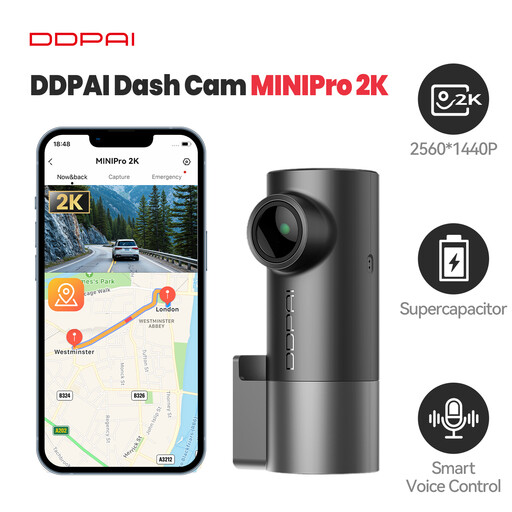
Why it's a great choice : Perfect for those who want a "set-it-and-forget-it" solution. Ultra-compact, it's virtually invisible behind the rearview mirror. Its native 2K resolution is the perfect balance between clarity and video file size.
This model doesn't bluff with fake 4K. It bets everything on an excellent 2K (1440p) resolution, which is more than enough to read a license plate. Its NightVIS 2.0 technology is designed to improve clarity in low light.
Ultra-discreet design : doesn't obstruct the field of view at all. Integrated WiFi : for simple and fast access to videos on your smartphone.
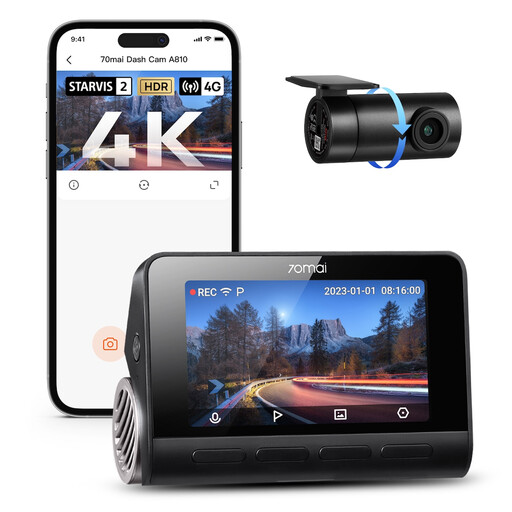
Why it's a great choice : For frequent drivers who demand flawless protection. This **front and rear dashcam** kit goes all-in on image quality and advanced features for complete peace of mind.
No compromises here: true Sony STARVIS 2 sensors front (IMX678) and rear (IMX662) ensure impeccable 4K and 1080p quality. Its AI-powered parking mode filters out false alerts to record only what's essential and preserve the battery.
HDR Image Quality on Both Channels : stunning clarity day and night, both front and rear. Integrated GPS and ADAS : to geotag videos and benefit from driver-assistance systems.
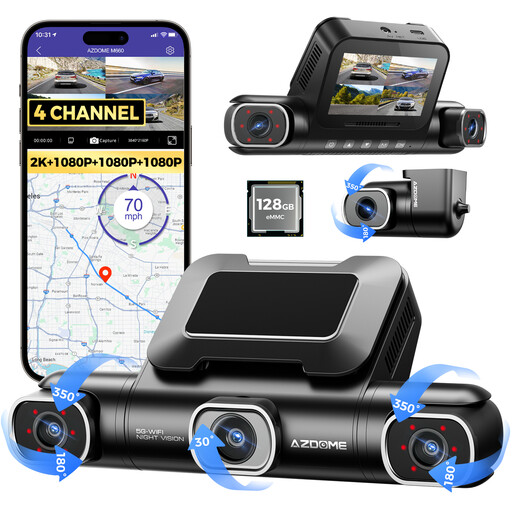
Why it's a great choice : For those who want to see absolutely everything. With its four cameras, this system offers true 360° surveillance, filming the front, rear, and even the inside of the cabin. Nothing escapes its view.
Instead of a single wide-angle lens that distorts the image, this kit uses four distinct recording channels. The result: true 360° coverage with no blind spots.
4-Channel Coverage : simply put, the end of blind spots. Integrated 128 GB eMMC Storage : no more need for an SD card, for increased reliability and speed.
Discover our full selection of onboard cameras, all tested and approved according to our demanding criteria.
Yes, the risk is real, especially with a constantly active parking mode. The solution? Use a specific hardwire kit. These smart kits monitor the battery's voltage and cut power to the camera long before it could compromise starting the engine.
The basic installation is a breeze. Simply attach the camera to the windscreen (via a suction cup or adhesive) and plug it into the cigarette lighter socket. The most tedious part is hiding the cable along the trim for a clean finish. However, installing the hardwire kit for parking mode is more delicate, as it involves connecting to the fuse box. If you don't have a DIY spirit, it's best to entrust this task to a professional.
In France, the admissibility of a video is left to the judge's sole discretion. In criminal law, the principle is the freedom of evidence, provided it is obtained fairly. In practice, a recording is very often taken into account by insurance companies and courts to clarify the circumstances of an accident. However, be mindful of privacy rights: it is strictly forbidden to publicly broadcast images where people or license plates are identifiable. The use of these videos must remain strictly limited to a private or legal context.