
Livraison le jour même ou le lendemain

Qualité garantie

Débloquez vos offres de bienvenue: Livraison GRATUITE | Jusqu'à -80 % | 30 jours d'essai gratuits à JoyPlus
Téléchargez l'application
Faced with the unexpected on the road, more and more drivers are choosing to install a dashcam. Far from being a mere gadget, this in-car camera is your best ally for providing irrefutable video evidence in the event of a fender-bender, a hit-and-run, or an insurance dispute.
This guide is designed to help you navigate the options. We'll break down the essential features and present a selection of reliable models suited for all needs and budgets, all without unnecessary jargon.
To make the right choice, you first need to understand what separates a good dashcam from a low-end model. Here are the key points to check before you buy.
A clear image is the number one criterion. High resolution is essential to be able to read a licence plate or make out a road sign—details that can make all the difference.
The viewing angle, expressed in degrees, determines how wide the captured scene is. Aim for a wide angle (between 140° and 170°) to cover multiple lanes of traffic and minimise blind spots as much as possible.
A good dashcam does more than just film the road. Here are the options that enhance your protection.
Retrieving your videos shouldn't be a chore. Connectivity is the key to a user-friendly experience.
Here are a few models we recommend, chosen for their performance and suitability for different types of drivers.
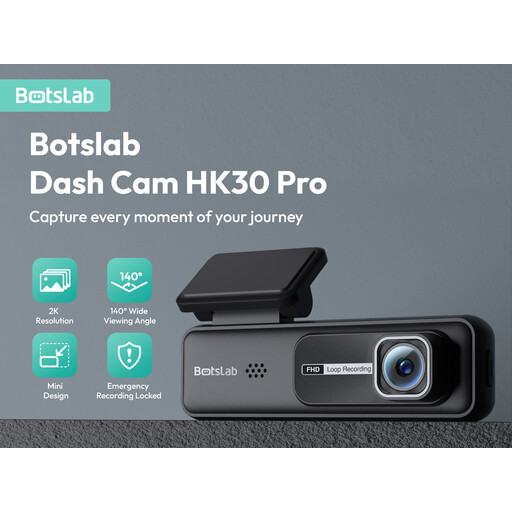
Why it stands out: It's the epitome of discretion. Its ultra-compact size is easily forgotten on the windshield, but its 2K resolution ensures impeccable image quality.
Advantages:
Who is it for?: Drivers looking for a simple, effective, and discreet solution to secure their daily commutes.
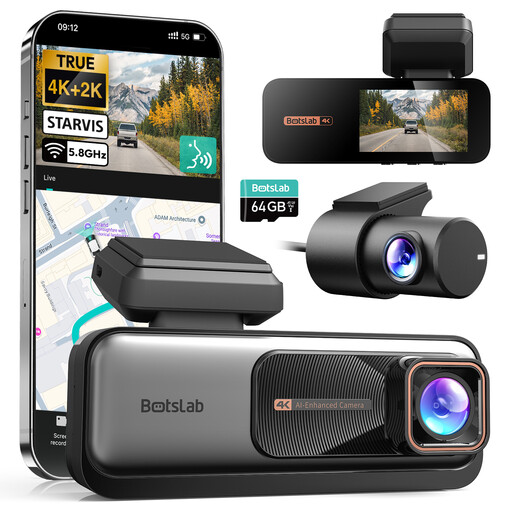
Why it stands out: This front and rear dashcam kit offers 360° protection, with a 4K camera at the front and a 2K camera at the rear. The bonus: Advanced Driver Assistance Systems (ADAS) for enhanced safety.
Advantages:
Who is it for?: Safety-conscious drivers, professional drivers, and tech enthusiasts who want comprehensive protection and advanced features.
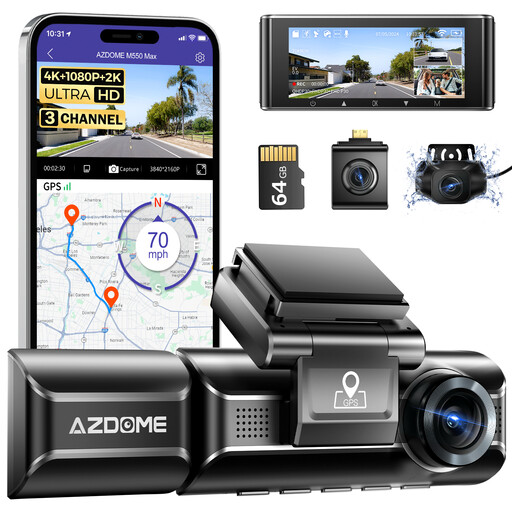
Why it stands out: The ultimate solution for total surveillance. This 3-channel dashcam records everything: the road ahead (4K), behind (2.5K), and even the vehicle's interior (1080p).
Advantages:
Who is it for?: Professional drivers and parents who need to monitor both the road and the inside of their vehicle.
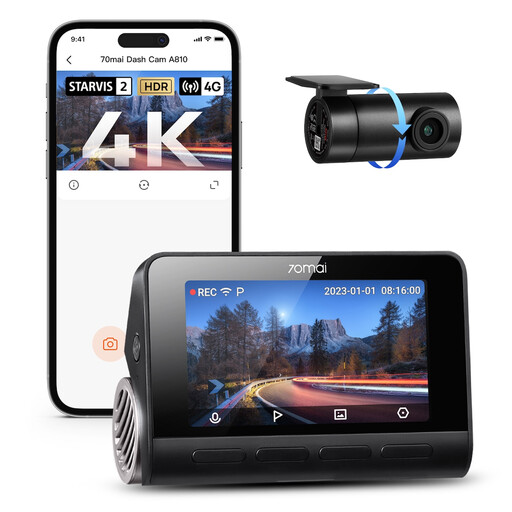
Why it stands out: This is the queen of the night. Thanks to its cutting-edge Sony STARVIS 2 sensor and dual-channel HDR, its night vision quality is stunning. This feature was praised by the German specialised press (Autobild.de, Computerbild.de), which awarded it a "Good" rating in 2024.
Advantages:
Who is it for?: Drivers who demand high image quality, especially at night, and who appreciate smart features like voice control and remote monitoring.
Your car is protected on the road. Now, what about organising your garage? To keep your tools, car accessories, and other equipment neatly stored and accessible, a good storage solution can be life-changing. Take a look at our selection of freestanding garage storage cabinets and optimise your space.
Yes, using a dashcam is perfectly legal in France for private use. You have the right to film public roads from your car. However, be aware that the distribution of these images (on social media, for example) is strictly regulated by image rights and personal data protection laws if faces or licence plates are identifiable. In a legal dispute, recordings may be admitted as preliminary evidence, but their final admissibility is at the judge's discretion.
Parking mode takes over when your engine is off to monitor your car's surroundings. It is mainly triggered in two ways:
This depends on the size of the SD card, the chosen resolution, and the number of cameras. All modern dashcams use loop recording: they film continuously and replace the oldest files with new ones when the card is full. To give you an idea, a 64?GB card can hold approximately 4 to 6 hours of 4K video (front camera only) before it starts overwriting. Of course, emergency clips locked by the G-sensor are protected and are never erased.