
Livraison le jour même ou le lendemain

Qualité garantie

Débloquez vos offres de bienvenue: Livraison GRATUITE | Jusqu'à -80 % | 30 jours d'essai gratuits à JoyPlus
Téléchargez l'application
As the Head of Product Recommendations at Joybuy, I analyze dozens of spec sheets every day. My role? To help you navigate the jungle of in-car technology. Choosing a dashcam might seem simple, but too many drivers end up with a device that lets them down when it matters most. The goal of this guide is to give you the keys to making the right choice and avoiding nasty surprises.
A car camera isn't just a gadget. It's your impartial witness—the one thing that can change everything in the event of an accident, a hit-and-run, or vandalism. But the market is saturated with marketing promises that often hide critical flaws.
Before you commit, watch out for these three common pitfalls that could render your investment useless:
To ensure you make the right choice, focus on these three technical pillars. They determine the day-to-day reliability and effectiveness of your in-car camera.
Image clarity is the number one criterion. To evaluate it, don't just look at the resolution number (1080p, 2K, 4K). Scrutinize these three elements:
A dashcam must cover a wide enough field of view to capture the entire scene without creating excessive image distortion.
Connected features aren't gimmicks: they simplify daily use and enhance your security.
To move from theory to practice, here is our selection. We've chosen models that excel in the performance and reliability criteria we've just discussed, matching them with typical driver profiles.
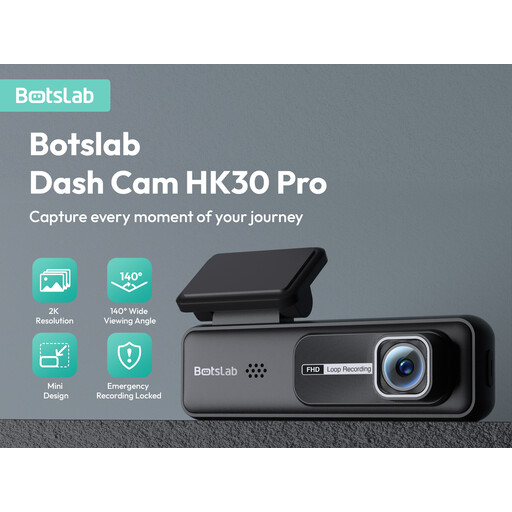
Why it's a match: Ideal for those looking for a discrete and effective "set-it-and-forget-it" solution. Its compact form factor doesn't obstruct your view, and installation is a breeze. It gets straight to the point: recording the road with reliable image quality.
It focuses on the essentials. Its 2K resolution offers an excellent balance between clarity and file size, and its night vision is designed to be genuinely functional, not just a marketing claim on the box.
2K Quad HD Resolution: Captures license plates and signs with much greater clarity than standard 1080p. Mini Design: It's easy to forget it's there behind your rearview mirror.
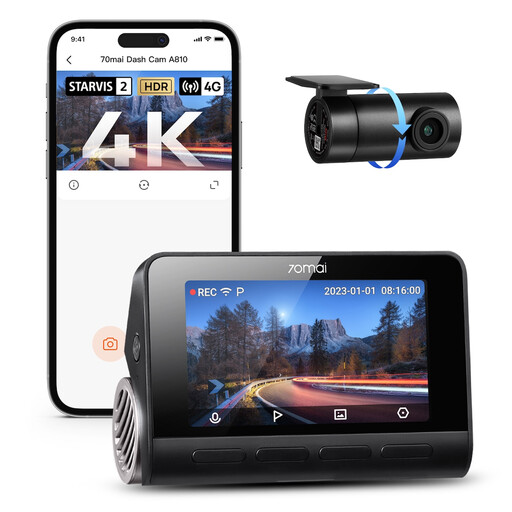
Why it's a match: For those who want to make zero compromises on image quality and features. This front and rear system is designed to provide irrefutable video evidence, day or night, with advanced driver-assistance features as a bonus.
There's no "fake 4K" here: the 4K UHD resolution is backed by excellent Sony STARVIS 2 sensors on both the front and rear cameras, with HDR on both channels. It delivers on its promise of cutting-edge night vision.
Dual Sony STARVIS 2 Sensors: Offers stunning low-light sensitivity and image sharpness. AI-Powered Parking Mode: Identifies human motion for more targeted recordings (requires a hardwire kit).
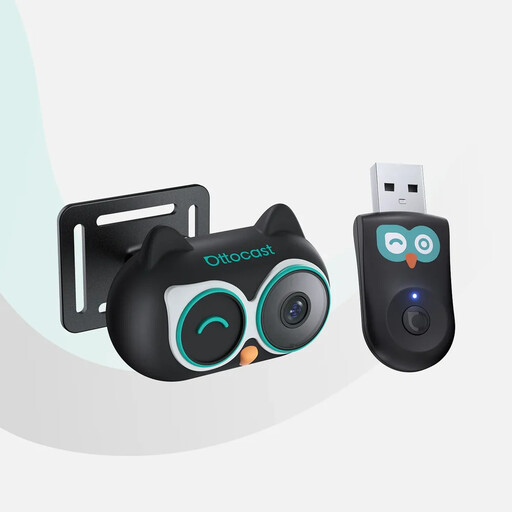
Why it's a match: Designed for parents, this system turns your car's CarPlay display into a video baby monitor. It's the ideal solution for safely keeping an eye on children in the back seat without having to turn around or clutter the dashboard with an extra screen.
This product isn't a traditional dashcam. It meets a very specific need: safely monitoring the cabin. Its infrared night vision is completely invisible (no red glow), so it will never disturb sleeping children.
Wireless CarPlay Integration: Displays the camera feed on the vehicle's central screen, either full-screen or split-screen with your navigation. Glow-Free Night Vision: Monitors the cabin in complete darkness without disturbing passengers.
Explore our full selection of products, all rigorously chosen to meet our quality criteria and safety standards.
Yes, this is a real risk with a poorly designed parking mode. The solution? Choose a dashcam equipped with a supercapacitor and install it with a quality hardwire kit. The kit connects to the fuse box and includes a critical safety feature: it cuts power to the camera if the battery's voltage drops below a certain threshold, ensuring you can always start your car.
This is a complex issue. In France, dash cam footage is generally accepted as preliminary evidence by insurance companies (to support an accident report) and by courts in civil proceedings. However, its admissibility is left to the judge's discretion, who must ensure the recording does not infringe on privacy rights. A crucial point: publishing this footage on the internet is strictly forbidden without completely blurring any faces and license plates not directly involved in the incident.
A dashcam puts a memory card through intense stress: loop recording involves constant write and rewrite cycles. A standard microSD card will therefore wear out very quickly. That's why it is imperative to use a "High Endurance" card. They are specifically designed for this intensive use, offering a much longer lifespan and, most importantly, greater reliability to prevent data corruption on the day you need it most.