
Livraison le jour même ou le lendemain

Qualité garantie

Débloquez vos offres de bienvenue: Livraison GRATUITE | Jusqu'à -80 % | 30 jours d'essai gratuits à JoyPlus
Téléchargez l'application
A door ding in a car park, a disagreement over an accident report, a hit-and-run, or an act of vandalism... these are stressful situations every driver dreads. In the face of these risks, the dash cam has emerged as a simple and incredibly effective solution. It records everything that happens on the road and around your car, offering you greater peace of mind and, most importantly, irrefutable video evidence if something goes wrong.
But with an overwhelming array of models and features, it's hard to know where to start. This guide is here to break down the essential criteria and help you find the car camera that perfectly matches your needs and budget.
Before diving into our top picks, let's review the technical specifications you need to master to make the right choice.
A dash cam's primary mission is to capture perfectly sharp images. Resolution is therefore the number one criterion.
The viewing angle, expressed in degrees, determines the width of the field of view. An angle between 140° and 170° is ideal for covering multiple lanes of traffic without creating excessive distortion on the sides of the image.
These options transform a simple camera into a true guardian angel for your vehicle.
These two technologies unlock the full potential of your dash cam.
Here are a few models that stand out from the crowd, designed for different types of drivers.
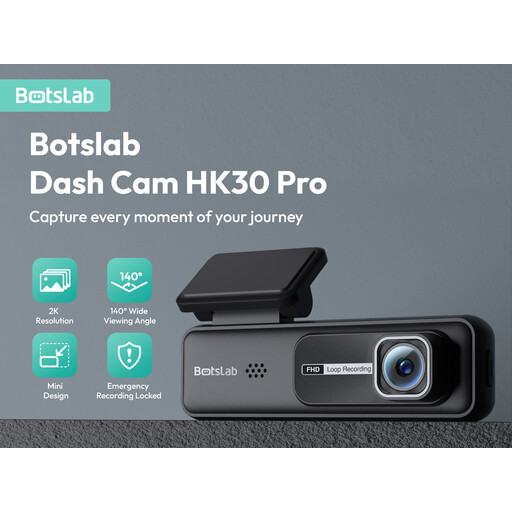
Why it stands out: Its key strength is its discretion. Thanks to its mini format, this camera fits perfectly behind the rear-view mirror without ever obstructing your field of vision. Its compact design doesn't sacrifice image quality, delivering a very impressive 2K Quad HD resolution.
Pros:
Who is it for? Ideal for drivers looking for a high-performance, discreet solution that is easy to install and use daily.
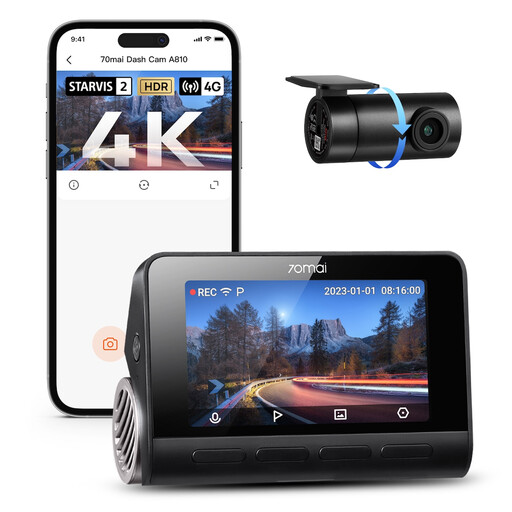
Why it stands out: This front and rear dash cam system offers complete protection with its two cameras equipped with Sony STARVIS 2 sensors. The front camera films in true 4K UHD, while the rear camera records in 1080p, ensuring total coverage. A testament to its quality: this model was praised by the German specialised press (Autobild.de, Computerbild.de), which awarded it a "Good" rating in 2024.
Pros:
Who is it for? The choice for tech enthusiasts and demanding drivers (ride-share, taxis, high-mileage drivers) who want maximum recording quality and cutting-edge features.
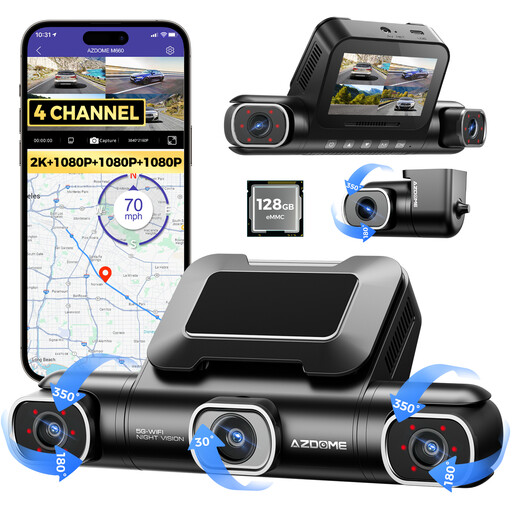
Why it stands out: The AZDOME M660 provides 360° surveillance thanks to its four cameras. With a 2.5K front camera and three 1080p cameras (interior, rear), it leaves absolutely no blind spots. Its built-in 128GB eMMC storage eliminates the need for an SD card and offers much faster read/write speeds.
Pros:
Who is it for? For professional drivers (ride-share, taxis) and motorists who demand flawless surveillance with no blind spots.
A dash cam is an excellent investment in your safety. But for total peace of mind, visibility is paramount. This means clear recordings, but also a vehicle that is perfectly visible to other road users.
So, remember to check your lights regularly. If needed, feel free to browse our selection of car turn signal bulbs to ensure your vehicle remains perfectly visible and safe in all conditions.
Yes, using a dash cam is perfectly legal in France for private use. In the event of an accident, recordings are admissible as preliminary evidence, with their assessment left to the discretion of law enforcement or a judge. However, be careful: publishing these images on the Internet (YouTube, social media, etc.) is strictly forbidden if faces and licence plates are not blurred, in order to respect privacy rights and GDPR.
Most dash cams operate on "loop recording." They continuously film short clips (usually 1, 3, or 5 minutes long). Once the memory card is full, the camera automatically deletes the oldest clip to replace it with the newest one. Rest assured: important videos, detected by the G-sensor (impact) or locked manually, are protected and never erased.
The basic installation is very simple. The camera attaches to the windscreen (usually behind the central rear-view mirror) with a suction cup or an adhesive mount. You then just need to plug it into the vehicle's cigarette lighter socket (12V). For a more discreet installation and to use the parking mode, a direct connection to the fuse box is necessary. This operation, which requires a specific hardwire kit, is recommended. If you're not comfortable with DIY, it's best to entrust this task to a professional.