
Livraison le jour même ou le lendemain

Qualité garantie

Débloquez vos offres de bienvenue: Livraison GRATUITE | Jusqu'à -80 % | 30 jours d'essai gratuits à JoyPlus
Téléchargez l'application
Equipping your car with a front and rear dash cam is no longer a luxury reserved for tech enthusiasts. For many drivers in the UK, it has become a guarantee of peace of mind on the road. In the face of an accident, a hit-and-run, or a dispute, a clear video can be decisive. The problem? The market is flooded with marketing promises that are often misleading.
As a product expert at Joybuy, my role is to help you see clearly through this jungle. Let's break down the pitfalls to avoid and the criteria that truly make a difference, so your investment is smart, useful, and long-lasting.
Marketing is a powerful force: impressive spec sheets often hide deal-breaking weaknesses in practice. Here are the essential points to watch out for:
To make an informed decision, focus on the specifications that guarantee reliable day-to-day performance.
The core engine of a good in-car camera is its sensor. A quality sensor, like a Sony STARVIS 2, is designed to capture maximum light. Paired with HDR (High Dynamic Range) technology, it ensures a perfect balance between the very dark and very bright areas of the image. This is essential for reading a license plate at night despite the glare of headlights, or when exiting a tunnel on a bright day. Don't be blinded by resolution; demand a sensor from a recognised brand and the presence of HDR.
For 24/7 surveillance, parking mode is essential. A reliable solution depends on two elements:
Far from being mere gimmicks, these two features transform a simple camera into a powerful security tool:
Rather than an exhaustive list, we've selected models tailored to specific user profiles, based on the reliability criteria we've just discussed.
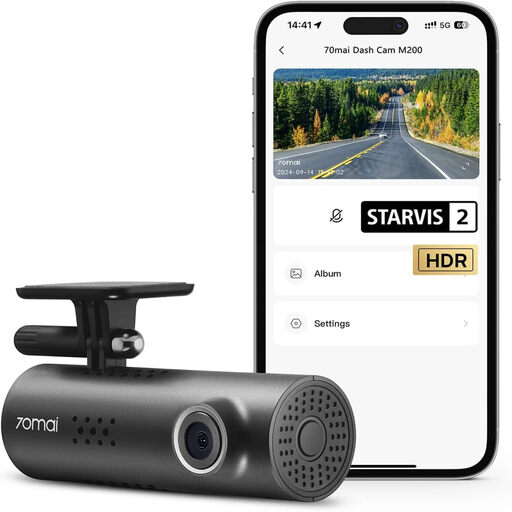
Why this model? Perfect for those who want a simple, reliable, and discreet solution. It gets straight to the point: excellent image quality, especially at night, without being cluttered with unnecessary features.
Instead of boasting about a high resolution, it bets everything on its Sony STARVIS 2 IMX662 sensor, renowned for its exceptional low-light sensitivity, ensuring clear images when it's crucial.
Its night-time performance, a result of the combination of its advanced sensor and HDR. Voice control and Wi-Fi are the icing on the cake for convenience.
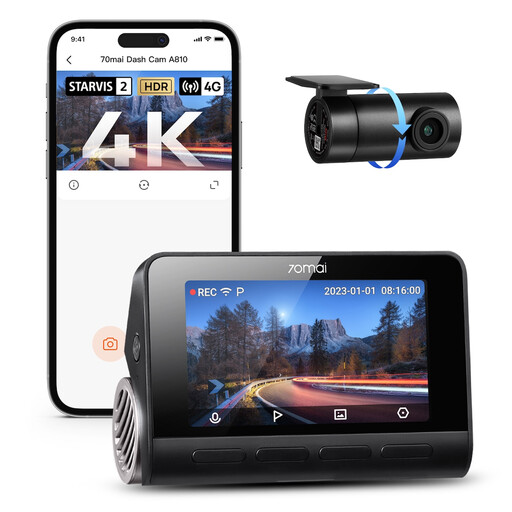
Why this model? For drivers who demand the best and refuse to compromise on video evidence quality. It combines true 4K with the latest technologies for maximum image clarity, both front and rear.
Here, 4K isn't just a marketing gimmick. It's powered by a duo of exceptional sensors: Sony STARVIS 2 IMX678 at the front and IMX662 at the rear, both HDR compatible. This architecture guarantees a high resolution that is genuinely usable, day or night.
The combination of 4K at the front and 1080p at the rear, served by top-tier sensors. The built-in GPS and driver-assistance systems (ADAS) make it a true safety arsenal.
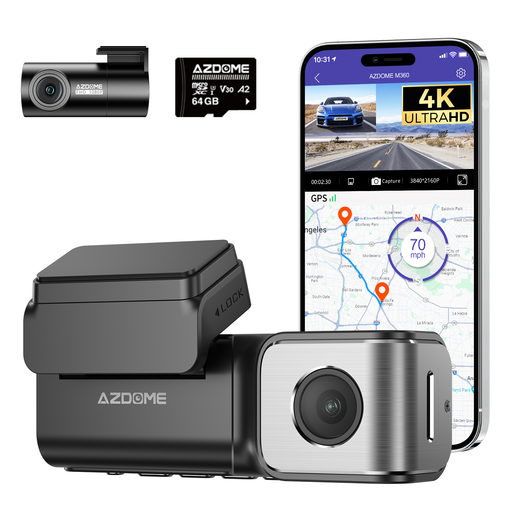
Why this model? Designed for those who spend their lives on the road (private hire drivers, delivery drivers, sales reps). It doesn't just monitor the front and rear: it adds valuable driver-assistance features to mitigate risks related to fatigue or inattention.
It goes beyond being a simple recorder by integrating active safety features like ADAS (lane departure warning, collision warning) and BSD (blind spot detection). Its parking mode is designed for 24/7 surveillance (with the dedicated hardwire kit).
The integration of driver-assistance systems (ADAS/BSD) and the dual 4K + 1080p camera make it a true electronic co-pilot that actively secures your drive, not just records it.
Discover our full range of models that meet our rigorous selection criteria and comply with current regulations.
1. What is the lifespan of a microSD card in a dash cam? A dash cam records in a loop, subjecting the memory card to a constant cycle of writing and rewriting. This intensive process eventually wears it out. For daily use, a standard microSD card can fail after 6 to 12 months. It is therefore imperative to opt for "High Endurance" cards, which are specifically designed for video surveillance. Their lifespan is measured in years.
2. Is installing a dash cam with parking mode complicated? The basic installation, via the cigarette lighter socket, is a breeze and takes only a few minutes. However, for parking mode, connecting the hardwire kit to the fuse box is another matter entirely. If you're not comfortable with auto electronics, it's best to have a professional handle the operation. The cost is generally reasonable, and it guarantees a clean and secure installation.
3. Is a 4K dash cam really necessary? Not necessarily. An excellent 1080p or 1440p (2K) dash cam with a very good sensor and HDR will often produce better results at night than an entry-level 4K model. The advantage of 4K lies in the ability to zoom into the image without losing detail, but the absolute priority remains the performance of the sensor/lens/image processor trio, especially in low light.